8-week plan for your first trail race (10-21 km): week-by-week table
Quick answer: if you only want one, Hoka Speedgoat 7 (best shoe to start trail running). For best light vest for 10-21 km, Salomon ADV Skin 5.
Our picks by use case
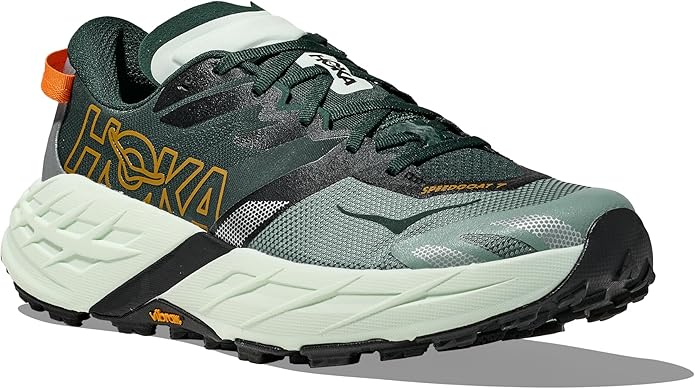 Our top pick#1 · Best shoe to start trail runningHoka Speedgoat 7Pro: Max Hoka cushioning: protects your legs over long distancesDownside: High stack: less stable for those who want more ground feelView on Amazon (opens in a new tab)
 #2 · Best light vest for 10-21 kmSalomon ADV Skin 5Pro: Same SensiFit fit as the ADV Skin 12 in a light formatDownside: 5 litres aren't enough for ultras with full mandatory gearView on Amazon (opens in a new tab)
 #3 · Best gel to test on long runsGU Energy Gel OriginalPro: Fast absorption thanks to the carbohydrate blendDownside: Needs to be taken with waterView on Amazon (opens in a new tab)
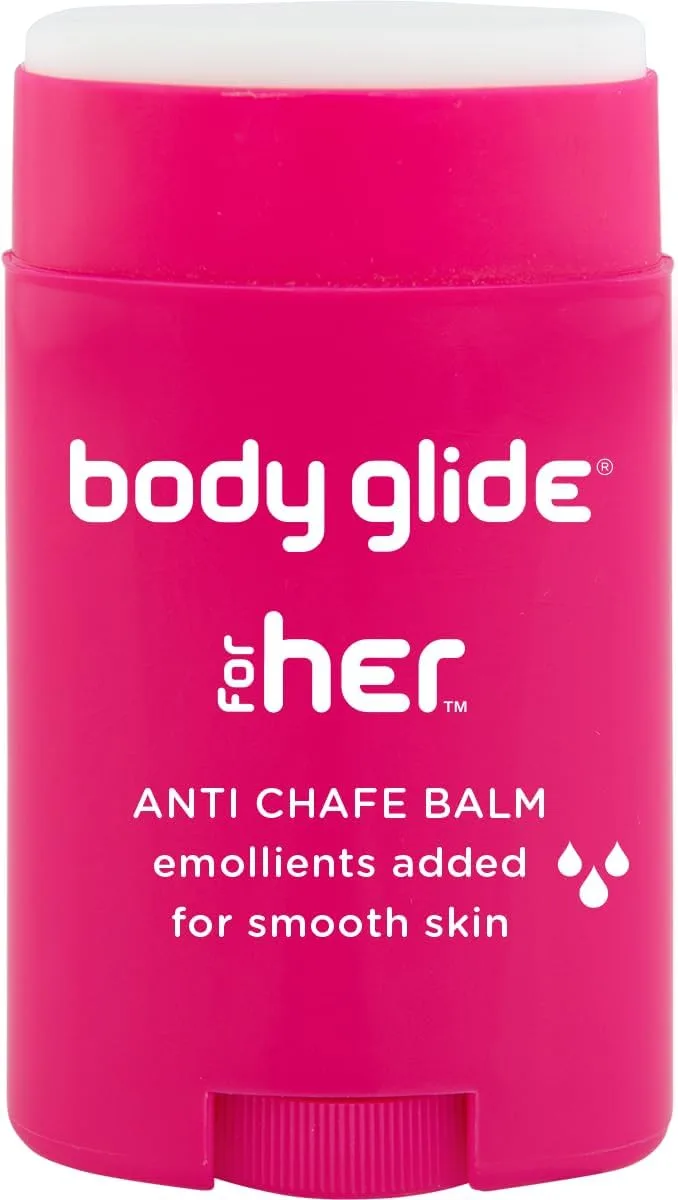 #4 · Best anti-chafe for race dayBodyGlide Original Anti-Chafe BalmPro: Easy-to-apply stick format, even with sweaty handsDownside: Higher price than traditional petroleum jellyView on Amazon (opens in a new tab)
 #5 · Best strength gear for homePOWER GUIDANCE Elastic Resistance Bands (Set of 6)Pro: Six progressive resistance levels for strength work at homeView on Amazon (opens in a new tab)
Affiliate links: if you buy through them we earn a commission at no extra cost to you. It does not affect the ranking.
How we choose
We compare every model on verified technical specs (weight, materials, price), user reviews and our own experience running and testing gear in races from 21K to 100K+. We update this guide when prices change or new models launch. Some links are affiliate links: if you buy through them, TrailRunTemple earns a commission at no extra cost to you and with no influence on the selection.
All products in this guide
Hoka
Hoka Speedgoat 7
The best-selling trail shoe in the US and an absolute ultra-trail classic. Max Hoka cushioning, a Vibram Megagrip outsole with 5 mm lugs for grip in mud and technical terrain, and a snug Matryx upper. Built to eat up kilometres without punishing your legs in long races.
Salomon
Salomon ADV Skin 5
The 5-litre version of trail running's most used vest: the same bounce-free SensiFit fit and front pockets as the ADV Skin 12, with two 500 ml soft flasks included. Just enough capacity for 10-30 km races, vertical kilometres and racing where you only carry water, gels and a windbreaker.
GU
GU Energy Gel Original
Energy gel with 100 calories and 21 g of carbohydrates per sachet. Blend of maltodextrin and fructose for optimal absorption. Includes amino acids and electrolytes. The most widely used gel in ultras around the world.
BodyGlide
BodyGlide Original Anti-Chafe Balm
Anti-chafe balm in stick format. Creates an invisible barrier on the skin that reduces friction without clogging pores. Sweat-resistant, ideal for critical zones like inner thighs, armpits, and nipples on long races.
POWER GUIDANCE
POWER GUIDANCE Elastic Resistance Bands (Set of 6)
Set of 6 progressive-resistance elastic bands with a carry bag, designed for powerlifting and strength training. Versatile for leg, glute and core work, essential for strengthening the stabilizing muscles that technical trail terrain demands.
Quick answer: if you already run about 20 km a week, 8 weeks is enough to reach a first trail race of 10 to 21 km. The recipe: 3-4 runs a week, mostly easy pace, hill repeats from week 2, a long run that grows from 8 to 16 km, strength work two days a week and a two-week taper. The gear worth having before race day: Hoka Speedgoat 7(opens in a new tab) for grip and cushioning, Salomon ADV Skin 5(opens in a new tab) to carry water without bounce, and BodyGlide(opens in a new tab) against chafing.
Before you start. This plan is for healthy people who already run regularly. It is not medical advice. If you have an injury, a heart or lung condition, are pregnant, or have not exercised for months, talk to your doctor first. If something hurts for more than a week, stop and get it checked. This plan is not for someone who has never run: that profile needs a different plan with more walking breaks.
Written by the TrailRunTemple Team. Every scientifically backed figure links to its reference at the bottom; where something is coaching habit and not proven, we say so.
The table: week by week
Enter your race date and the plan highlights which week you are in.
| Week | Total km | Key sessions | Long run | Strength | Focus |
|---|---|---|---|---|---|
| 1 | 20 | 3 easy runs | 8 km, ~100 m D+ | 1 day (30’) | Get back into the routine on trails |
| 2 | 22 | 2 easy + 6 hill repeats of 45” | 9 km, ~150 m D+ | 2 days | First hills |
| 3 | 25 | 2 easy + 8 hill repeats of 1’ | 11 km, ~250 m D+ | 2 days | Power-hike the steep sections |
| 4 | 18 | Recovery: 3 easy runs | 8 km, ~100 m D+ | 1 day | Recover and absorb |
| 5 | 27 | 2 easy + 4 hill repeats of 3’ | 13 km, ~400 m D+ | 2 days | Technical descents, controlled |
| 6 | 30 | 2 easy + 3’ hill repeats | 16 km, ~550 m D+ | 2 days | Peak week: rehearse with race gear |
| 7 | 22 | 3 easy, 1 with 4 × 1’ lively | 10 km, ~250 m D+ | 1 day | Taper: less volume, same pace |
| 8 | 14 | 2 short runs + activation | Race | None | Rest, prepare your gear |
How to read the table
- Easy run: a pace at which you could hold a conversation. On the trail, if the slope bites, walk: it is more efficient than burning out.
- Hill repeats: climb hard (high effort, not maximal) and walk or jog down gently. Recover fully between repeats.
- Strength (20-30’): squats, lunges, single-leg deadlifts, calf raises and planks. With a set of resistance bands(opens in a new tab) or a kettlebell(opens in a new tab) you can do it at home. More in the guide to home strength gear.
- Rest day: at least 1 a week, and 2 if you feel wrecked.
Who it is for (and who it is not)
- Yes: you run 2-3 times a week, cover about 20 km weekly and are comfortable running 8-10 km without stopping.
- Goal: finish a 10 to 21 km race feeling good, with up to about 800 m of positive elevation (D+). Chasing a time is not the goal.
- No: if you want a fast time, ultras or altitude. Those need longer plans.
How the plan works: 6 rules
- Mostly easy. About 4 of every 5 runs should be at a pace where you can talk. That split is typical in endurance training studies (around 80 % easy volume) [1]. Note: it has not been shown to be better than other splits for performance [1], so do not obsess over the percentage.
- Increase load gradually, but do not trust the “10 % rule”. It is widely repeated, yet a randomised trial of 532 novice runners found no fewer injuries with a programme built on it: 20.8 % versus 20.3 % with a standard one (although the two programmes also differed in length) [2]. Here load rises gradually with a lighter week along the way because it is prudent, not because it is proven.
- A recovery week halfway. This is common coaching practice; we have not found trials confirming it, so it is a common-sense decision.
- Hills and descents, in order. Descents cause muscle damage, and those least used to them suffer most; prior exposure is the best-supported preventive strategy [3]. That is why technical descents come in early and gradually.
- Strength twice a week. Strength training improves running economy in runners: a small effect with heavy loads and a moderate one when methods are combined, although certainty is low for the latter [4].
- A two-week taper. Cutting volume by roughly 40-60 % over the last two weeks while keeping intensity and frequency is the best-performing strategy in the available meta-analysis [5]. That study covers athletes from different sports, not only trail; we use it as the best reference available.
Gear by milestone
You do not need to buy everything on day one. This is what to have when each stage arrives:
Weeks 1-2 · shoes. Grip comes first: on loose stone and mud, a road shoe slips. Hoka Speedgoat 7(opens in a new tab) cushions and grips on mixed terrain; if your terrain is mud and rock, Salomon Speedcross 6(opens in a new tab) grips more. More options in the guide to cushioned trail shoes.
Weeks 3-4 · vest or belt. Once your long run passes 10 km you need to carry water and a layer. A small vest such as the Salomon ADV Skin 5(opens in a new tab) with a soft flask(opens in a new tab) does not bounce and leaves your hands free.
Weeks 5-6 · nutrition and watch. These are the weeks to test what you eat. In a 10-14 km race you do not need to eat; in a 21 km one, trying 1-2 gels such as GU Energy Gel(opens in a new tab) or SiS GO Isotonic(opens in a new tab) on your long runs avoids stomach surprises. A GPS watch such as the Garmin Forerunner 165(opens in a new tab) or Coros Pace 3(opens in a new tab) helps you manage effort and track elevation.
Weeks 7-8 · race day. Socks that do not blister (Injinji Trail Midweight(opens in a new tab)), anti-chafe cream (BodyGlide Original(opens in a new tab) or Squirrel’s Nut Butter(opens in a new tab)) and a sunscreen stick (Heliocare 360º Sport(opens in a new tab)) are three cheap purchases that prevent the silliest problems.
Golden rule: do not try anything new on race day. Everything you wear that day should have done at least one long run with you.
What to eat and drink (keep it simple)
- In 10-14 km a good breakfast and some water are enough.
- In 21 km practise in weeks 5 and 6: take a gel or some carbohydrate every 30-45 minutes from minute 45, and drink in sips.
- For ultramarathons, the ISSN consensus recommends 30-50 g of carbohydrate per hour and 450-750 mL of fluid per hour, and practising the strategy in training [6]. A 2-hour race is far from that, but the principle holds: train your stomach before race day.
- Beware of drinking too much. Exercise-associated hyponatremia is mainly caused by drinking beyond thirst [7]. Drink when you are thirsty, not out of obligation.
Classic first-race mistakes
- Starting too fast. The first climbs arrive before you have warmed up. If you cannot talk, you are going too hard.
- Not walking. In trail running, walking steep climbs is not losing: it is pacing.
- Trying new shoes or gels on race day. See the golden rule above.
- Training only on the flat. Elevation is trained with elevation, especially descents [3].
- Overdoing week 8. The taper is there so you arrive fresh; running extra that week does not make you stronger, only more tired.
Pick your race
If you do not have a race yet, these are friendly for a first time. Choose one 8-10 weeks away:
- Trail Almendros y Volcanes (April, 21/14/7 km)
- XTrail Series Run Orrius (April, 21/15/10 km)
- Trail La Cebrera (March, 28/14/6 km)
- Pego Trail (March, 20 km)
Each page includes the Pack 360: registration, accommodation and the gear you need.
Frequently asked questions
Can I do it if I only run 10-15 km a week? Do 3-4 weeks of easy base running first, until you reach about 20 km a week. Starting with less load and ramping up fast is exactly what this plan does not do.
What if I lose a week to illness or work? Repeat the previous week and shift the plan. Do not try to make up lost kilometres.
Do I need poles? For 10-21 km, no. Evidence on their energy cost uphill is mixed and comes from small studies, so we do not use it to recommend them.
How many days can I run? The plan suggests 3-4 runs. If you can only do 3, drop the second easy run.
What if the race has more elevation than we train? Raise the long runs in weeks 5 and 6 until the D+ resembles the race, and cut the kilometres to compensate.
References
- Oliveira, Boppre, Fonseca (2024). Comparison of polarized versus other types of endurance training intensity distribution on athletes’ endurance performance: a systematic review with meta-analysis. Sports Medicine. Article on Springer
- Buist I. et al. (2008). No effect of a graded training program on the number of running-related injuries in novice runners: a randomized controlled trial. American Journal of Sports Medicine. DOI 10.1177/0363546507307505
- Bontemps B., Vercruyssen F., Gruet M., Louis J. (2020). Downhill running: what are the effects and how can we adapt? A narrative review. Sports Medicine. DOI 10.1007/s40279-020-01355-z
- Llanos-Lagos C. et al. (2024). Effect of strength training programs in middle- and long-distance runners’ economy at different running speeds: a systematic review with meta-analysis. Sports Medicine 54(4):895-932. Full text on PubMed Central
- Bosquet L., Montpetit J., Arvisais D., Mujika I. (2007). Effects of tapering on performance: a meta-analysis. Medicine & Science in Sports & Exercise 39(8):1358-1365. DOI 10.1249/mss.0b013e31806010e0
- Tiller N.B. et al. (2019). International Society of Sports Nutrition position stand: nutritional considerations for single-stage ultra-marathon training and racing. Journal of the International Society of Sports Nutrition 16:50. ISSN full text on PubMed Central
- Hew-Butler T., Loi V., Pani A., Rosner M.H. (2017). Exercise-associated hyponatremia: 2017 update. Frontiers in Medicine. DOI 10.3389/fmed.2017.00021
Other guides you might find useful
Races where you'll need this gear
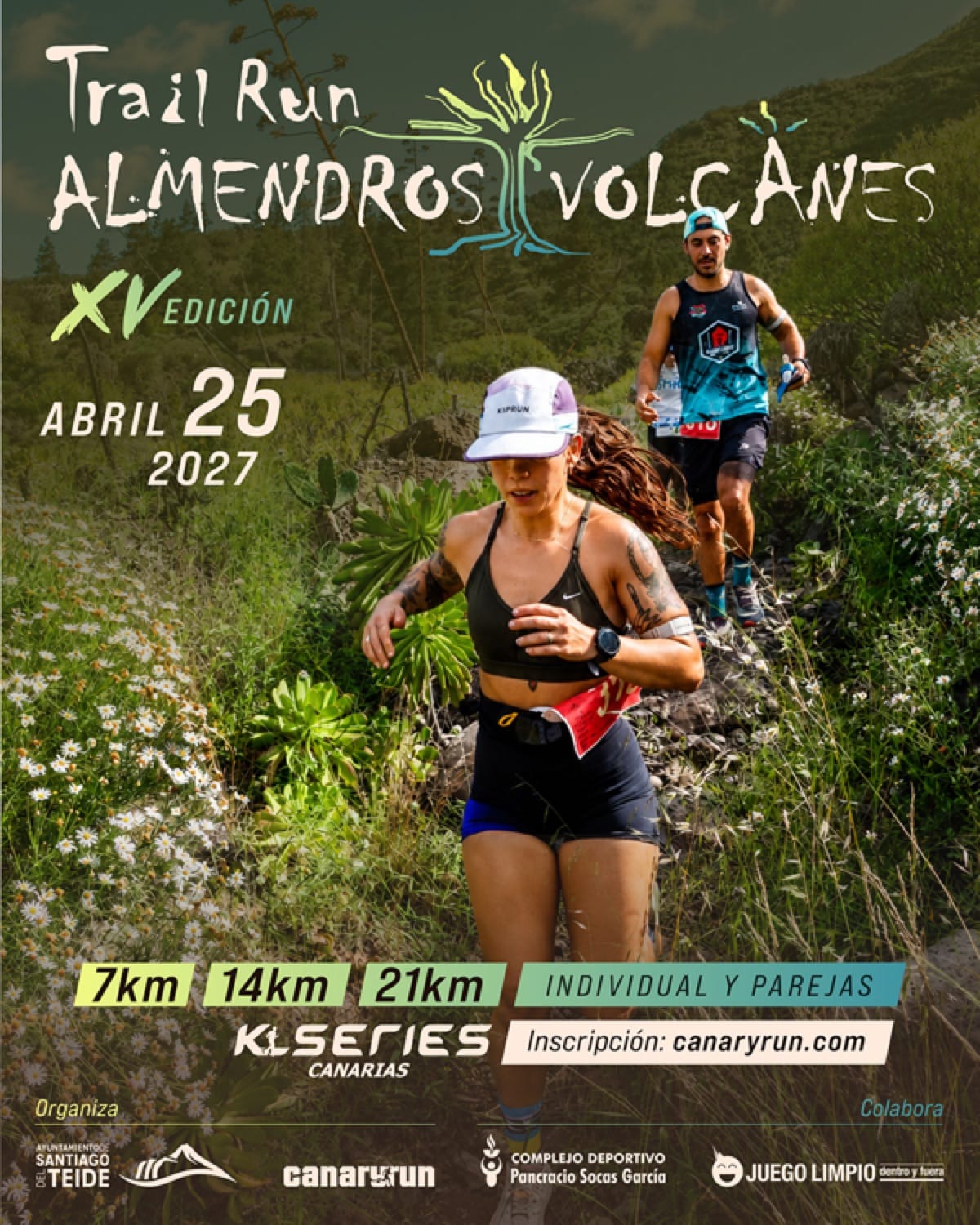
Trail Almendros y Volcanes
Trail Almendros y Volcanes 2027: Trail 21K, Short trail 14K and Short trail 7K in Santiago del Teide (Santa Cruz de Tenerife), 25 April
Read more →
Xtrail Series Run Òrrius
21K, 15K and 10K through the Serralada del Litoral from Òrrius (Barcelona)
Read more →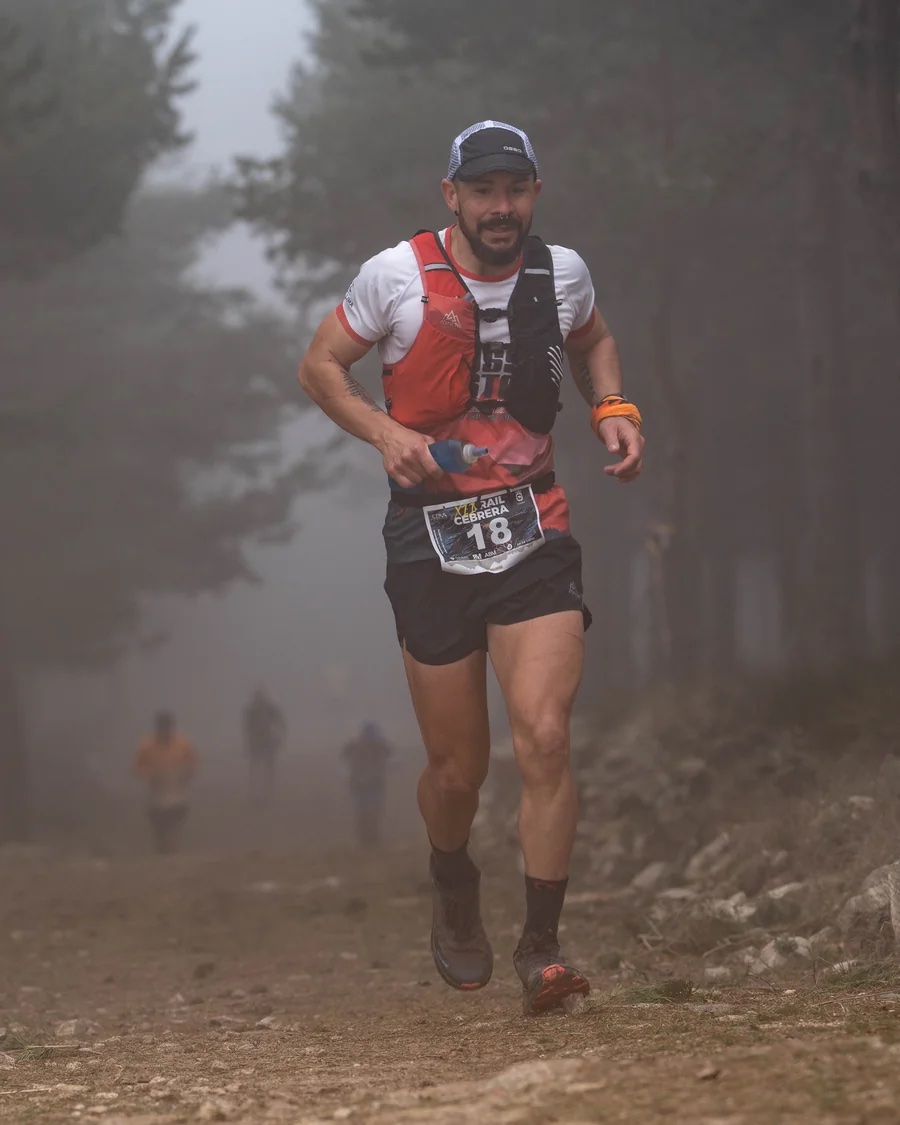
XIII Trail La Cebrera
28K long trail (1,400 m D+), 14K short trail and 6K Cross on the La Cebrera trails in El Barraco
Read more →
Pego Trail
Pego Trail 2027: Trail 20K in Pego (Alicante), 21 March
Read more →