Trail running nutrition & hydration estimator
Estimate your hydration, carbohydrate and electrolyte needs for your next trail race, based on published scientific guidelines.
Orientative estimator — not a personalized plan
This tool shows general ranges based on published scientific guidelines (ACSM, ISSN, IOC). It does not constitute medical or nutritional advice.
We recommend consulting a sports nutrition professional for a personalized plan adapted to your individual needs.
Quick reference (published guidelines)
Carbohydrates per hour (ISSN 2017)
- Events < 3 h: 30–60 g/h
- Events > 3 h (ultra): 60–90 g/h
Hydration per hour (ACSM 2007)
- < 15 °C: 400–500 ml/h
- 15–25 °C: 500–700 ml/h
- > 25 °C: 700–800 ml/h
Orientative estimation based on ACSM/ISSN
Total calories
kcal/h
Total water
ml/h
Carbs/h
Sodium/h
Your kit for this race
The exact products to cover what you just calculated. We never show a price — check it on Amazon.
See all alternatives →Calories
Hydration
Nutrition
Orientative product equivalence
Based on typical carbohydrate content per product (gel ~22 g, bar ~40 g)
Orientative hourly plan
Based on general recommendations from ISSN and ACSM. Individual needs may vary.
| Hour | Water | Carbs | Sodium | Example |
|---|
Pre-race hydration (ACSM)
The ACSM recommends 5-10 ml/kg of body weight, 2-4 hours before the start.
Recommended nutrition products
The most popular gels, bars and electrolytes used in trail running and ultra races.
Energy gels

Maurten
Maurten Gel 100
Gel de hidrogel con 25g de carbohidratos. La tecnología de hidrogel encapsula los carbohidratos para una absorción sin molestias gástricas. Sabor neutro, sin edulcorantes artificiales. Usado por corredores de élite en maratón y ultra.

GU
GU Energy Gel Original
Gel energético con 100 calorías y 21g de carbohidratos por sobre. Mezcla de maltodextrina y fructosa para absorción óptima. Incluye aminoácidos y electrolitos. El gel más usado en ultratrails de todo el mundo.

Santa Madre
Santa Madre Unusual Fuel 100CHO Con Cafeína
Combustible líquido de alta densidad con 100g de carbohidratos en ratio 1:1 glucosa:fructosa y cafeína, en formato de 106g. Pensado para ultras de intensidad alta y estrategias de carbohidratos por hora exigentes, con sabor limón. Alternativa española al Maurten Gel 160 para quien busca máxima densidad energética en un solo formato.

Santa Madre
Santa Madre Unusual Gel 45CHO Off Caf
Gel energético español de textura líquida (no gelatinosa) con 45g de carbohidratos en ratio 1:1 glucosa:fructosa, pensado para estrategias de 90g+ de carbohidratos por hora. Sin cafeína, sabor neutro y fresco. Alternativa nacional a los geles de alta densidad de carbohidratos tipo Maurten 160.
Energy bars

Clif Bar
Clif Bar Original Energy Bar
Barrita energética con 40g de carbohidratos y 10g de proteína. Ingredientes orgánicos y sabores naturales. Textura densa, ideal para avituallamientos o secciones tranquilas. Una de las barritas más populares en trail running.

PowerBar
PowerBar Energize Original
Barrita energética con 45g de carbohidratos por unidad. Mezcla de carbohidratos de absorción rápida y lenta para energía sostenida. Textura masticable, ideal para secciones de subida donde puedes comer con calma.
Electrolytes & isotonic drinks
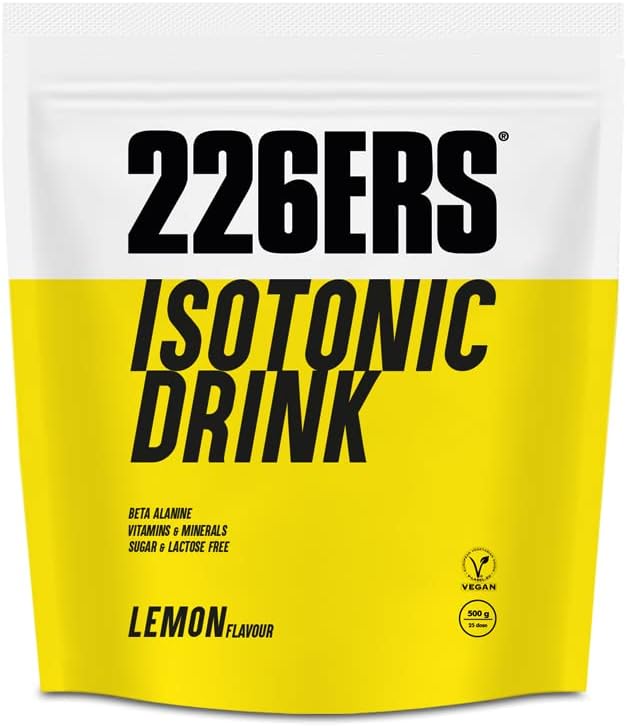
226ERS
226ERS Isotonic Drink
Bebida isotónica en polvo de la marca española 226ERS. Aporta carbohidratos, electrolitos y minerales para mantener la hidratación durante el ejercicio. Fórmula con amilopectina para absorción rápida sin molestias digestivas.

Victory Endurance
Victory Endurance Total Recovery
Preparado en polvo para bebida de recuperación post-entreno con carbohidratos, electrolitos y proteína en ratio BCAA 2:1:1. Incluye 12 vitaminas y 9 minerales para acelerar la recuperación muscular tras un trail largo. Formato de 1250 g, sabor sandía.

226ERS
226ERS Sub9 Pro Salts Electrolytes
The caffeinated version of Sub9 Salts: 250 mg of sodium and 40 mg of caffeine per capsule, plus potassium, magnesium and ginger. Made for the final stretch of an ultra, when you need to replace salts and get a lift without opening another caffeine gel.

226ERS
226ERS Sub9 Salts Electrolytes
Mineral salt capsules with 250 mg of sodium each, plus potassium, magnesium and ginger extract for better digestive tolerance. The highest sodium per capsule from Spain's benchmark endurance brand. Zero calories: you replace salts without touching your gel plan.
Want a full comparison before you buy?
We've tested and compared the best options for the two needs this calculator sizes:
Scientific sources
- ACSM Position Stand — Exercise and Fluid Replacement (2007).Medicine & Science in Sports & Exercise, 39(2), 377-390.PubMed
- ISSN Position Stand — Nutrient Timing (2017).Journal of the International Society of Sports Nutrition, 14:33.PubMed
- ACSM/AND/DC Joint Position — Nutrition and Athletic Performance (2016).Medicine & Science in Sports & Exercise, 48(3), 543-568.PubMed
Frequently asked questions
What are the calculations in this estimator based on?
All ranges shown come from published scientific guidelines by reference bodies: the ACSM (American College of Sports Medicine) for hydration and electrolytes (Position Stand 2007), the ISSN (International Society of Sports Nutrition) for carbohydrates during exercise (Position Stand 2017), and the joint ACSM/AND/DC position on nutrition and athletic performance (2016) for caloric expenditure.
How many gels do I need for a trail race?
According to ISSN guidelines, 30-60 g of carbohydrates per hour is recommended for events under 3 hours, and 60-90 g/hour for ultras over 3 hours. A typical gel provides about 20-25 g of carbohydrates, so you would roughly need 1-3 gels per hour depending on duration. This estimator calculates the specific range for your race.
How much water should I drink during a mountain race?
ACSM guidelines recommend a range of 400-800 ml/hour during exercise, varying by temperature: less in cold conditions (<15 °C) and more in heat (>25 °C). The exact rate depends on your individual sweat rate. This estimator uses the general ACSM ranges adjusted by temperature.
What are electrolytes and why are they important?
Electrolytes (mainly sodium) are lost through sweat. The ACSM recommends replenishing 300-600 mg of sodium per hour in events over 2 hours to reduce the risk of dehydration and hyponatremia (low blood sodium). This can be achieved with salt tablets, isotonic drinks, or gels with electrolytes.
Is this estimator the same as a personalized nutrition plan?
No. This estimator shows orientative ranges based on general scientific guidelines. A personalized nutrition plan, developed by a sports dietitian-nutritionist, takes into account your history, body composition, individual sweat rate, intolerances, and specific goals. We recommend consulting a professional for a plan adapted to your needs.
How should I hydrate before the race?
ACSM guidelines recommend consuming 5-10 ml per kg of body weight in the 2-4 hours before exercise. For example, for a 70 kg person, this means 350-700 ml of fluid. The goal is to start the race well hydrated without overloading the stomach.
Why are ranges shown instead of exact values?
Because hydration and nutrition needs vary enormously between individuals. Factors such as individual sweat rate, gastric tolerance, heat acclimatization, altitude, and fitness level make a single value imprecise. The ranges from scientific guidelines reflect this variability and are more honest and useful.
How the nutrition estimator works
This estimator uses published scientific guidelines to calculate orientative ranges for your nutrition and hydration needs during trail running:
- Caloric expenditure: estimated using MET values (Metabolic Equivalent of Task) for trail running, multiplied by your body weight and duration. The formula comes from the ACSM/AND/DC joint position (2016).
- Carbohydrates: the ISSN (2017) recommends 30-60 g/hour for events under 3 hours and 60-90 g/hour for longer events. We show the equivalent in gels and bars.
- Hydration: the ACSM (2007) recommends 400-800 ml/hour, adjusted by ambient temperature. The goal is to prevent excessive dehydration (>2% body weight loss).
- Electrolytes: for events over 2 hours, the ACSM recommends 300-600 mg of sodium per hour to reduce the risk of hyponatremia.
All results are shown as min-max ranges because individual needs vary significantly. Factors like your sweat rate, gastric tolerance, altitude, and fitness level all influence your actual requirements. For a personalized plan, consult a sports nutrition professional.