Trail running pace calculator
Convert between pace, time and distance. Analyze your trail pace by section and generate a split table for your next race.
Pace (min/km) and speed (km/h) are inverses of each other: one is calculated from the other with the formula km/h = 60 ÷ min/km. For example, a pace of 5:00 /km equals a speed of 12 km/h. Use the quick converter below or check the reference table with the most common values.
Typical trail running paces
Average pace by level
- Beginner: 9:00–14:00 /km
- Intermediate: 7:00–11:00 /km
- Advanced: 6:00–9:00 /km
- Elite: 5:00–7:00 /km
Road vs trail (same effort)
- 5:00 /km road ≈ 7:00–9:00 /km trail
- 6:00 /km road ≈ 8:00–11:00 /km trail
- 7:00 /km road ≈ 9:00–13:00 /km trail
*Depends on elevation and terrain
Pace (min/km) to speed (km/h) conversion table
Reference values from 3:00 to 12:00 min/km, every 15 seconds, with their km/h equivalent.
| Pace (min/km) | Speed (km/h) | Speed (mph) |
|---|---|---|
| 3:00 /km | 20.0 km/h | 12.4 mph |
| 3:15 /km | 18.5 km/h | 11.5 mph |
| 3:30 /km | 17.1 km/h | 10.7 mph |
| 3:45 /km | 16.0 km/h | 9.9 mph |
| 4:00 /km | 15.0 km/h | 9.3 mph |
| 4:15 /km | 14.1 km/h | 8.8 mph |
| 4:30 /km | 13.3 km/h | 8.3 mph |
| 4:45 /km | 12.6 km/h | 7.8 mph |
| 5:00 /km | 12.0 km/h | 7.5 mph |
| 5:15 /km | 11.4 km/h | 7.1 mph |
| 5:30 /km | 10.9 km/h | 6.8 mph |
| 5:45 /km | 10.4 km/h | 6.5 mph |
| 6:00 /km | 10.0 km/h | 6.2 mph |
| 6:15 /km | 9.6 km/h | 6.0 mph |
| 6:30 /km | 9.2 km/h | 5.7 mph |
| 6:45 /km | 8.9 km/h | 5.5 mph |
| 7:00 /km | 8.6 km/h | 5.3 mph |
| 7:15 /km | 8.3 km/h | 5.1 mph |
| 7:30 /km | 8.0 km/h | 5.0 mph |
| 7:45 /km | 7.7 km/h | 4.8 mph |
| 8:00 /km | 7.5 km/h | 4.7 mph |
| 8:15 /km | 7.3 km/h | 4.5 mph |
| 8:30 /km | 7.1 km/h | 4.4 mph |
| 8:45 /km | 6.9 km/h | 4.3 mph |
| 9:00 /km | 6.7 km/h | 4.1 mph |
| 9:15 /km | 6.5 km/h | 4.0 mph |
| 9:30 /km | 6.3 km/h | 3.9 mph |
| 9:45 /km | 6.2 km/h | 3.8 mph |
| 10:00 /km | 6.0 km/h | 3.7 mph |
| 10:15 /km | 5.9 km/h | 3.6 mph |
| 10:30 /km | 5.7 km/h | 3.6 mph |
| 10:45 /km | 5.6 km/h | 3.5 mph |
| 11:00 /km | 5.5 km/h | 3.4 mph |
| 11:15 /km | 5.3 km/h | 3.3 mph |
| 11:30 /km | 5.2 km/h | 3.2 mph |
| 11:45 /km | 5.1 km/h | 3.2 mph |
| 12:00 /km | 5.0 km/h | 3.1 mph |
Pace to speed converter (min/km, km/h, min/mile)
Fill in any 2 fields and we'll calculate the 3rd.
Trail pace analyzer
Average trail pace
Flat pace
Uphill pace
Downhill pace
Road equivalent
Summary
Effort-km
Climb rate
Descent rate
Total time
Split table generator
Enter your target distance and time to get a kilometer-by-kilometer pace table.
Your split table
| Km | Pace | Split | Cumulative |
|---|
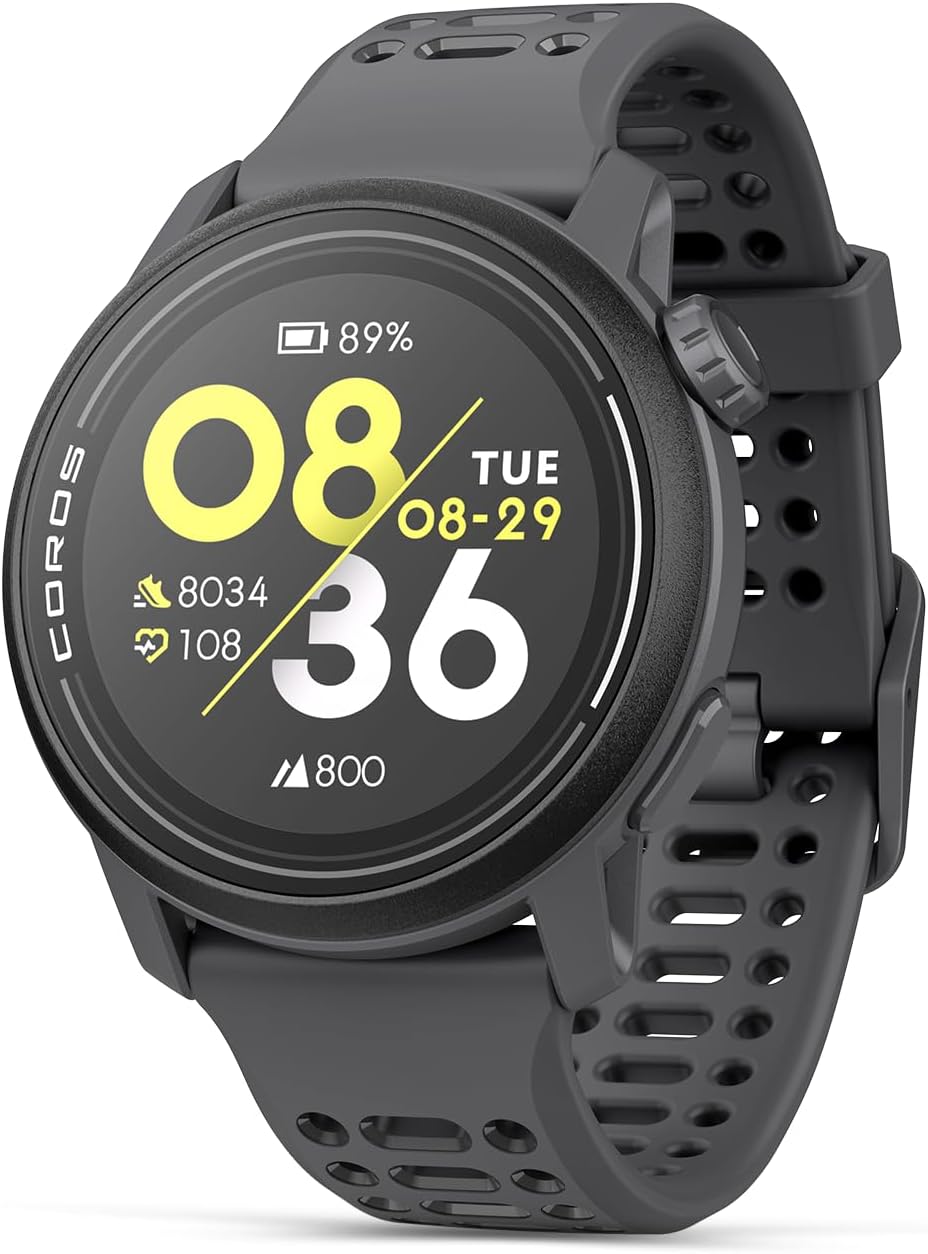
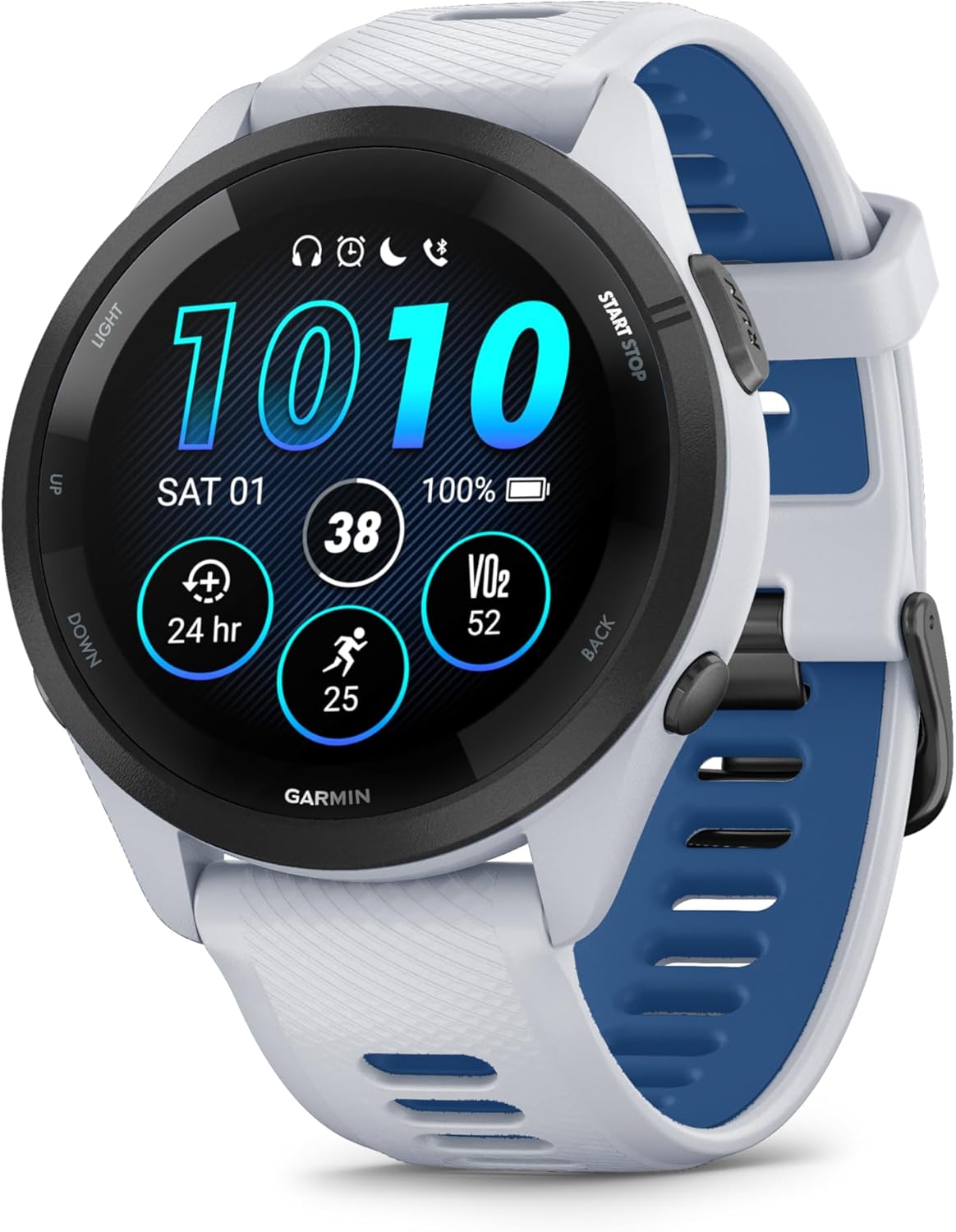
Improve your pace with the right gear
GPS watch, shoes and poles that make the difference
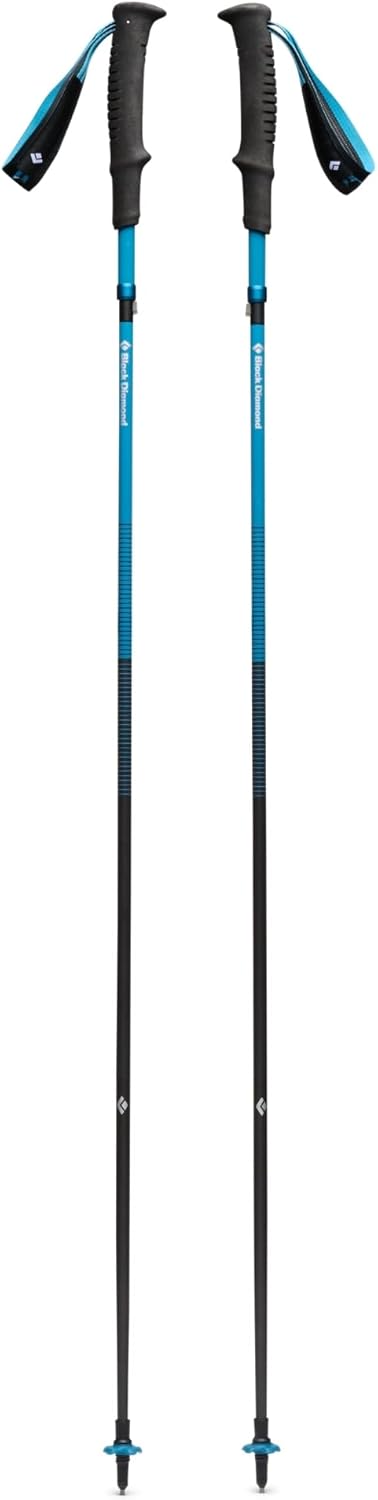
Black Diamond
Black Diamond Distance Carbon Z
Ultralight carbon Z-pole foldable trekking poles. 137 g per pole in 110 cm length, 33 cm folded. EVA grip and adjustable strap. The trail running reference.
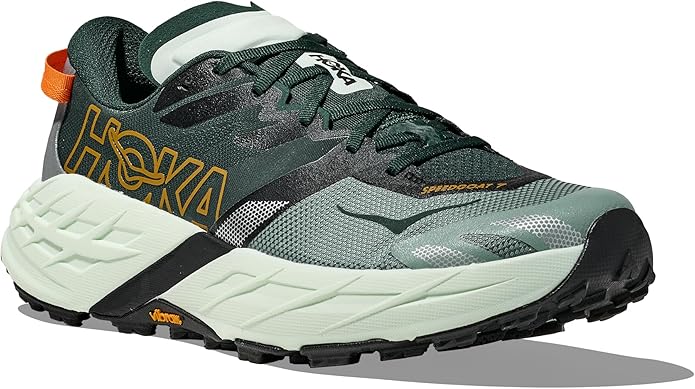
Hoka
Hoka Speedgoat 7
The best-selling trail shoe in the US and an absolute ultra-trail classic. Max Hoka cushioning, a Vibram Megagrip outsole with 5 mm lugs for grip in mud and technical terrain, and a snug Matryx upper. Built to eat up kilometres without punishing your legs in long races.
Altra
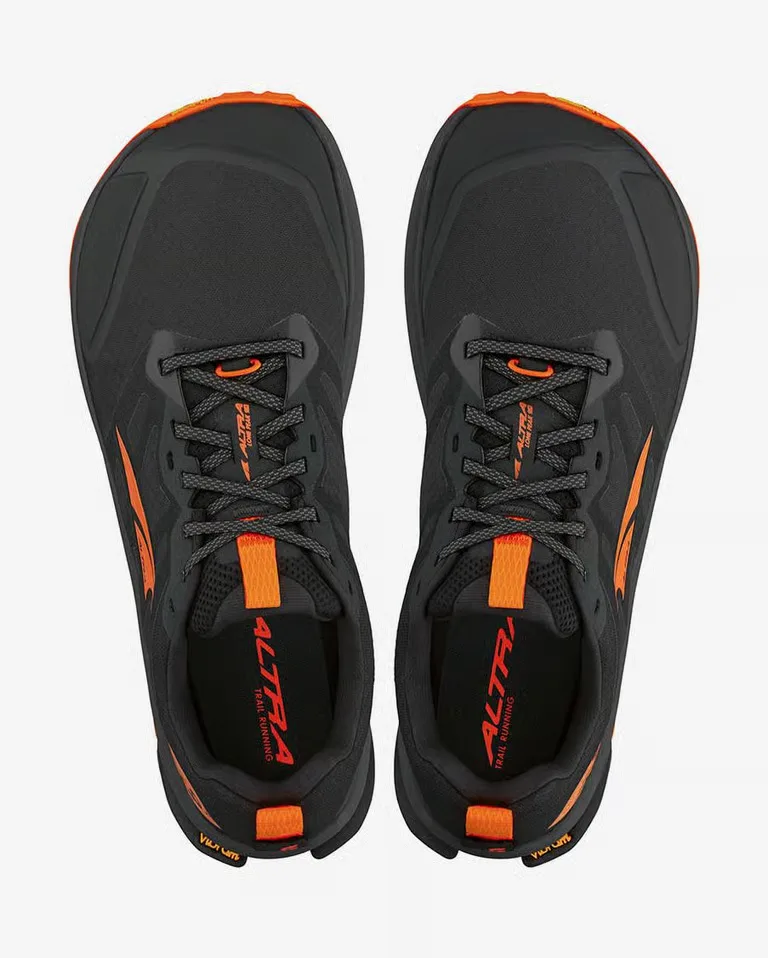
Altra Lone Peak 9
Trail running shoe with zero drop and wide FootShape toe box that allows natural toe splay. 25 mm stack with EGO foam for balanced cushioning without losing ground contact. MaxTrac outsole with 3.5 mm lugs, ideal for non-technical trails, forest tracks and long-distance paths.
New Balance
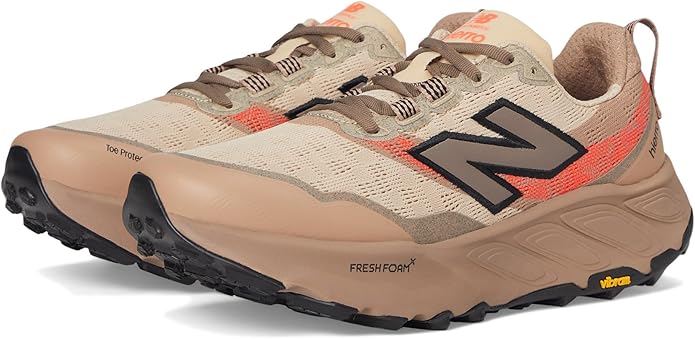
New Balance Fresh Foam X Hierro v9
The model breaking into Spain's best-seller charts. Fresh Foam X midsole with a solid balance between cushioning and ground feel, a Vibram Megagrip outsole, and a comfortable last suited to wide feet. A reliable all-rounder for training runs and mountain races of any distance.
Some links are affiliate links. If you buy through them, we earn a commission at no extra cost to you.
Continue preparing your race...
Road vs trail pace comparison
Reference table showing approximate pace equivalences between road and trail running for different levels. Trail paces assume moderate elevation (~50 m D+ per km).
| Level | Road pace | Trail pace* | Factor |
|---|---|---|---|
| Beginner | 6:30–7:30 /km | 9:00–14:00 /km | ×1.4–1.9 |
| Intermediate | 5:30–6:30 /km | 7:00–11:00 /km | ×1.3–1.7 |
| Advanced | 4:30–5:30 /km | 6:00–9:00 /km | ×1.3–1.6 |
| Elite | 3:30–4:30 /km | 5:00–7:00 /km | ×1.3–1.6 |
*Trail pace varies significantly with elevation, terrain and distance. These are approximate values for races with moderate technical difficulty.
Frequently asked questions
What is a normal pace in trail running?
It depends heavily on elevation and terrain. As a general reference: beginners run 9-14 min/km, intermediate runners 7-11 min/km, advanced 6-9 min/km and elite 5-7 min/km. On flat terrain these paces are faster; with heavy elevation gain, much slower. Average pace on a trail with 2000 m elevation gain will always be slower than a road race of the same distance.
Why is my trail pace so much slower than on road?
Three main factors: elevation (climbing at 500 m/h equals about 22 min/km), terrain (rocks, roots and technical trails slow you 5-15%) and accumulated fatigue in ultras. That's why the concept of 'effort-km' is used: 1 km with 100 m of climbing equals 2 km on flat. A 42 km race with 3000 m D+ equals about 72 effort-km.
How do I calculate my uphill pace?
The most practical way is to use vertical speed (meters of elevation per hour). If you climb at 550 m/h and the average gradient is 20%, your horizontal speed is about 2.75 km/h, which equals ~22 min/km. Beginners climb at 350-450 m/h, intermediate at 500-600 m/h, advanced at 700-800 m/h and elite at 900-1100 m/h.
What are negative splits in trail running?
It means running the second half faster than the first. In trail running this is unusual due to fatigue, but a good strategy is to start conservatively to save energy. The split table in this calculator helps you plan sustainable paces from the start.
How do I interpret pace in a race with heavy elevation?
Average pace (min/km) is misleading in trail. It's more useful to look at vertical speed (m/h) for climbs and effort-km to compare races. A 7:00/km on a race with 2000 m elevation gain is a much bigger effort than the same pace on flat ground.
How do I use the split table during a race?
Print it or save it to your phone. Check at each kilometer or aid station if you're ahead or behind the plan. Allow a 3-5% margin for the unexpected. The elevation-adjusted paces help you go slower uphill and recover downhill without overdoing it.
What is the difference between pace and speed?
Pace (min/km) is the inverse of speed (km/h). Trail runners use min/km because it's more intuitive for planning: 'I need to run 7:30/km to finish in 5 hours'. Speed is used more in cycling and flat running. Formula: pace = 60 / speed.
How much slower am I on technical terrain?
As a reference: smooth trail +0%, technical (rocks, roots) +5%, mountain (uneven, exposed sections) +10%, skyrunning (ridges, scrambling) +15%. On very technical sections like the Aizkorri ridge at Zegama, the penalty can reach 20-30%.
How the pace calculator works
This calculator offers three tools to help you plan your trail running pace:
- Quick converter: converts between distance, time and pace. Enter any two values and get the third instantly. Useful for quick calculations before or after a race.
- Trail pace analyzer: breaks down your expected pace by section type (flat, uphill, downhill) considering elevation, terrain and your level. It also shows your road-equivalent pace — what flat road pace represents the same effort.
- Split table: generates a kilometer-by-kilometer pace table based on your target time. Print it or copy it for race day to track your progress at each kilometer.
The trail pace analyzer uses a three-component model: flat pace (based on your base running speed), climb pace (derived from vertical speed in m/h) and descent pace. Correction factors for terrain type and ultra fatigue are applied on top.
The road equivalent uses effort-km (distance + D+/100 + D-/300) to express your trail effort as an equivalent flat road pace. This helps you compare your trail performance with your road running times.
Gear up for your next race
Now you know your pace — make sure your kit is up to it. Our buying guides, tested on the trails: