The 6 Best Trail Running Socks 2026
 (se abre en una pestaña nueva)
 (se abre en una pestaña nueva)
 (se abre en una pestaña nueva)
 (se abre en una pestaña nueva)
How we choose
We compare every model on verified technical specs (weight, materials, price), user reviews and our own experience running and testing gear in races from 21K to 100K+. We update this guide when prices change or new models launch. Some links are affiliate links: if you buy through them, TrailRunTemple earns a commission at no extra cost to you and with no influence on the selection.
Our picks by use case
- #1Best Overall: Compressport Compressport Pro Racing Socks V3.0 TrailView on Amazon →(se abre en una pestaña nueva)
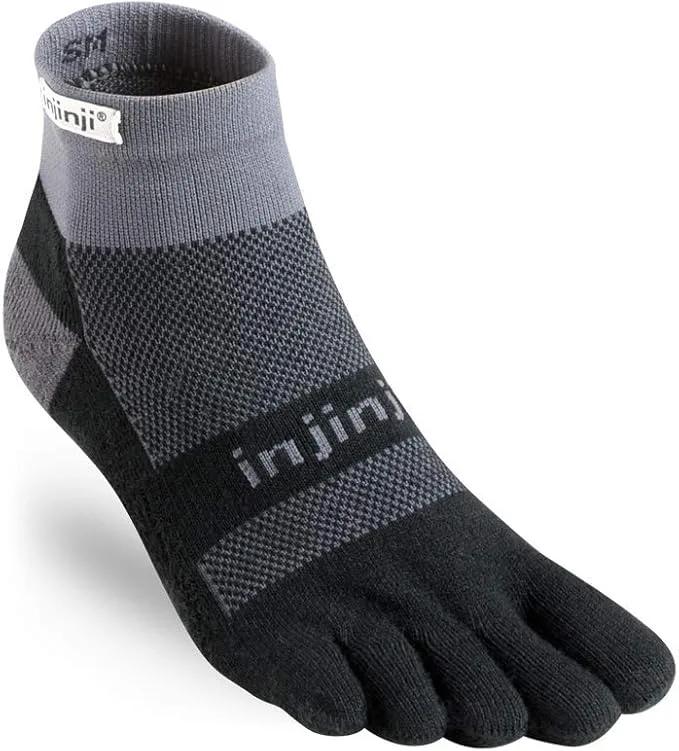
- #2Best for Interdigital Blisters: Injinji Injinji Trail Midweight CrewView on Amazon →(se abre en una pestaña nueva)
- #3Best Value Toe Socks: OrrinSports OrrinSports Calcetines de Dedos TrailView on Amazon →(se abre en una pestaña nueva)
- #4Best for Racing: Lurbel Lurbel Desafío FourView on Amazon →(se abre en una pestaña nueva)
- #5Best for Cold and Altitude: Icebreaker Icebreaker Merino Hike+ Light CrewView on Amazon →(se abre en una pestaña nueva)
- #6Best for Recovery: Compressport Compressport Full Socks RecoveryView on Amazon →(se abre en una pestaña nueva)
All products in this guide
Compressport
Compressport Pro Racing Socks V3.0 Trail
Non-toe trail sock, Compressport's all-rounder reference. Reinforced instep fabric and ankle-specific mesh for stability on rocky terrain, cushioned sole with 3D dots that boost circulation and absorb impact, plus 360° arch support to prevent blisters and irritation over long distances.
Injinji
Injinji Trail Midweight Crew
Five-toe socks designed for trail running. Crew height protects ankles from vegetation and rock abrasion. CoolMax quick-drying fabric with heel and toe reinforcements. The benchmark in toe socks for pairing with wide toe box and zero-drop shoes.
OrrinSports
OrrinSports Calcetines de Dedos Trail
Five-toe socks for trail running. Eliminate toe-on-toe rubbing, the main cause of interdigital blisters. Breathable quick-drying fabric with heel and toe reinforcements. Ideal pack for training and long races.
Lurbel
Lurbel Desafío Four
Ankle-length competition socks with Regenactiv fabric and breathable mesh. Heel and toe reinforcements, flat seams and wrinkle-free fit. Spanish brand designed for trail running. Ultralight and quick-drying.

Icebreaker
Icebreaker Merino Hike+ Light Crew
Mid-crew sock in a merino wool (61%), nylon (37%) and lycra (2%) blend. Merino wool regulates temperature and controls odour on night sections, high-altitude routes or multi-day races, while the anatomical padded design at ankle, Achilles and instep gives support without sacrificing breathability. Reinforced heel and toe with seamless closure.

Compressport
Compressport Full Socks Recovery
Full-length compression socks (foot to knee) designed specifically for post-exercise recovery. Graduated compression that improves venous return and reduces swelling. Breathable fabric with infrared fibres that improve microcirculation.
Socks are the cheapest piece of gear in a trail runner’s kit, and yet the number one cause of a race turning into a nightmare: blisters don’t give any warning until they already hurt, and by then there are still miles to go. Unlike shoes, there’s no single “best sock” here — it depends on whether your problem is toe-on-toe friction, the cold on a night section, or recovery the day after an ultra. This comparison breaks down the 6 best trail running socks: two five-toe models, a lightweight racing sock, a merino wool option for cold and altitude, an all-round cushioned pick, and a compression sock for recovery.
Comparison table
| Sock | Height | Material | Best for | Buy |
|---|---|---|---|---|
| Compressport Pro Racing V3.0 Trail | Ankle, no toe separation | Cushioned synthetic | All-rounder, stability on rock | Amazon → |
| Injinji Trail Midweight Crew | Crew, 5 toes | CoolMax | Preventing interdigital blisters | Amazon → |
| OrrinSports Toe Socks Trail | Ankle, 5 toes | Breathable synthetic | Toe separation on a budget | Amazon → |
| Lurbel Desafío Four | Ankle, no toe separation | Regenactiv + mesh | Racing, Spanish brand | Amazon → |
| Icebreaker Merino Hike+ Light Crew | Mid-crew, no toe separation | 61% merino + nylon + lycra | Cold, altitude, multi-day | Amazon → |
| Compressport Full Socks Recovery | Knee-high, compression | Synthetic + infrared fibre | Post-race recovery | Amazon → |
All available on Amazon with fast shipping. Links go to the current live price.
How to choose trail running socks: 5 deciding factors
1. Toe socks or regular socks
Interdigital blisters (between the toes) are caused by one toe rubbing against another with every stride, made worse by moisture and long distances. A five-toe sock removes that friction at the source by physically separating each toe, like a glove. The trade-off is an adjustment period and a better pairing with wide toe-box shoes (Altra, Topo). If that specific friction has never been your problem, a well-fitted regular sock handles the rest of blister prevention just as well.
2. Height
Ankle-length for warm weather and short races where you want minimal weight. Crew or mid-crew to protect the ankle from rocks and vegetation on technical singletrack. Knee-high only makes sense on compression socks for recovery, not for running — at that height a regular sock just adds heat and friction without any benefit.
3. Material: synthetic vs merino
Synthetic (polyester, CoolMax, nylon) dries faster after a river or puddle crossing, which matters in races with fords. Merino wool regulates temperature better in the cold and controls odour naturally, which shows on multi-day races or night sections at altitude where the temperature drops several degrees. Its downside is a slower drying time.
4. Seams and reinforcement
Toe seams are a bigger silent cause of blisters than people think: a poorly finished closure rubs the same spot for hours. Always look for “seamless” or “flat seam” in the description, plus specific heel and toe reinforcement, the two highest-friction, highest-impact zones.
5. Compression: performance or recovery
A graduated compression sock won’t make you run faster, but it does improve venous return and reduce that heavy-legs feeling in the hours after a long race. If you’re after in-race performance, prioritise cushioning and stability; if you’re after better recovery the day after an ultra, that’s where high compression (knee-high) makes the difference.
Individual review of the 6 socks
1. Compressport Pro Racing Socks V3.0 Trail — Best Overall
The Compressport Pro Racing Socks V3.0 Trail is the all-rounder pick for anyone who doesn’t want to deal with separated toes. Its reinforced instep fabric and ankle-specific mesh give real stability on rocky terrain, while the 3D-dot sole absorbs impact and boosts circulation. The 360° arch support is what stands out most over long distances, keeping the sock from twisting or folding inside the shoe.
Best for: the runner who wants a single sock for both training and racing, with no specific niche. Its rating (3.9) is the lowest in the comparison, but it corresponds to a very high-volume model with mixed opinions on sizing — check Compressport’s sizing chart carefully before buying.
See Compressport Pro Racing V3.0 on Amazon →2. Injinji Trail Midweight Crew — Best for Interdigital Blisters
The Injinji Trail Midweight Crew is the go-to reference for five-toe trail socks. Its quick-drying CoolMax fabric and heel/toe reinforcements make it durable, and the crew height protects the ankle from rock and vegetation abrasion on technical trails. With a 4.4 rating, it’s the best-reviewed model in the whole comparison.
Best for: runners who suffer recurring blisters between their toes, especially paired with wide toe-box shoes like Altra or Topo. It requires an adjustment period to the separated-toe feel — try it in training before racing in it for the first time.
See Injinji Trail Midweight Crew on Amazon →3. OrrinSports Toe Socks Trail — Best Value Toe Socks
The OrrinSports Toe Socks Trail tackles the same problem as the Injinji — toe-on-toe friction — with a more affordable approach. Same five-toe principle and quick-drying breathable fabric, with a solid 4.2 rating despite being a lesser-known brand.
Best for: anyone who wants to test whether toe socks work for them before investing in the Injinji reference model, or as a spare pair on multi-day races without doubling the spend. It’s unisex, suitable for both men and women.
See OrrinSports Toe Socks Trail on Amazon →4. Lurbel Desafío Four — Best for Racing
The Lurbel Desafío Four is an ankle-height sock from a Spanish brand built for race day. Its Regenactiv fabric and breathable mesh make it ultralight and quick-drying, with flat seams and a wrinkle-free fit that avoids friction points mid-race.
Best for: racing and short or one-day events where you prioritise lightness over ankle protection. Being ankle-height, it leaves the upper ankle exposed to vegetation rub on technical trails — for that, the Compressport or Injinji crew height is the better call.
See Lurbel Desafío Four on Amazon →5. Icebreaker Merino Hike+ Light Crew — Best for Cold and Altitude
The Icebreaker Merino Hike+ Light Crew is the only merino wool option in the comparison (61%, blended with nylon and lycra). It regulates temperature naturally in cold or high-altitude sections, controls odour on multi-day races, and its anatomical design adds padding at the ankle, Achilles and instep without losing breathability. Reinforced heel and toe with a seamless closure.
Best for: ultras with night sections, high-mountain races with cold at the summit, or multi-day stage races where you won’t be able to swap socks every day. If your race includes fords or river crossings, keep in mind that wool dries slower than the Compressport or Lurbel’s synthetic fabric.
See Icebreaker Merino Hike+ on Amazon →6. Compressport Full Socks Recovery — Best for Recovery
The Compressport Full Socks Recovery isn’t a sock for running — it’s for the hours and days after a demanding race. Its graduated compression from foot to knee improves venous return and reduces swelling, and the infrared fibres support microcirculation. With a 4.4 rating, it’s just as well-reviewed as the Injinji despite being a niche product.
Best for: the day after an ultra or a race with heavy negative elevation, when legs arrive loaded. It can be worn to sleep without discomfort. It’s the priciest in the comparison (€49.90), and sizing needs to be exact for the compression to work — this isn’t a sock to run in.
See Compressport Full Socks Recovery on Amazon →Head-to-head: Compressport Pro Racing V3.0 vs Injinji Trail Midweight Crew
The two opposite approaches to blister prevention, side by side:
Compressport wins on stability and cushioning. Its 3D-dot sole and 360° arch support give more impact protection on technical terrain than the thinner Injinji.
Injinji wins on interdigital blisters. If your specific problem is toe-on-toe rubbing, no regular sock fully solves it — only physical toe separation removes it at the source.
Injinji wins on rating and brand trust. With 4.4 versus Compressport’s 3.9, and it’s the historic reference brand for toe socks in running and trail.
Compressport wins on versatility. It requires no adjustment period and doesn’t pair better or worse with any particular shoe last; it works the same with any toe box.
Head-to-head verdict: if you’ve never had blisters between your toes, the Compressport Pro Racing V3.0 gives you more all-round protection on technical terrain. If you carry interdigital blisters from race to race, switching to Injinji is usually the definitive fix, even if it takes a few weeks to adjust.
5 common mistakes when choosing trail running socks
-
Running in cotton socks. Cotton holds moisture instead of wicking it away, and wet skin for hours is the direct precursor to a blister. None of the socks in this comparison use cotton, for good reason.
-
Wearing a brand-new sock on race day. Every model has its own seams and friction zones. Always test a new sock on a long training run before trusting it for an important race.
-
Getting the size wrong. A sock that’s too big bunches up inside the shoe — the number one cause of blisters — and one that’s too small compresses the foot poorly. Always check the manufacturer’s size chart, not your shoe size.
-
Not matching thickness to distance and temperature. A thin racing sock like the Lurbel isn’t the best choice for a 100 km ultra with cold night sections; that’s where the Icebreaker Merino performs better.
-
Using compression socks to run in instead of to recover in. The Compressport Full Socks Recovery is designed for the hours after the race, not for racing in — using the wrong sock at the wrong time provides no benefit.
Frequently asked questions
Do five-toe socks prevent all blisters?
Only interdigital ones, the ones that appear between the toes from rubbing against each other. For heel or sole blisters, what makes the difference is the seam, the fit and getting the right size — not toe separation.
Merino or synthetic for trail running?
Merino if your race has cold sections, altitude, or multiple days where odour control matters. Synthetic if you prioritise quick drying after river crossings or fords, or if you mostly run in warm climates.
Do compression socks improve race performance?
Evidence for a performance boost during the race itself is limited. Where there’s a clear benefit is in recovery afterward: they improve venous return and reduce the heavy-legs feeling the following day.
How often should I change socks on a multi-day ultra?
As a general rule, change socks per stage or every 8-10 hours of effort on very long races, and always after they get completely soaked crossing a river or in heavy rain.
What sock height do I need for technical trail with vegetation?
Crew or mid-crew, like the Injinji or the Icebreaker. They protect the ankle from scrub and rock abrasion that an ankle-height model like the Lurbel leaves exposed.
Final verdict: our pick of the 6 socks
- If you want the best without overthinking it: Compressport Pro Racing V3.0 Trail
- If you suffer blisters between your toes: Injinji Trail Midweight Crew
- If you want toe separation for less: OrrinSports Toe Socks Trail
- If you want the lightest option for racing: Lurbel Desafío Four
- If your race has cold, altitude or multiple days: Icebreaker Merino Hike+ Light Crew
- If you want to recover better the day after: Compressport Full Socks Recovery
Socks are the cheapest piece of gear you own and the one you think about the least before a race. You don’t need the most expensive on this list — you need the one that solves your specific problem, whether that’s toe-on-toe rubbing, the cold on a night stage, or heavy legs the day after. If the problem is the shoe itself rather than the sock, check our best trail running shoes guide.
Other guides you might find useful
Races where you'll need this gear

Transgrancanaria
128K, 83K, 44K, and 30K crossing Gran Canaria from north to south
Read more →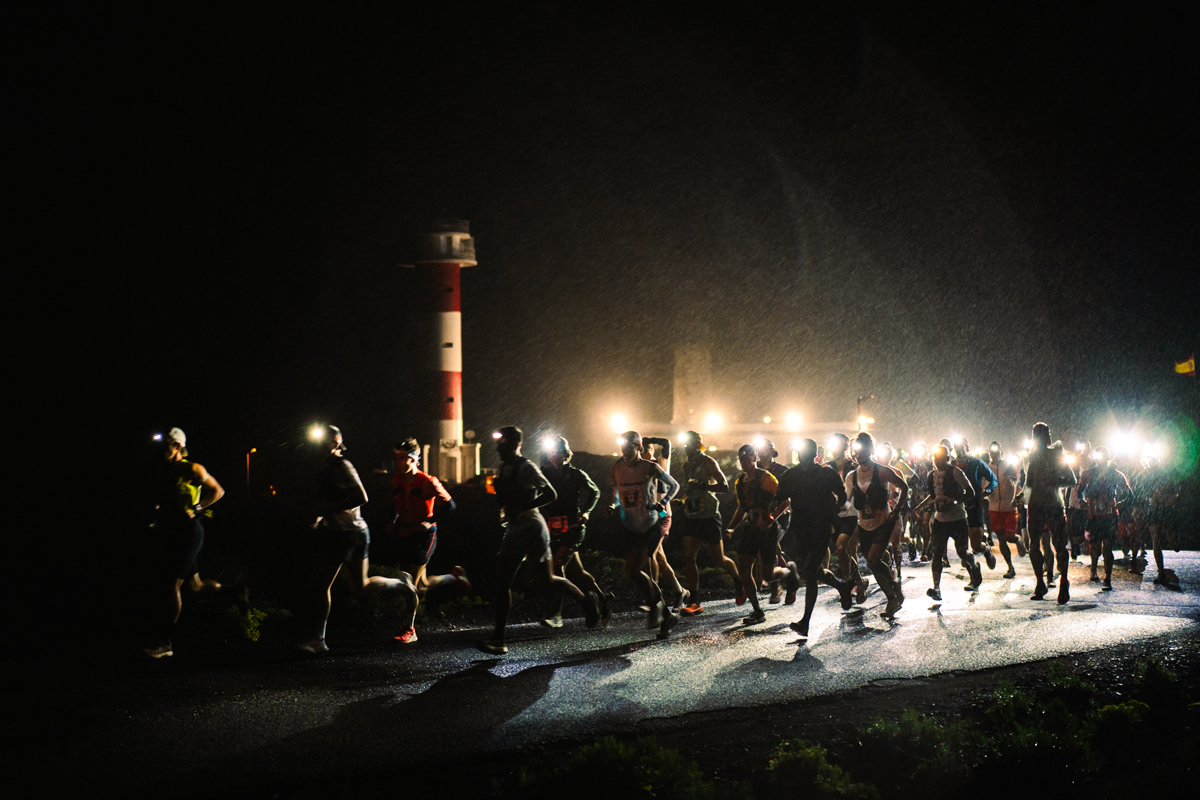
Transvulcania
73K, 43K, 25K, and VK crossing La Palma along the Ruta del Bastón
Read more →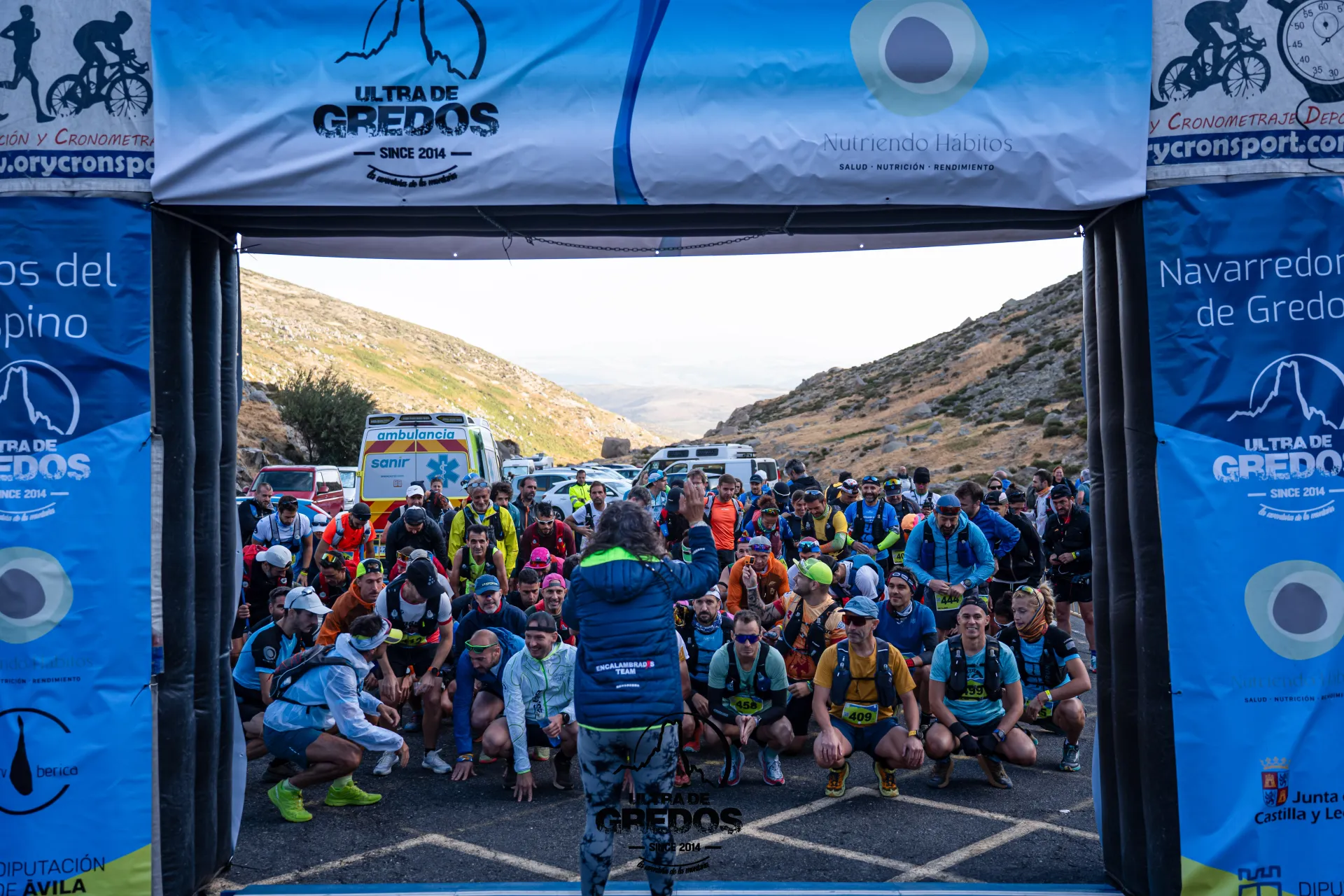
Ultra Trail Gredos
71K, 54K, 43K, 33K, 20K and 10K through the Sierra de Gredos from Hoyos del Espino — mountain trail running in the heart of Ávila
Read more →
Ultra Pirineu
100K, 54K, and 30K along the Cadí Range in the Catalan Pyrenees
Read more →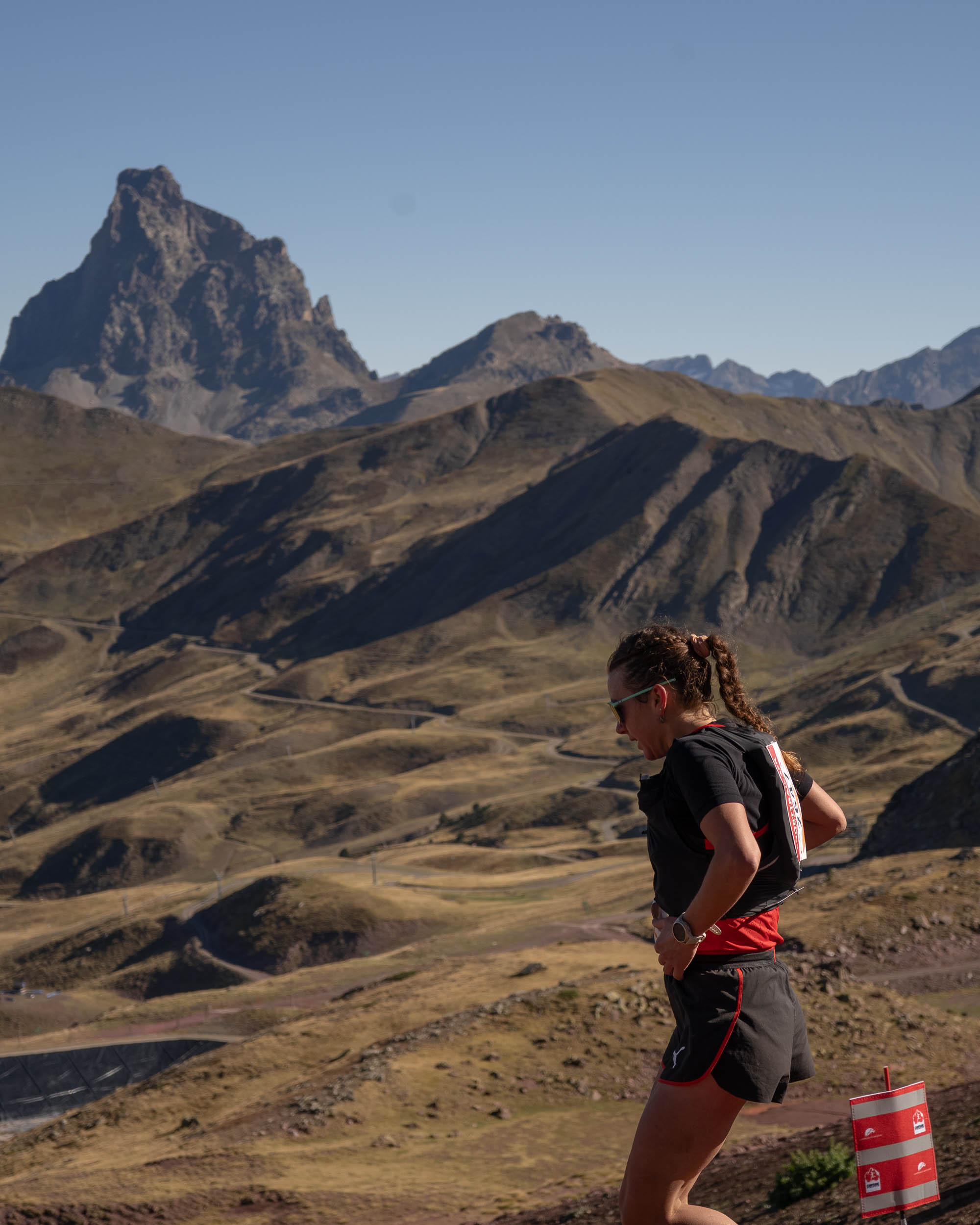
Canfranc-Canfranc
From 6K to 100K through the central Pyrenees from the iconic Canfranc International Station
Read more →