Drop Bags for Ultra Running 2026: Which Duffel to Use and What to Pack
Our picks by use case
Affiliate links: if you buy through them we earn a commission at no extra cost to you. It does not affect the ranking.
How we choose
We compare every model on verified technical specs (weight, materials, price), user reviews and our own experience running and testing gear in races from 21K to 100K+. We update this guide when prices change or new models launch. Some links are affiliate links: if you buy through them, TrailRunTemple earns a commission at no extra cost to you and with no influence on the selection.
All products in this guide
The North Face
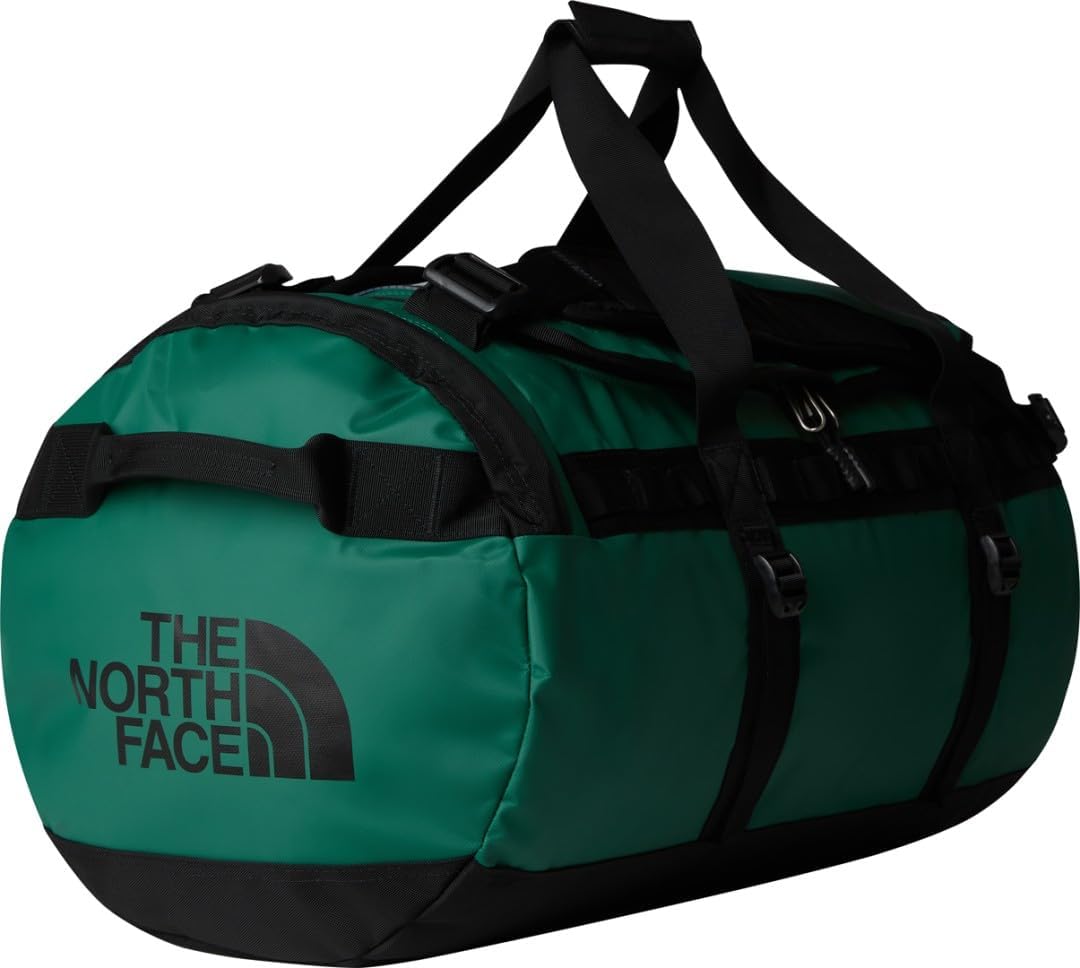
The North Face Base Camp Duffel M
Iconic, rugged travel duffel with hydrophobic TPE-coated fabric built to survive rough handling in race-organisation vans and aid stations. Reinforced wraparound haul handles and a storm flap that shields the main zipper from water and dust.

Patagonia
Patagonia Black Hole Duffel 55L
55-litre duffel made from recycled TPU-coated ripstop fabric, weather resistant. Wide-mouth opening makes it easy to organise and find drop-bag contents at an aid station without emptying it out. Convertible backpack straps for carrying it on your back.

Osprey
Osprey Transporter Duffel
Budget-friendly option among technical brands, with rugged coated fabric and taped seams. Integrated, stowable backpack straps designed for walking to the aid station without needing a vehicle. Backed by Osprey's All Mighty Guarantee.
In an ultratrail with aid stations, race organisers transport your drop bag from the start to one or more checkpoints where you can restock gear, dry clothing or food. It sounds like a minor logistical detail, but picking the wrong duffel means losing minutes digging through it in a dim tent at 3am, or finding your bag soaked because the gear van travelled through rain. Here we compare 3 duffels built to survive that treatment and explain what to pack inside.
Comparison
| Duffel | Strength | Price range | Buy |
|---|---|---|---|
| North Face Base Camp Duffel M | Extreme resistance to impact and water | Mid-high | Amazon →(opens in a new tab) |
| Patagonia Black Hole Duffel 55L | Wide mouth, fast access to contents | High | Amazon →(opens in a new tab) |
| Osprey Transporter Duffel | Backpack straps for walking it in | Mid | Amazon →(opens in a new tab) |
Prices are indicative and subject to change on Amazon.
How to choose for your situation
Races with demanding aid station logistics (mountain terrain, rain, rough handling)
If the race hauls bags up mountain tracks in vans or drops them off exposed to the weather, prioritise real physical durability. The North Face Base Camp Duffel is the industry reference for this use: hydrophobic fabric and seams built for expeditions, not hotel weekend trips.
Aid stations with little time and a crowd
When you only have a couple of minutes at the checkpoint and dozens of bags are piled up, what helps most is opening it, seeing everything at a glance, and closing it. The Patagonia Black Hole 55L has a much wider opening than a conventional duffel, so you don’t have to empty it out to find your headlamp batteries or windbreaker.
When you carry the bag to the aid station yourself
If you’re racing a multi-stage event or walking in to a checkpoint where your crew is waiting, the Osprey Transporter’s backpack straps save you from hand-carrying a duffel, and it’s more affordably priced than the other two options.
What to pack in your ultra drop bag
A drop bag isn’t a random grab bag — each checkpoint serves a different purpose depending on mileage and time of day you’ll arrive. Before sealing it, check off:
- A change of clothes matched to the time of day: if you’ll pass through that checkpoint at night or at altitude, pack a warm layer and gloves even if the start was hot. Check the forecast for the route, not the start line.
- Spare socks and shoes: switching into dry socks is the single move that prevents the most blisters in long races that cross rivers or mud.
- Specific nutrition: don’t repeat exactly what’s already in your vest. Pack something appealing and different (real food, not just gels) for when your stomach is already saturated with sweetness.
- Spare batteries for your headlamp: essential if you’ll run through the night; a headlamp dying mid-way through a technical descent is a real hazard, not just an inconvenience.
- Spare mandatory gear: emergency blanket, whistle or windbreaker if race rules require it and yours got wet or torn.
- Vaseline or anti-chafing cream: chafing that didn’t hurt at 30km becomes a serious problem past 60-70km.
- A short note with clear instructions for yourself: at that hour, that exhausted, a short pre-written list (“change socks, eat this, grab the spare headlamp”) saves minutes of indecision.
Organise contents in coloured freezer bags or stuff sacks inside the duffel — it lets you find each item without dumping the whole bag on a table shared with other runners.
The 3 in detail
1. North Face Base Camp Duffel M — Most Durable
Iconic, rugged travel duffel with hydrophobic TPE-coated fabric built to survive rough handling in race-organisation vans and aid stations. Reinforced wraparound haul handles and a storm flap that shields the main zipper from water and dust.
Pros: highly abrasion and water resistant fabric, survives cargo hold travel and rough handling; reinforced wraparound handles; instantly recognisable among dozens of bags at an aid station.
Cons: water resistant but not fully waterproof; heavier than an ultralight duffel.
View North Face Base Camp Duffel on Amazon →(opens in a new tab)2. Patagonia Black Hole Duffel 55L — Most Practical
55-litre duffel made from recycled TPU-coated ripstop fabric, weather resistant. Wide-mouth opening makes it easy to organise and find drop-bag contents at an aid station without emptying it out. Convertible backpack straps.
Pros: wide mouth for quick access to all contents; weather-resistant fabric; convertible straps let you carry it on your back.
Cons: pricier than generic alternatives; still heavier than a thin ultralight nylon duffel.
View Patagonia Black Hole Duffel 55L on Amazon →(opens in a new tab)3. Osprey Transporter Duffel — Best Value
Budget-friendly option among technical brands, with rugged coated fabric and taped seams. Integrated, stowable backpack straps designed for walking to the aid station without needing a vehicle. Backed by Osprey’s All Mighty Guarantee.
Pros: more affordable than North Face or Patagonia; stowable backpack straps for walking it in; Osprey’s lifetime All Mighty Guarantee.
Cons: water-resistant but not fully sealed zippers; bulky when empty.
View Osprey Transporter Duffel on Amazon →(opens in a new tab)FAQ
What’s the difference between a “bolsa de vida” and a drop bag?
None really: “bolsa de vida” (life bag) is the term used in Spanish-language ultrarunning, and “drop bag” is the English term for the same concept. Both refer to the bag race organisers move to a specific aid station along the course.
Does any duffel work, or do I need something race-specific?
You don’t need a “race-specific” duffel, but you do need one resistant to water and rough handling: drop bags get stacked, moved around in vans, and sometimes left outdoors for hours before you arrive.
How many litres do I need?
For a single checkpoint with a change of clothes and nutrition, 40-55 litres is usually enough. If you’re reusing the same bag for multiple checkpoints or packing spare technical footwear too, aim closer to 55-70 litres.
Final verdict
- If you prioritise maximum durability: North Face Base Camp Duffel M(opens in a new tab)
- If you prioritise fast access to contents: Patagonia Black Hole Duffel 55L(opens in a new tab)
- If you want to save money without giving up technical quality: Osprey Transporter Duffel(opens in a new tab)