Zero Drop Shoes for Kids: A Getting-Started Guide to Natural Footwear
If you run in natural or barefoot footwear and have kids, sooner or later the question comes up: does it make sense to put a child in zero drop shoes from the start? The short answer is yes, and it’s actually easier than in adults: a child hasn’t spent years wearing elevated-heel shoes that then need re-education. A child’s foot is still forming, so zero drop isn’t a transition — it’s simply letting the foot grow the way it’s meant to.
This guide isn’t a phased ladder like the one for adults. It’s what to actually look for when choosing that first shoe, without getting lost in marketing claims.
What to look for in a kids’ zero drop shoe
Zero drop, no exceptions
Drop is the height difference between the heel and the toe. Most conventional kids’ shoes have several millimetres of heel elevation, something with no biomechanical justification in a foot that hasn’t developed fixed strike patterns yet. Look for 0 mm drop, no nuances.
A wide last, not a “small kid” last
Most conventional kids’ footwear is designed with a narrow, pointed toe box, built to look good on a shelf, not for the foot. A growing foot needs room for the toes to splay sideways with every step. If, with the foot placed bare on the shoe’s sole, the toes spread past the edges, the last is too narrow.
A flexible sole, no resisted torsion
Take the shoe, fold it in half, and try to twist it like wringing a towel. If it resists, the sole is too stiff for a child’s foot. A child’s foot needs to articulate freely with every stride, just like an adult’s, but with even more give since the bones aren’t fully ossified yet.
Sizing with some room, but not too much
Here there’s a real difference from adult footwear: feet grow fast, and it’s tempting to buy a size up to extend the shoe’s useful life. Don’t go beyond half a size. With a wide-last zero drop shoe, excess room lets the foot slide inside and loses exactly the proprioception you’re looking for with this kind of footwear.
Three real options, depending on use
There’s no single “best” shoe for kids. It depends on the main use case.
Xero Prio Kids — the most versatile for everyday wear and easy trail
This is the one I’d recommend as a first closed shoe if the child will be alternating between school, playground and the occasional easy family trail outing. Zero drop, 10.5 mm sole with a 5.5 mm FeelTrue tread, and very light (from 102 g in small sizes). The closed upper gives an extra bit of protection against gravel or small stones that a sandal doesn’t offer.

Vivobarefoot Primus Sport III Kids — the most minimalist
With just a 2 mm sole and hexagonal lugs, this is the option if you want to go to the extreme of ground contact. Good for playground, pavement and very easy trail, but with barely any protection, it’s not the first choice if your child will regularly be stepping on loose rock.

Xero Z-Trail Kids — the most affordable entry point, for summer and water
This is a sandal, not a closed shoe, so it doesn’t replace the two above on technical trail. But it’s the perfect option to test whether barefoot works for your child without spending much, and it’s the best fit for the beach, a river, or any plan that involves water.

How it compares to adult natural footwear
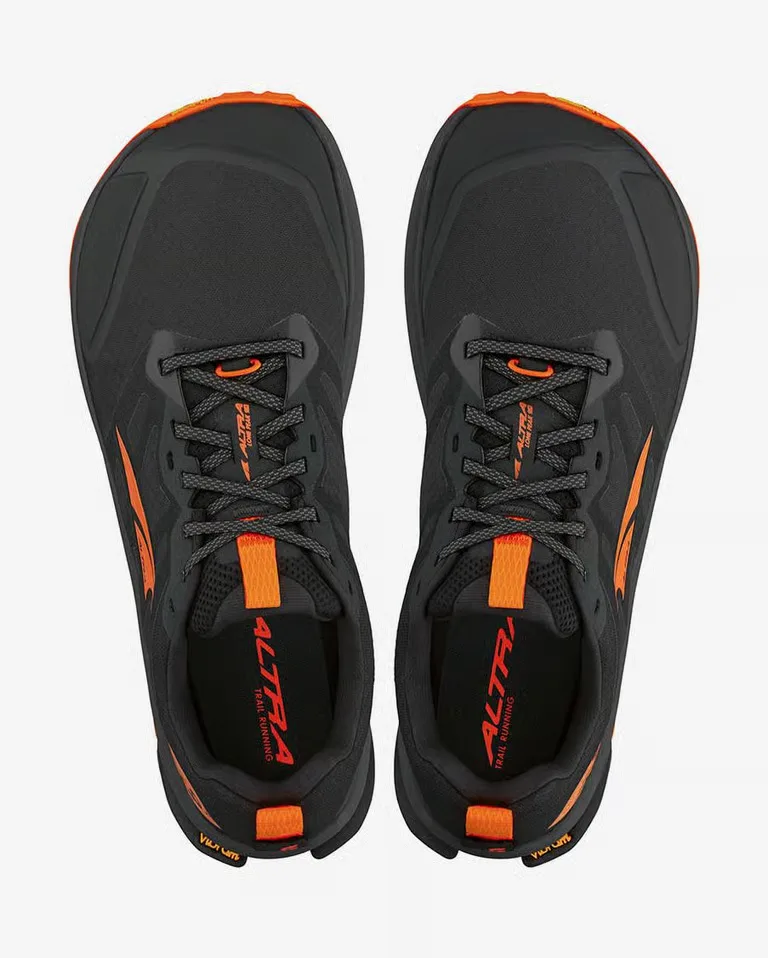
If you’re already familiar with natural footwear as an adult, the logic is the same as a shoe like the Altra Lone Peak 9: zero drop and a wide last, but with kids you almost never need the cushioned intermediate step we recommend for adults coming from conventional shoes. A child starting out in zero drop doesn’t need to “transition” from anything.
Signs the shoe isn’t working for them
- Red marks on the toes when you take the shoe off: the last is too narrow.
- The foot slides forward walking downhill: the size is too big.
- They complain about stones on easy packed-dirt trail: they may need a slightly thicker sole (Xero Prio instead of the Vivobarefoot Primus Sport III).
- Heel chafing after extended use: check the closure fit, it’s not a problem with zero drop itself.
Frequently asked questions
At what age does zero drop make sense?
From the moment the child starts walking. The earlier, the better: there’s no recommended minimum age below which zero drop is harmful, unlike adults, who do need a gradual transition.
Do they need an insole or arch support?
No, unless specifically indicated by a doctor. Artificial arch support on a healthy child’s foot tends to weaken the musculature that the foot itself should be developing on its own.
Is it suitable for kids’ trail races?
For easy trail and beginner races without technical terrain, yes. For trail with loose rock or roots, the Xero Prio Kids gives more margin than the Z-Trail sandal or the Primus Sport III thanks to its slightly thicker sole.
Conclusion
There’s no phased ladder like the one for adults: a child who starts in zero drop simply starts right. The only things to watch are the last (wide), the sole (flexible) and the sizing (snug, not oversized). Of the three options, the Xero Prio Kids is what I’d recommend as a first general-purpose closed shoe; the Vivobarefoot Primus Sport III if you’re after maximum minimalism, and the Xero Z-Trail if you want to try it out without a big investment or will mostly use it around water.
If you’re on your own transition to zero drop, we have the full guide here: zero drop transition protocol, week by week.