Best caps and visors for trail running 2026: sun protection on race day
Our picks by use case
Affiliate links: if you buy through them we earn a commission at no extra cost to you. It does not affect the ranking.
 Our top pick#1 · Best OverallBuff Buff Venture Gorra 5 PanelView on Amazon (opens in a new tab)
 #2 · Best VentilationGenérica Visera Running UnisexView on Amazon (opens in a new tab)
 #3 · Best for UltrasColumbia Columbia Schooner Bank II CachalotView on Amazon (opens in a new tab)
 #4 · Best Add-OnBuff Buff CoolNet UV+View on Amazon (opens in a new tab)
How we choose
We compare every model on verified technical specs (weight, materials, price), user reviews and our own experience running and testing gear in races from 21K to 100K+. We update this guide when prices change or new models launch. Some links are affiliate links: if you buy through them, TrailRunTemple earns a commission at no extra cost to you and with no influence on the selection.
All products in this guide
Buff
Buff Venture Gorra 5 Panel
Lightweight 5-panel cap with UPF 50+ protection, breathable fabric and comfortable fit. Ideal for summer trail running races where weight and ventilation are a priority.
Genérica
Visera Running Unisex
Lightweight, breathable visor for trail running, with no closed crown for maximum head ventilation. Adjustable velcro fit, suitable for men and women.
Columbia
Columbia Schooner Bank II Cachalot
Legionnaire-style cap with neck flap, ideal for long-duration races with intense sun exposure. Covers the neck and ears, two of the areas most prone to sunburn in the mountains.
Buff
Buff CoolNet UV+
Multifunctional tubular with UPF 50+ UV protection and cooling technology. Can be worn as neck gaiter, headband, balaclava or wristband. CoolNet fabric reflects UV rays and cools the skin by evaporation.
Your head takes the most direct sun radiation of an entire trail race: scalp, face, neck and ears are exposed for hours, and no watch or pair of shoes will save you from sunburn if you go bare-headed. Sunscreen is essential, but it washes off with sweat within two hours; a good head accessory creates a physical barrier that doesn’t fail mid-race. This comparison covers the 4 best options for protecting your head from the sun in trail running: a lightweight cap, a visor, a neck-flap cap and a UV buff.
Comparison table
| Product | Covers | Ventilation | Best for | Buy |
|---|---|---|---|---|
| Buff Venture 5 Panel | Scalp, forehead | Medium | General use | Amazon →(opens in a new tab) |
| Running Unisex Visor | Forehead, eyes | Maximum | Extreme heat | Amazon →(opens in a new tab) |
| Columbia Schooner Bank II | Scalp, neck, ears | Low | Ultras, intense sun | Amazon →(opens in a new tab) |
| Buff CoolNet UV+ | Neck, nape, ears | High (cooling) | Add-on | Amazon →(opens in a new tab) |
All available on Amazon with fast shipping. Links go to the current live price.
How to choose a head accessory for trail running: 4 deciding factors
1. UPF protection
Always look for the UPF 50+ label: it blocks 98% of UV radiation. Not every cap has it — many ordinary cotton caps offer no real protection beyond the shade they cast.
2. Which area you need to cover
Protecting yourself from midday sun on a short race isn’t the same as spending 8 hours on open, shadeless summits. The longer and more exposed the race, the more areas you need to cover: scalp, yes, but also the neck and ears.
3. Ventilation vs coverage
This is the big trade-off in this category: the more fabric covering your head, the more heat gets trapped. A visor ventilates better but protects less; a neck-flap cap covers more but traps more heat. Choose based on expected race-day temperature, not just sun exposure.
4. Compatibility with pack and sunglasses
A neck flap can rub against a trail pack’s straps on technical sections. Test the cap + pack + sunglasses combo on a long training run before debuting it on race day.
Visor vs Cap: Which Is Better for Running?
Short answer: a visor if heat is the problem, a cap if sun is the problem.
| Visor | Cap | |
|---|---|---|
| Heat release | Best: the top of your head vents freely | Traps more heat, even with mesh panels |
| Scalp protection | None: the crown and parting are exposed | Full scalp coverage |
| Pouring water over your head | Easy, it runs straight through | Soaks the cap, which then cools you as it dries |
| Headlamp at night | Straps sit directly on the head | Strap can slip over the crown |
| Best for | Hot, shorter races with some shade; runners with thick hair | Long, exposed races; thin or no hair; high altitude |
- Go visor for road runs and trail races under 3 hours in the heat, or if you overheat easily.
- Go cap for ultras and exposed ridges, especially above 2,000 m where UV is much stronger. For all-day sun, add neck coverage: a neck-flap cap, or a cap plus a UV buff.
- Many ultra runners carry both: visor for the hot climbs, cap (or buff) for the long exposed sections.
Individual breakdown of the 4 options
1. Buff Venture 5 Panel — Best Overall
The Buff Venture 5 Panel Cap with UPF 50+ protection is the default choice for most races: lightweight, breathable and comfortable to wear. It covers the scalp and forehead without trapping too much heat.
Ideal for: medium-length races, warm but not extreme weather, when you want a versatile piece that also works off-race.
View Buff Venture on Amazon →(opens in a new tab)2. Running Unisex Visor — Best Ventilation
The Running Unisex Visor, having no closed crown, is the coolest option in the comparison. It shields the face from direct sun without trapping heat, something highly valued in extreme-heat or high-intensity races.
Ideal for: fast or short-to-medium distance races with high temperatures, runners who sweat heavily from the head and prefer maximum ventilation. The crown stays exposed to the sun, so pair it with sunscreen on the scalp for long or high-altitude races.
View Running Visor on Amazon →(opens in a new tab)3. Columbia Schooner Bank II — Best for Ultras
The Columbia Schooner Bank II Cachalot, with its legionnaire-style fabric flap, covers the neck and ears — two high sunburn-risk areas most caps leave exposed. It’s the most complete option of the four in terms of coverage.
Ideal for: ultras over 6 hours, races on open summits with no shade, runners who have already burned their neck once. It’s the warmest option and the neck flap can rub against a trail pack on technical sections.
View Columbia Schooner Bank II on Amazon →(opens in a new tab)4. Buff CoolNet UV+ — Best Add-On
The Buff CoolNet UV+ isn’t a cap, but it pairs with any of the three above to cover exactly the areas they leave exposed: neck, nape and ears, with UPF 50+ protection and a cooling effect when wet.
Ideal for: completing a lightweight cap or visor on long races, or wearing on its own on hot days when the cooling effect matters as much as UV protection.
View Buff CoolNet UV+ on Amazon →(opens in a new tab)Head-to-head: Visor vs Columbia Schooner Bank II
The two extremes of the comparison, side by side:
The Visor wins on ventilation. With no crown coverage, it’s noticeably cooler on extreme-heat days.
The Columbia wins on coverage. It protects the neck and ears, two areas the visor leaves completely exposed.
The Visor wins on weight and comfort. You barely notice it during hours of wear.
The Columbia wins on long races. On ultras over 6 hours with intense sun, the extra coverage prevents sunburn the visor can’t.
Head-to-head verdict: if ventilation matters most on a short, hot race, go with the Running Visor. If you’re spending many hours under the sun on an ultra, go with the Columbia Schooner Bank II — and add a UV buff to cover whatever it leaves exposed.
4 common mistakes when choosing a head accessory for trail running
-
Relying only on the visor’s shade. Without a UPF label, many caps don’t actually filter UV radiation — they only offer visual shade.
-
Choosing a visor for an ultra on open summits. The crown stays exposed for hours; on long, high-exposure races, a cap with more coverage or a complementary buff is a better choice.
-
Ignoring the neck and ears. These get burned the most because almost no standard cap covers them.
-
Not testing the combo with pack and sunglasses before race day. A neck flap can rub against a vest’s straps; test it on a long training run, not on race day.
FAQ
Do I need UPF 50+ on a cap, or does any cap work?
Yes, you need explicit UPF 50+. A regular cotton cap offers shade but doesn’t reliably block UV radiation that arrives through reflection or scattering.
Cap or visor for summer trail running?
It depends on duration and heat. For short races or extreme heat, a visor ventilates better. For medium or long races with less extreme heat, a cap protects more surface area.
Do I need a neck-flap cap if I already wear sunscreen?
Sunscreen washes off with sweat within two hours. On long ultras, a neck-flap cap reduces how often you need to reapply and covers areas easy to miss when applying cream in a hurry.
Can I combine a cap and a UV buff?
Yes, it’s the most complete combination: the cap covers the scalp and forehead, the buff covers the neck, nape and ears. Together they leave very little skin exposed without needing constant reapplication of cream.
Final verdict: our pick from the 4 options
- If you want the best without overthinking it: Buff Venture 5 Panel(opens in a new tab)
- If ventilation in extreme heat is your priority: Running Unisex Visor(opens in a new tab)
- If you run ultras under intense sun: Columbia Schooner Bank II(opens in a new tab)
- To round out your neck and nape protection: Buff CoolNet UV+(opens in a new tab)
Head protection is one of the cheapest items in your entire race kit, and if it fails, the mark lasts for weeks. Combine the cap that best fits your race with a UV buff and sunscreen on the rest of the exposed areas, and the only thing you’ll have to worry about from the neck up is the race profile.
If you want the rest of the sun protection kit (cream, sunglasses, arm sleeves), check out our sunscreen comparison for trail running and our sun protection guide for trail running.
Other guides you might find useful
Races where you'll need this gear

Ultra Sierra Nevada
100K, 42K and 21K across the rooftop of the Iberian Peninsula
Read more →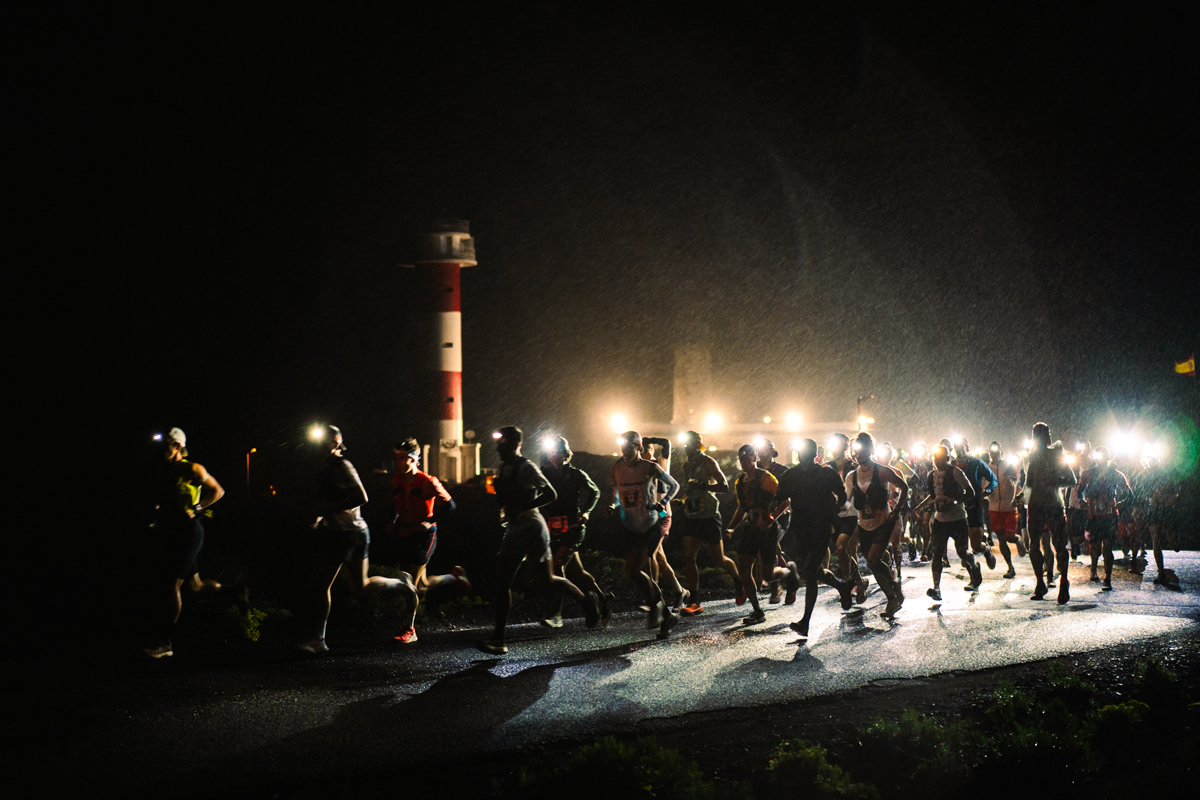
Transvulcania
73K, 43K, 25K, and VK crossing La Palma along the Ruta del Bastón
Read more →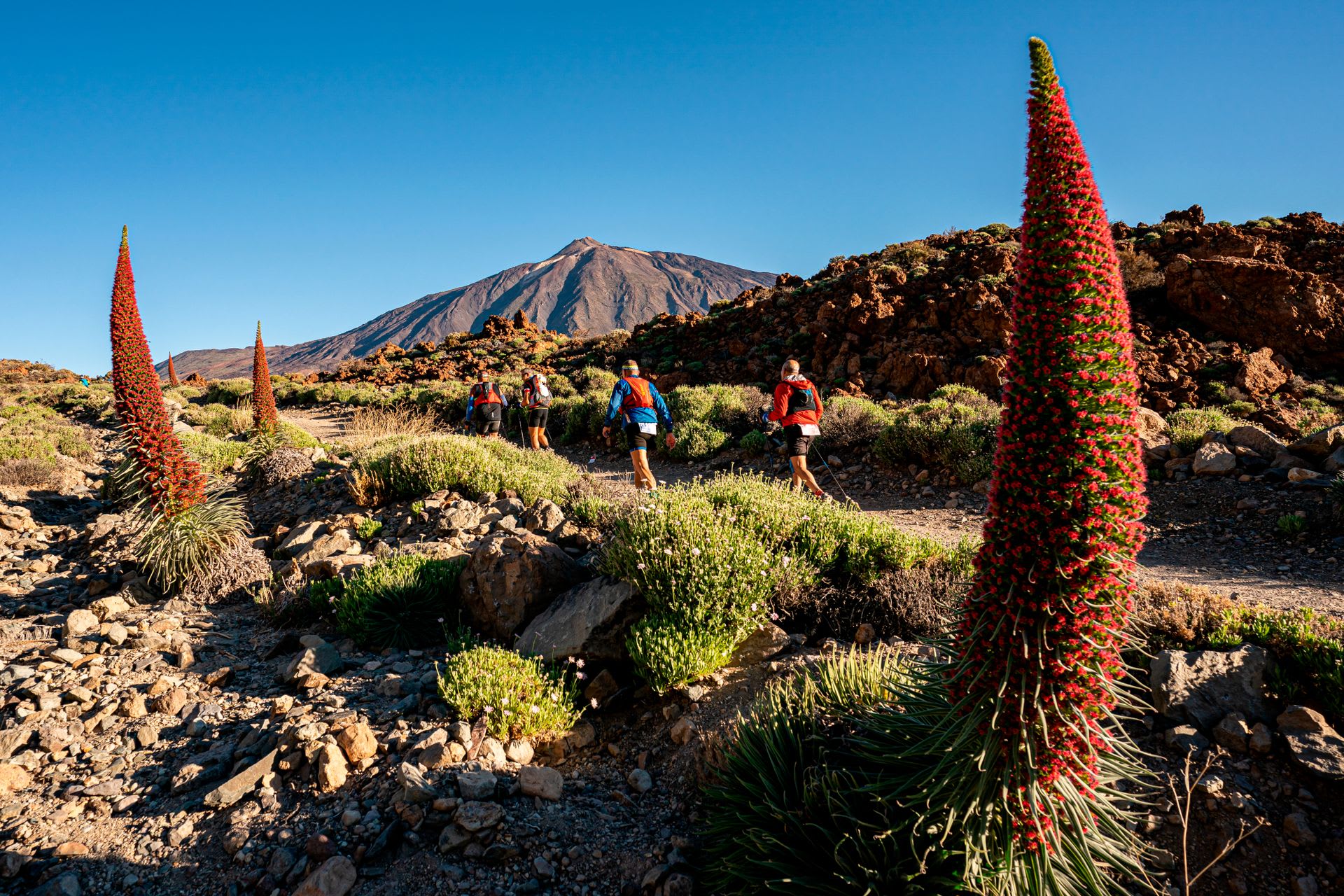
Tenerife by UTMB
110K, 82K, 68K, 47K and 24K crossing Tenerife from south to north via Mount Teide (8-10 April 2027)
Read more →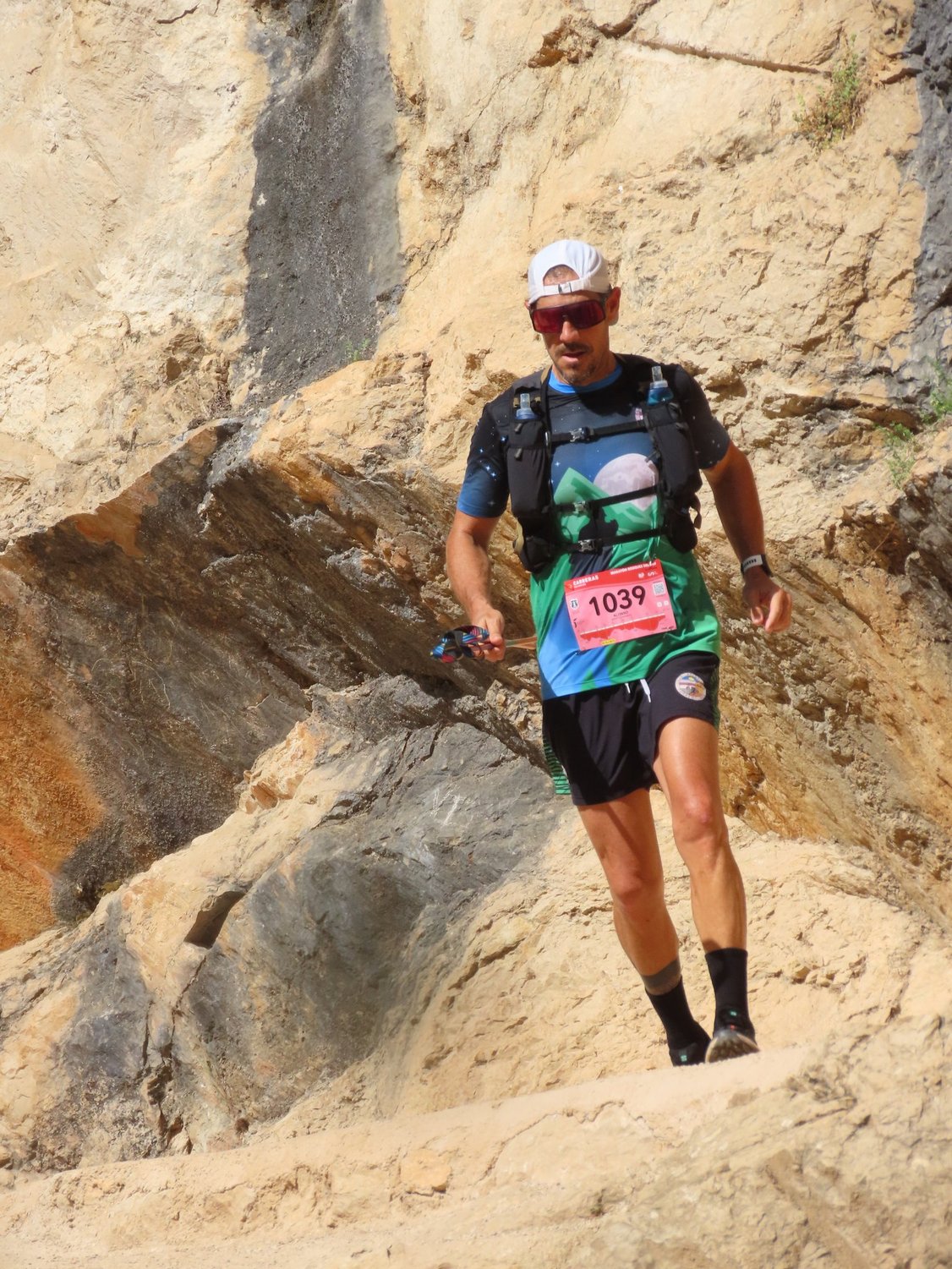
Ultra Trail Bosques del Sur
70K, 42K, 21K, 10K and 4K through the Cazorla, Segura y las Villas Natural Park
Read more →