Bites and bugs on spring trails: ticks, bees, processionary caterpillars and more
March arrives and the mountains wake up (bugs included)
With the first long days and rising temperatures, the spring trail season is one of the best of the year. Dry paths, green everywhere, snow on the summits. But something else wakes up in spring too: ticks, bees, wasps, processionary caterpillars, mosquitoes and every bug that has spent months dormant.
This is no reason to panic. It’s a reason to go prepared. Most encounters with mountain wildlife are anecdotal, but a few can ruin your race or, in rare cases, turn into an emergency. This article covers the most common bugs on Spanish trails between March and June, how to prevent problems and what to do if you get bitten or stung.
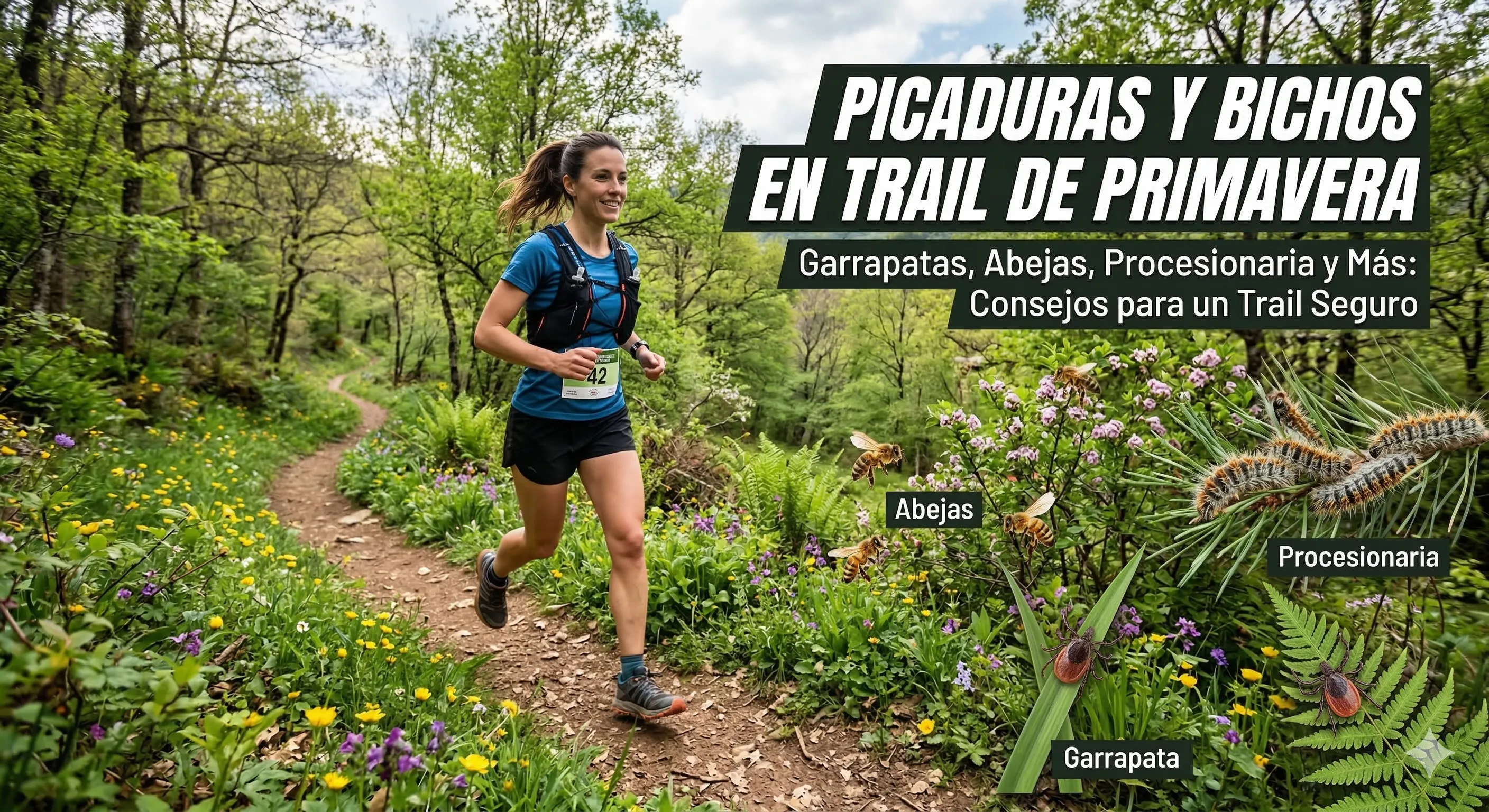
Ticks: the silent enemy
If one bug deserves your attention in spring, it’s the tick. It doesn’t sting and leave like a wasp. It latches on, burrows into your skin and feeds on your blood for hours or days. Worst of all, it can transmit serious diseases such as Lyme disease or Crimean-Congo haemorrhagic fever.
Where and when
Ticks live in low vegetation: tall grass, ferns, shrubs, damp leaf litter. Their peak months in Spain are March to June and September to November. The areas with the highest incidence: northern Spain (Cantabria, Basque Country, Navarre, Asturias), ranges with free-roaming livestock and dehesa pastureland.
As a trail runner you pass straight through their habitat: paths where vegetation brushes your legs, damp shady spots, meadow crossings.
How to prevent bites
- Covering clothing: long or below-the-knee tights instead of shorts. The less exposed skin on your legs and ankles, the better.
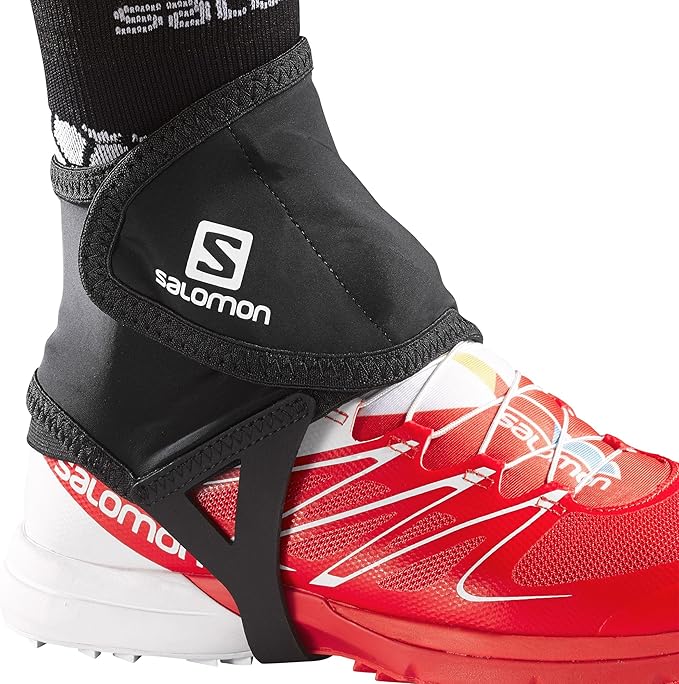
- Gaiters: an excellent physical barrier. They cover the ankle-calf area, which is exactly where ticks climb up from the vegetation.
- Repellent with DEET or permethrin: DEET (20-30%) applied to exposed skin repels ticks. Permethrin is applied to clothing and is especially effective (it lasts several washes). Don’t carry just any repellent: mosquito repellent without DEET doesn’t work against ticks.
- Light colours: they make it easier to spot ticks on your clothes before they reach your skin.
The post-run check: the key step
A tick needs 24 to 48 hours attached to transmit Lyme disease. That means the post-run check is your best defence.
Protocol after running through tick country:
- Shower straight away (within 2 hours) — the water washes off any that haven’t attached yet.
- Check thoroughly in front of a mirror: groin, armpits, behind the ears, behind the knees, scalp, belly button. Ticks look for warm, sheltered spots.
- Check your clothes: shake them outdoors or put them straight in the tumble dryer on high heat (heat kills them; cold water doesn’t).
If you find an attached tick
- Don’t squash it, and don’t apply oil or alcohol. That makes the tick regurgitate and raises the risk of infection.
- Use fine-tipped tweezers or a tick remover: grip the tick as close to the skin as possible and pull upwards with steady pressure, without twisting or yanking.
- Disinfect the area with antiseptic.
- Note the date and the spot on your body. If a rash (a red patch spreading in a bullseye pattern) or fever appears in the following 4 weeks, see a doctor and mention the tick bite.
Carry fine-tipped tweezers in your first-aid kit. It’s a 5-gram item that can save you a serious problem.

Bees and wasps: the unexpected sting
They’re not after you, but if you step on a ground nest or disturb a hive by accident, they’ll let you know fast.
The difference matters
- Bees: sting once and leave the stinger in. The stinger keeps injecting venom, so the sooner you remove it, the better. Scrape it out with the edge of a card or a fingernail (don’t squeeze with tweezers, or you’ll squeeze the venom sac).
- Wasps: sting several times and don’t leave a stinger. They’re more aggressive around sweet food and sports drinks.
Prevention during a race
- Don’t flap your arms if a wasp is buzzing around you. Sudden movement makes them aggressive. Stay calm and move away slowly.
- Keep bottles and gels closed: wasps crawl into open soft flasks and bottles with sweet mouthpieces. Always close them after drinking.
- Take care on narrow paths between flowering shrubs: the bees are at work. Pass through without stopping.
If you get stung
- Remove the stinger (bees only) by scraping, not squeezing.
- Apply cold if you have it (aid-station ice wrapped in cloth).
- Soothing gel to relieve itching and swelling.

- Warning signs (severe allergic reaction / anaphylaxis): swelling of the face or throat, difficulty breathing, severe dizziness, widespread hives. This is an emergency: call 112 and stop running immediately. If you know you’re allergic to bee or wasp stings, always carry an adrenaline auto-injector (prescribed by your allergist).
Pine processionary caterpillars: the bug you don’t touch but that touches you
Between February and April, processionary caterpillars come down from the pines in single file to bury themselves in the ground. Their stinging hairs break off in the wind and cause contact dermatitis, eye irritation and breathing problems if inhaled. You don’t need to touch the caterpillar: just passing close is enough.
Risk areas
Any pine forest in Spain below 1,800 m between February and April. Look for the nests: white silk bags in the tops of the pines. If you see nests, there are caterpillars.
Prevention
- Avoid paths under pine forests with visible nests between February and April. If you can’t avoid them, pass quickly without stopping.
- A Buff or neck tube over your neck and mouth: the stinging hairs float in the air. A neck tube reduces how much you breathe in.

- Arm sleeves: if you run in a short-sleeved shirt through processionary country, sleeves cover exposed skin without making you hot.

- Don’t touch the caterpillars or fallen nests. Not even with a stick. The stinging hairs stay active for months.
If you come into contact
- Don’t scratch. Rubbing drives the hairs deeper into the skin and spreads the rash.
- Remove visible hairs with adhesive tape (the strapping tape from your first-aid kit) pressed onto the area and pulled off in one go.
- Wash the area with soap and water.
- Apply antihistamine gel.
- If your eyes are affected: rinse with plenty of water and go to A&E. Don’t rub them.
- If you have difficulty breathing: emergency, call 112.
Mosquitoes: more annoying than dangerous (with caveats)
Mosquitoes in Spain rarely transmit diseases, but the tiger mosquito (Aedes albopictus), now established along the whole Mediterranean coast and the Ebro valley, bites during the day, hurts more than the common mosquito and leaves welts that itch for days.
Prevention
- Repellent with DEET or icaridin if you run at dawn, at dusk or through damp areas.
- Avoid perfumes and scented deodorants: they attract mosquitoes.
- Long tights protect your legs, but in spring repellent is usually enough.
If you get bitten
- Soothing gel or antihistamine cream.
- Don’t scratch (scratching breaks the skin and lets bacteria in; infected bites are the real risk).
Snakes: rare but possible
The Iberian Peninsula has vipers (Vipera latastei, Vipera aspis, Vipera seoanei) with venomous bites. Encounters are uncommon because snakes flee from noise, and a trail runner makes plenty of noise going past. But they can happen on sunny rocks, dry-stone walls or narrow paths in rocky areas.
Prevention
- Watch where you step in rocky, sunny areas.
- High gaiters protect your ankles from accidental bites.
- Don’t put your hands into cracks or lift stones without seeing what’s underneath.
If a snake bites you
- Stay calm. Most viper bites in Spain are not fatal with proper treatment.
- Don’t suck out the venom, don’t apply a tourniquet, don’t make cuts. All of that makes things worse.
- Immobilise the affected limb and keep it below heart level.
- Call 112 and describe the snake if you saw it (pattern, colour, size).
- Head to the nearest evacuation point without running (exercise speeds up the spread of the venom).
The anti-bug kit: what to carry in your pack
You don’t need to carry a pharmacy, but these extra grams can get you out of trouble:
| Product | Approx. weight | What for |
|---|---|---|
| DEET 30% repellent (travel size) | 30 g | Ticks, mosquitoes |
| Fine-tipped tweezers | 5 g | Tick removal |
| Antihistamine gel (After Bite) | 20 g | Stings, processionary caterpillars |
| Strapping/adhesive tape | 10 g | Removing processionary hairs |
| Plasters + antiseptic wipe | 10 g | Disinfection after removal |
Total: ~75 g. Less than an extra energy gel. It fits in a side pocket of your pack.
Seasonal map: which bug, when and where
| Bug | Risk months | Trail habitat | Risk level |
|---|---|---|---|
| Tick | Mar-Jun, Sep-Nov | Tall grass, ferns, dehesas | High (transmits diseases) |
| Processionary caterpillar | Feb-Apr | Pine forests below 1,800 m | Medium-high (hives, breathing) |
| Bees/wasps | Apr-Oct | Flowering shrubs, food areas | Medium (high if allergic) |
| Tiger mosquito | May-Nov | Damp areas, Mediterranean coast | Low (nuisance, rare transmission) |
| Viper | Mar-Oct | Sunny rocks, stone walls | Low (bites very rare) |
Spring pre-race checklist (bugs)
If the race goes through tall grass, dehesas or livestock areas:
- Long tights or gaiters
- DEET repellent applied to ankles, calves and arms
- Fine-tipped tweezers in the first-aid kit
- Full body check when you finish
If the race goes through pine forests (February-April):
- Buff or neck tube for neck/mouth
- Arm sleeves if you wear short sleeves
- Strapping tape in the first-aid kit
- Antihistamine gel
If you’re allergic to bee or wasp stings:
- Adrenaline auto-injector (prescribed by your allergist)
- Tell the organisers and your fellow runners
- Carry visible medical ID (a bracelet or a card in your pack)
Bugs shouldn’t hold you back
Running in the mountains in spring is a privilege. The trails are at their best: mild temperatures, a living landscape, long days. Bugs are part of the scenery, and the vast majority of outings go by with nothing more than the odd annoying mosquito.
But the difference between an anecdote and a serious problem is often 75 grams of first-aid kit, a 5-minute tick check and knowing what to do if something happens. Now you know.
Preparing your next spring race? Check our race Pack 360 pages with all the recommended gear for each race, including body care and protection products. And for more practical advice, explore the trail running blog.