Seamless technology for women's trail running clothing: the fix for chafing
The problem generic chafing guides don’t cover
Most chafing content for trail running is written with a male body in mind: nipples, groin, armpits. But the female body has its own friction zones that are rarely explained in detail: the sports bra line, the inner thigh (compounded by hip anatomy), and the waistband area when a legging is combined with a belt or a pack.
Want to skip straight to what to buy?
See our guide to the 5 best anti-chafe products for running and trail: what works in each zone, from balm to toe socks.
That’s where seamless technology comes in: it isn’t a marketing gimmick, it’s a technical answer to a very specific problem. This guide explains what it is, why it works, and which garments use it.
What seamless technology actually is
A seamless garment is knitted as one continuous 3D piece on a circular knitting machine. Fabric panels aren’t cut and then sewn together — the knit itself creates the garment’s final shape. The result is a smooth interior surface, without the flat seams or finishing edges that traditionally sewn garments have.
The practical difference: in a sewn garment, every seam is a point of concentrated friction against the skin. In a seamless garment, that friction spreads evenly across the whole contact surface, because there are no hard edges or double layers of fabric.
Beyond the seam-free knit, these garments usually combine:
- Graduated, zoned compression: tighter fit in some areas than others, depending on function (support, containment, ventilation).
- Mesh panels built into the knit itself (not sewn on separately) for breathability in high-sweat zones.
- Four-way stretch fabric that follows the multi-directional movement of trail running without creasing or folding in ways that cause friction.
Why women need this technology more than men
It isn’t only about general comfort. Three anatomical and gear-related factors make chafing hit the female body differently on the trail:
- The sports bra adds an extra layer of seams. The underband, straps, and side panels of a bra are friction zones on top of whatever the shirt or legging already creates. Over long races, that combined friction adds up fast.
- Hip anatomy creates more inner-thigh friction. Wider hips relative to the waist mean more skin-on-skin contact with every stride, especially uphill and once sweat and salt build up.
- Gear sits on a different silhouette. A hydration belt, waist pack, or vest fits over a waist and hip shape different from a male one, which can concentrate pressure and rubbing at specific points if the base layer underneath isn’t smooth.
The 3 critical female zones and their seamless fix
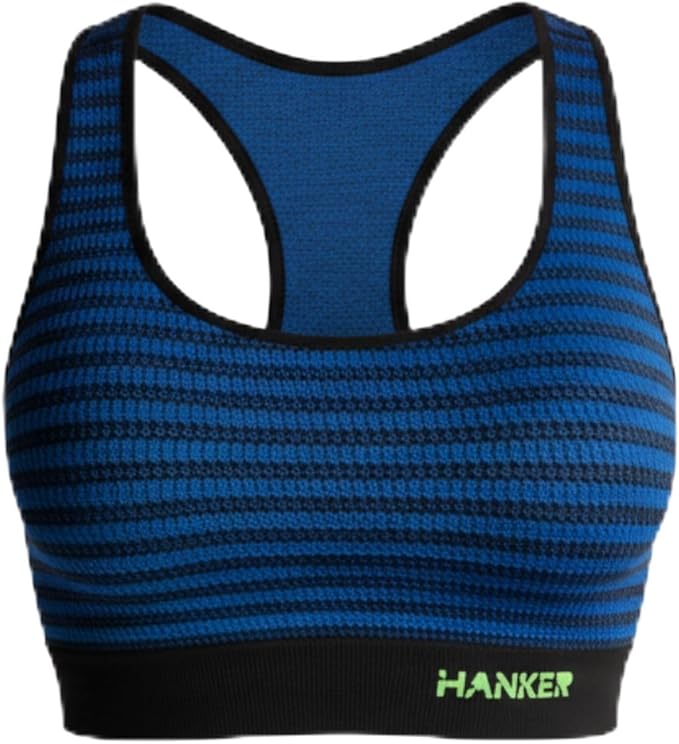
1. Sports bra line (band and straps)
The problem: the underband rubs against the ribs and back with every deep breath on a climb. The straps rub against the shoulders and trapezius.
The seamless fix: sports bras knitted without seams on the skin-contact band, with zoned compression that supports without a hard edge digging in.
2. Inner thigh
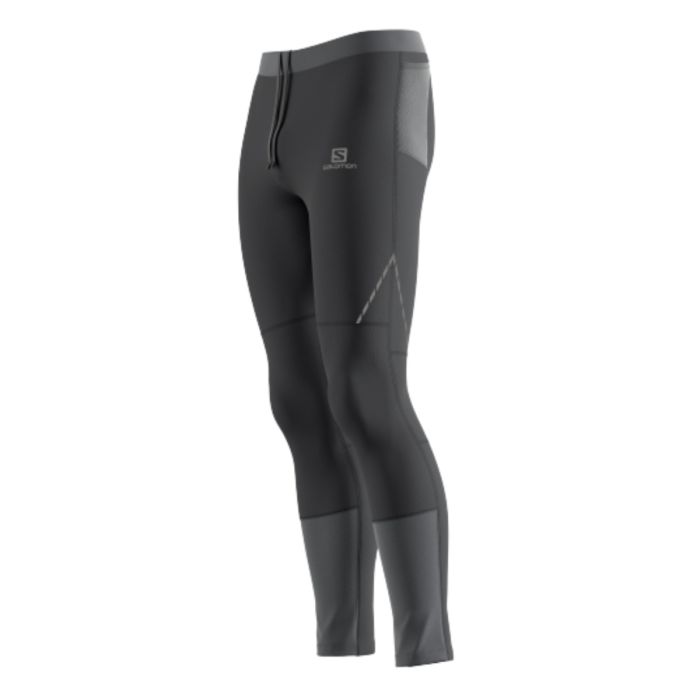
The problem: this is the most punished zone for female chafing on trail. Skin-on-skin contact between the thighs, made worse by sweat and salt, starts hurting past a certain distance for almost everyone.
The seamless fix: leggings knitted without an inner seam at the crotch and inner thigh, using a fabric that glides over itself instead of gripping the skin.
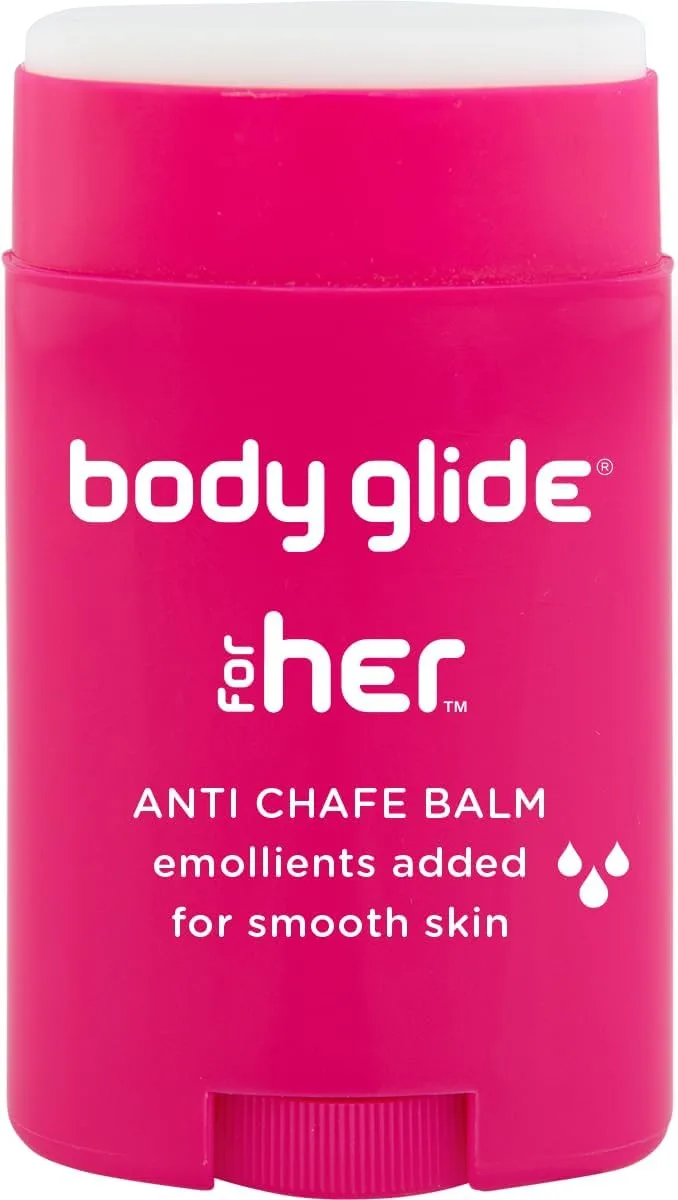
When the fabric alone isn’t enough — very long races or especially sensitive skin — the winning combination is a seamless legging plus anti-friction balm on the zone:
3. Waistband and lower back under gear
The problem: wherever a belt, waist pack, or pack strap crosses the waist, any seam on the legging or shorts underneath becomes a constant pressure point over hours.
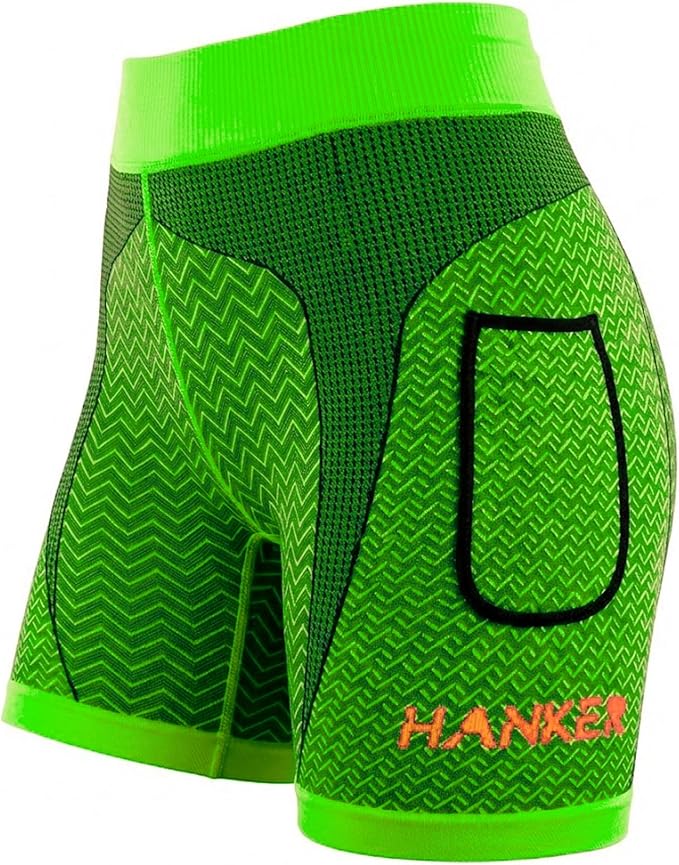
The seamless fix: shorts or leggings with a knitted (not sewn) waistband and, for shorts, an anatomical liner built into the same piece, with no center seam that can rub under the gear.
Shorts with an anatomical liner: what to check
Besides full-length leggings, women’s trail shorts with a built-in liner are a common choice for hot races. When picking one, look for:
- A liner built into the same knit piece, not sewn on as a separate layer (avoids a double seam at the crotch).
- Quick-dry, antibacterial-treated fabric, since the liner sits directly against the skin for hours of sweating.
- A wide, flat waistband with no exposed elastic that could dig in or rub under a hydration belt.
Which brands make running apparel with anti-chafe technology?
Short answer: Salomon, Compressport, Odlo, Icebreaker and HANKER all make running apparel with anti-chafe (seamless or flat-seam) construction. Salomon and Compressport lead for trail-specific compression, Odlo and Icebreaker for base layers, and HANKER is the budget pick for seamless sports bras and compression shorts. For skin that still rubs, a balm like BodyGlide covers the gaps — see the best anti-chafe products for running.
Each brand takes a different approach:
- Salomon: leggings and shirts in the Cross line with zoned compression panels and flat seams in non-seamless areas.
- Compressport: compression garments using circular seam-free knits, designed to reduce muscle fatigue as well as friction.
- Odlo: base layers with seamless technology in the Performance line, with thermal zoning.
- Icebreaker: merino wool garments with seam-free construction in the highest-contact zones.
- HANKER: sports bras and compression leggings with seamless fabric at a more accessible price than the technical mountain brands.
Not every garment from these brands is seamless: check the product spec for “circular knit,” “seam-free,” or “seamless construction.” A sewn legging or shirt from the same brand doesn’t offer the same protection, however good the fabric is.
How to check if a garment is truly seamless
Before buying, a simple test: turn the garment inside out and run your hand over the interior. If you feel edges, hard hems, or a defined seam at the crotch, armpits, or bra band, it isn’t a fully seamless construction, even if the label markets it that way. The interior should feel smooth and continuous, like a second skin.
Seamless doesn’t replace basic prevention
Seamless technology reduces friction at the source, but on long races it’s still worth combining it with the usual measures: anti-chafe balm on critical zones before the start, proper hydration to minimize salt crystals on the skin, and testing any new garment in training before an important race. If you want to go deeper on the rest of the critical chafing zones (not just the female-specific ones), we have a full guide on preventing chafing in trail running.
Conclusion
Seamless technology isn’t a luxury extra: it’s the technical answer to a real, specific problem for the female body on the trail. Investing in a legging, bra, or shorts with seam-free construction in the critical zones — inner thigh, bra band, waistband — is one of the most cost-effective comfort upgrades you can make to your trail kit, especially for long-distance running.