 Photo: Mario La Pergola / Unsplash
 Trail races in La Rioja 2026
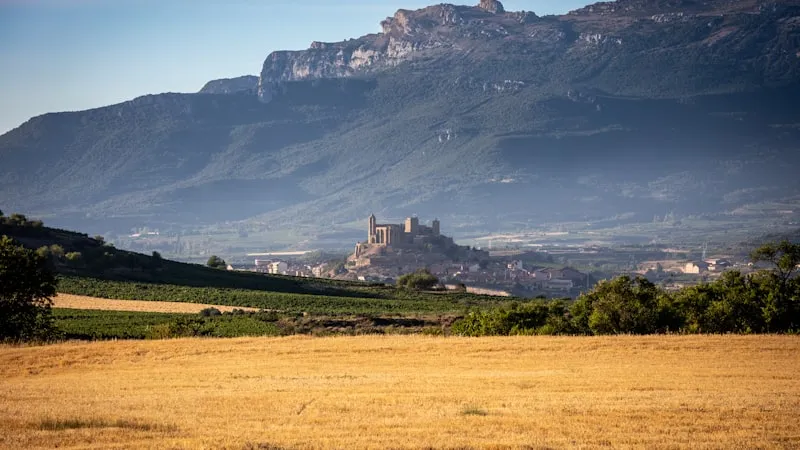
La Rioja combines vineyards and mountain ranges in Spain's most compact territory. Sierra de la Demanda, Sierra de Cebollera, and the Cameros offer trail through beech forests, ridges above 2,000 meters, and solitary valleys.
View on map“Vineyards and summits: Spain's most compact trail”
2.271 m
San Lorenzo (Sierra de la Demanda)
Mar-Jun
Best trail season
3 sierras
Demanda, Cebollera, Obarenes
5.045 km²
Spain's most compact region
4
Races
7 – 47 km
Distance range
350 – 2600 D+
Elevation range
Mar – Sep
Race months
Difficulty
Terrain
La Rioja is Spain's smallest region, but its compact geography hides surprisingly varied trail running. To the south, the Sierra de la Demanda peaks at San Lorenzo at 2,271 meters, with ridgelines connecting centuries-old beech forests and glacial lagoons. Sierra de Cebollera, a Natural Park, offers forest trails through pine and birch groves in a silence broken only by wind. The valleys of Camero Viejo and Camero Nuevo are natural corridors where trails wind between abandoned medieval villages and the banks of the Iregua and Leza rivers. To the north, the Montes Obarenes and Sierra de Cantabria close the region with limestone cliffs above the Ebro. In between, the Peñas de Isasa and Arnedo's ravines create an almost lunar landscape of red clay and fairy chimneys. All this in barely 5,000 km²: here terrain changes happen in minutes, not hours.
Key areas
Climate & best season
La Rioja has a continental Mediterranean climate with nuances depending on altitude. The Ebro valley accumulates summer heat exceeding 35°C, making trail unviable in low areas during July and August. However, the southern sierras cool down notably, and the Demanda or Cebollera ranges can be run even in midsummer with early starts. Spring is the gem: from March to June temperatures are perfect, beech forests green up, and rivers run strong. Autumn (September-October) is equally spectacular, with vineyards in harvest and beeches turning red. Winter brings snow to summits and hard frosts to valleys, but lower Cameros trails remain passable with proper gear.
Trail culture
The Riojan trail community is small, discreet, and proud of its own. In a region where wine steals all the fame, mountain runners have spent years championing the sierras as a treasure waiting to be discovered. Races like Isasa Trail Xtrem in Arnedo or Foncea Trail in the Obarenes are born from local clubs that know every stone and path. There are no big organizations or millionaire sponsors: just townspeople who mark trails, set up aid stations, and greet you at the finish with a glass of Rioja. It's close-to-home trail, where everyone knows each other and where mountains don't compete with asphalt for attention. For visiting runners, La Rioja is a constant surprise: you come expecting vineyards and find canyons, beech forests, and 2,000-meter ridges half an hour from Logroño.
Iconic races in the region
Race map
Click on the map to enable scroll zoom.
Race calendar
Marzo 2026
Mayo 2026
By month
Races
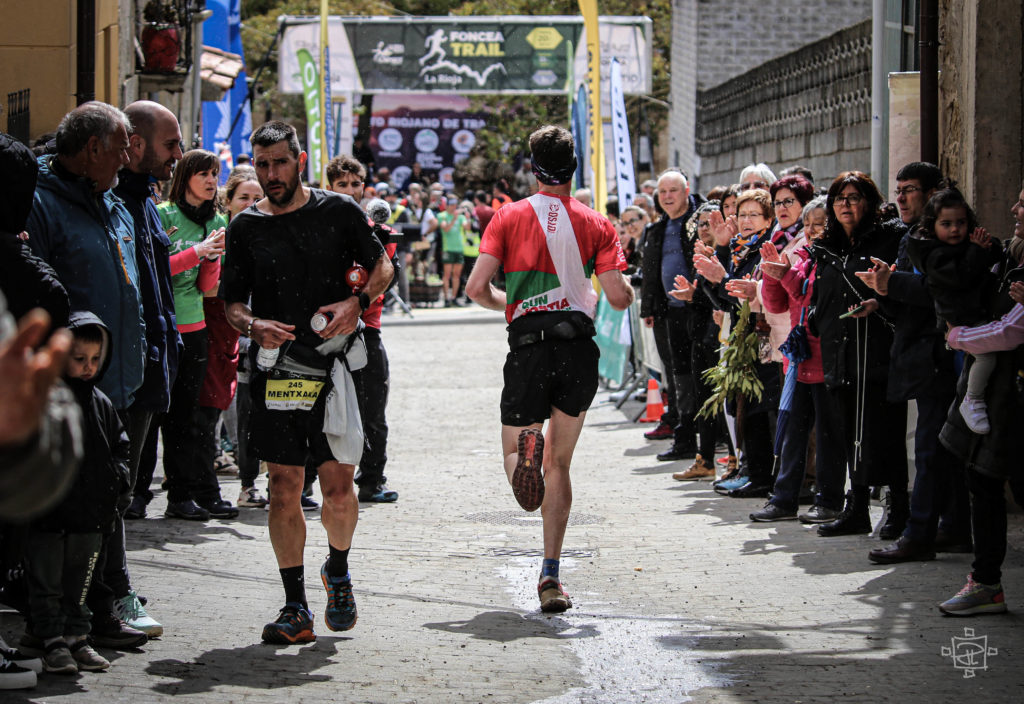 Photo: Juan Luis Pérez
 Foncea Trail
Foncea
Trail running through the Obarenes Mountains in La Rioja: 20K and 13.5K in a Natura 2000 area
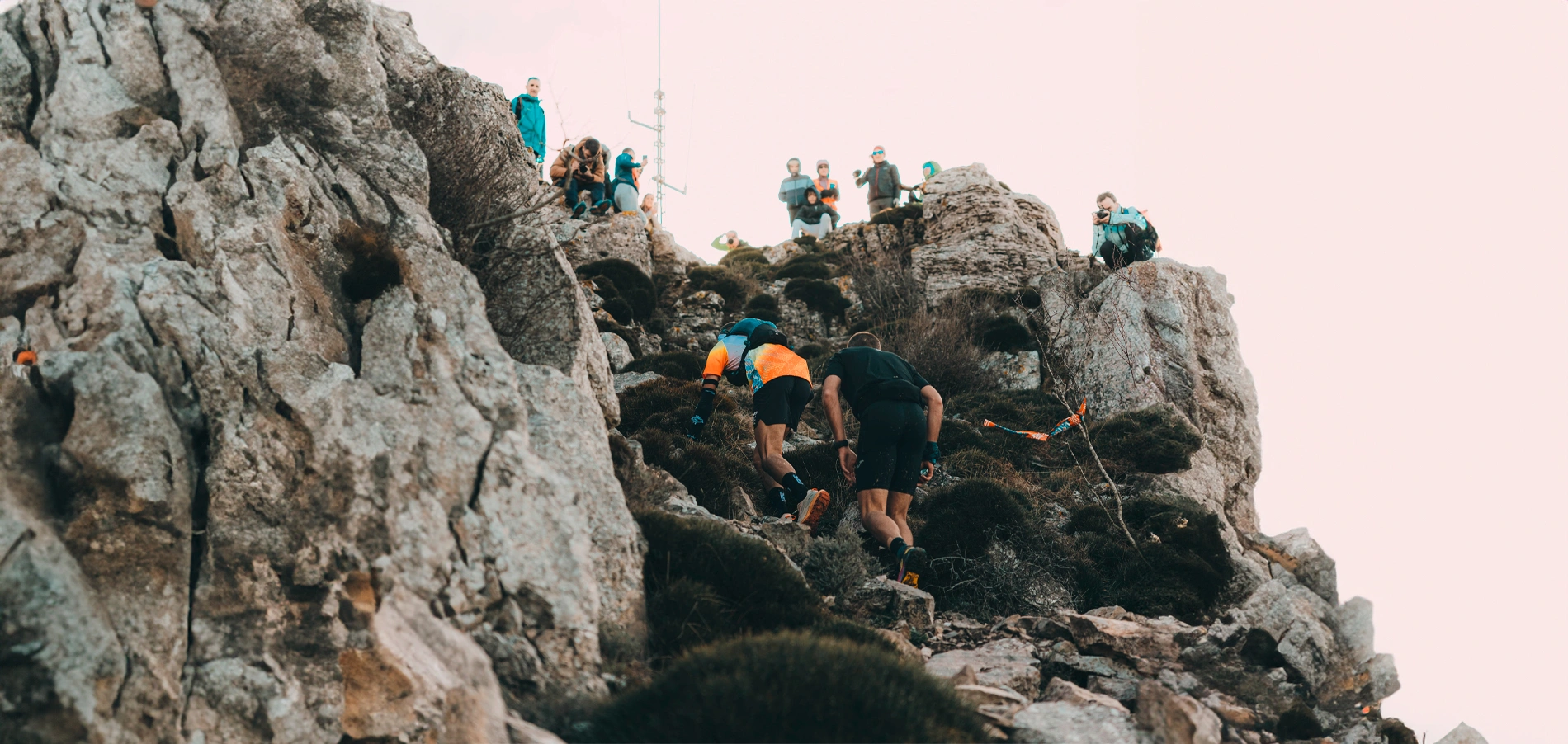 Photo: Isasa Trail Xtrem
 Isasa Trail Xtrem
Arnedo
46K, 23K and 16K through the trails of Arnedo, La Rioja's shoe-making capital
Trail Picos de la Demanda
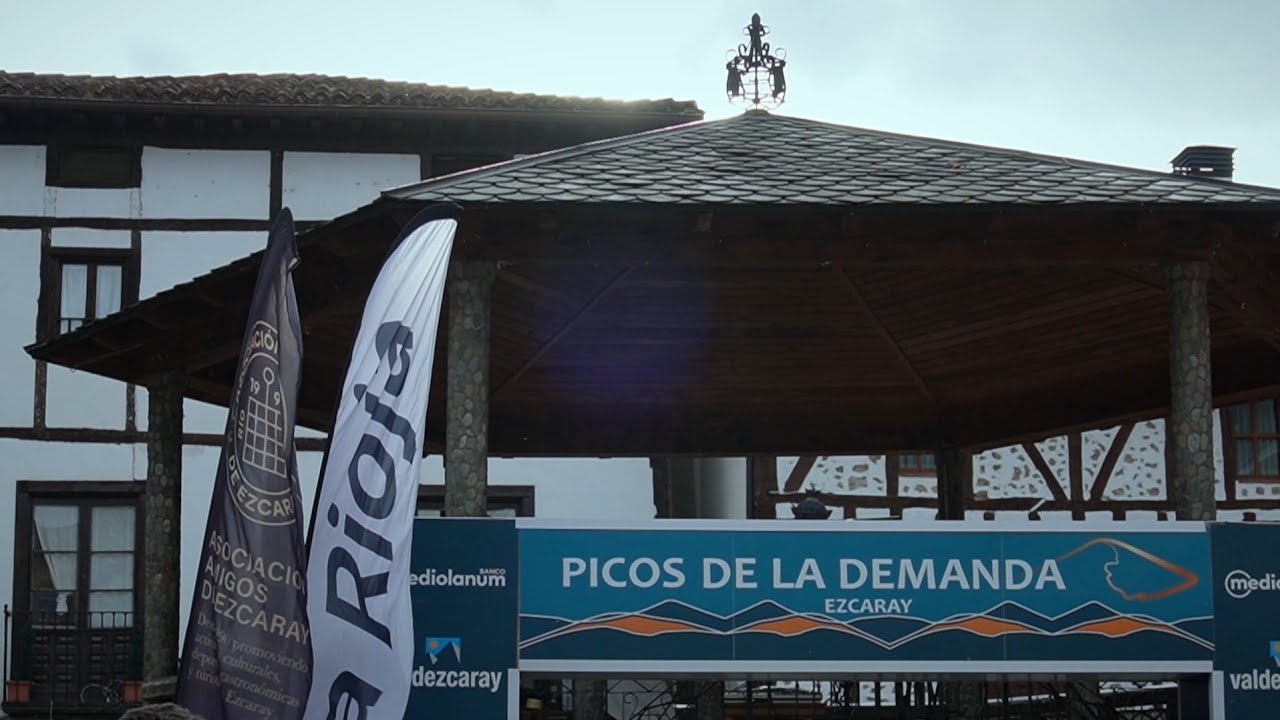
Ezcaray
35K, 24K, 10K and Night Race through the Sierra de la Demanda from Ezcaray, summiting San Lorenzo (2,271m)
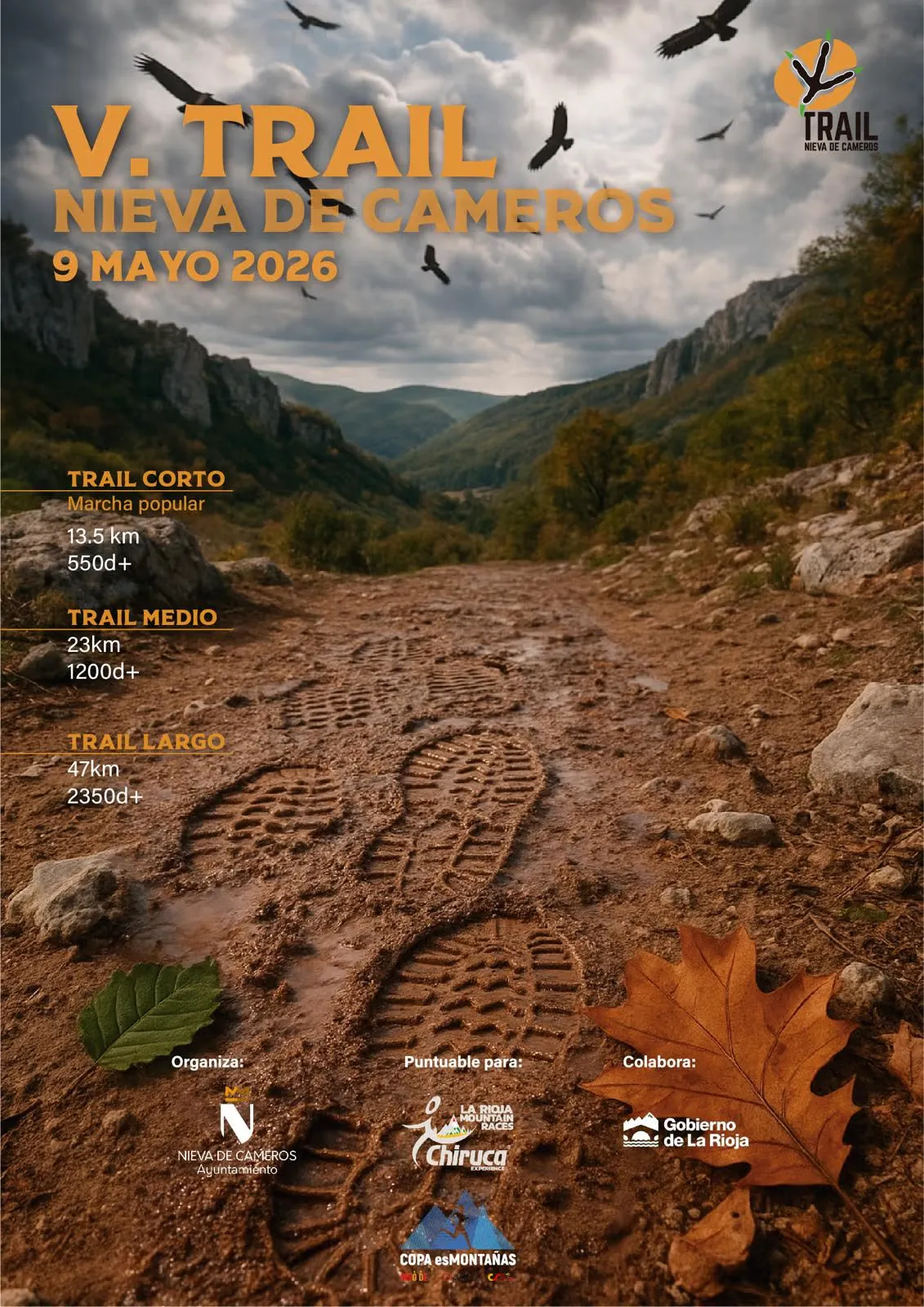
V Trail Nieva de Cameros
Nieva de Cameros
V Trail Nieva de Cameros — 47K, 23K and 13.5K through Camero Nuevo, La Rioja