Barefoot shoe transition for trail running: from Altra Lone Peak 8 to Freet Feldom 3
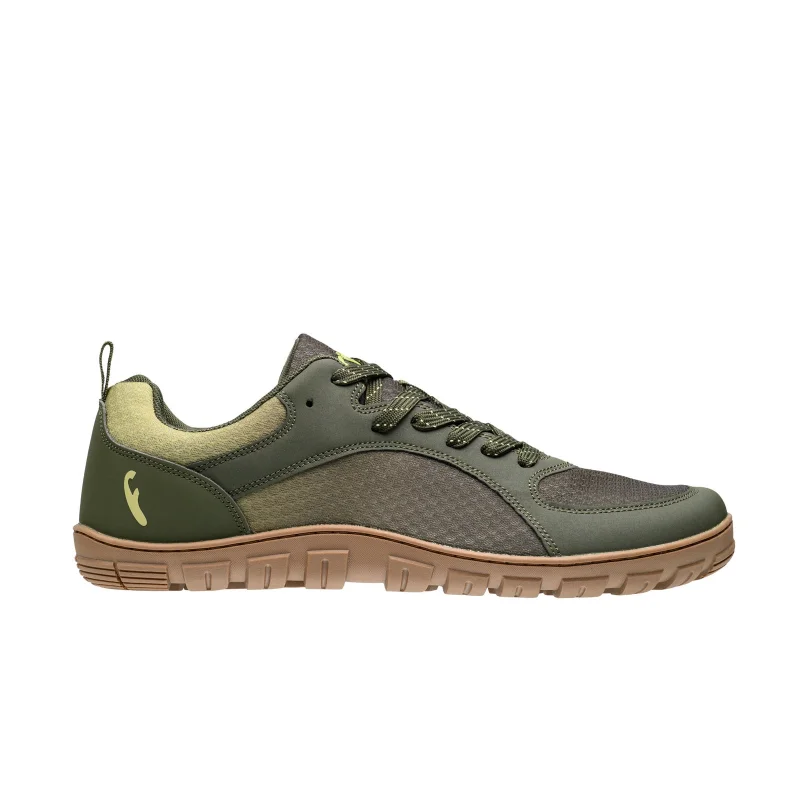
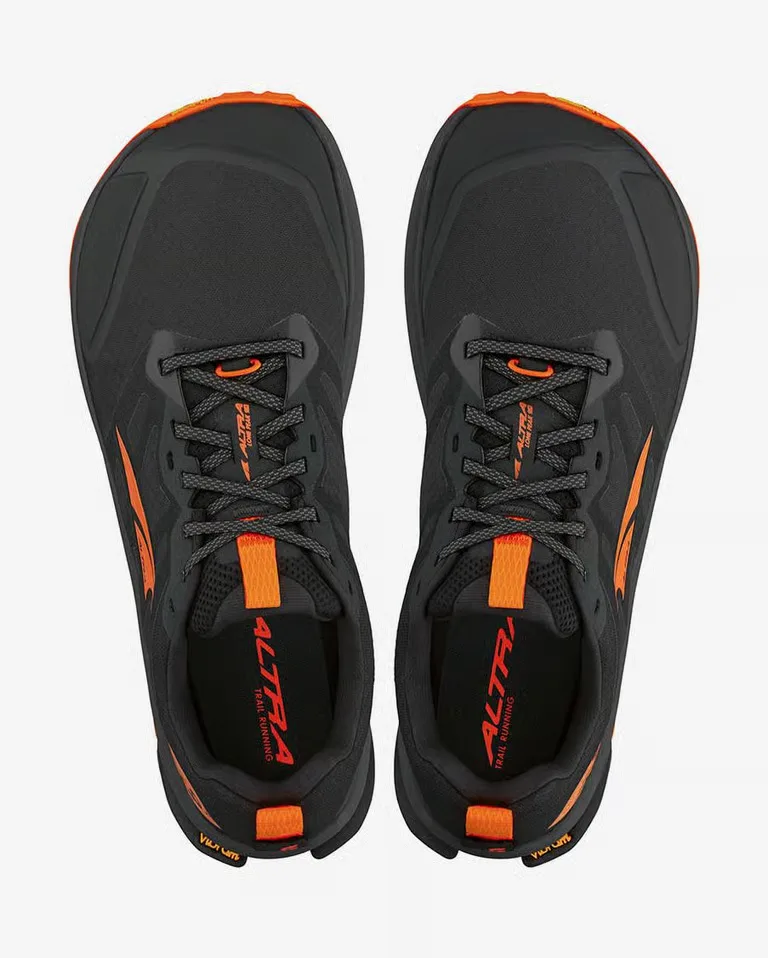
I had been running for months in Altra Lone Peak 8, a zero-drop shoe with a wide toe box and 25 mm of cushioning. A perfect entry point into natural footwear. But one step was missing: jumping to a 100% barefoot shoe, no cushioning, ultra-thin sole and maximum proprioception. I picked the Freet Feldom 3 and this is the honest diary of the transition: day-by-day sensations, the real risks (soleus, metatarsal area), the benefits and the gear you need so you don’t get injured.
Natural footwear vs pure barefoot: not the same thing
There’s a lot of confusion here. Let’s clear it up:
- Natural footwear with stack (like Altra Lone Peak): zero drop, wide toe box, but keeps cushioning (20-30 mm stack). Respects foot biomechanics but partially insulates you from the ground. Ideal for getting started or for long runs.
- Pure barefoot shoe (like Freet Feldom 3, Vivobarefoot Primus, Xero): zero drop, wide toe box and ultra-thin sole (4-7 mm) with no cushioning. You feel every stone, every root. Maximum proprioception, but the foot has to be strong.
The most common mistake is jumping from a conventional 8-10 mm drop shoe straight to pure barefoot. That’s basically guaranteeing a soleus, Achilles or plantar fascia injury.
The logical path is in stages. Mine looked like this:
- Conventional 8-10 mm drop → first running year.
- Natural footwear with stack (Altra Lone Peak 8): months at zero drop with cushioning. The foot learns to land naturally, but still has a buffer.
- Pure barefoot (Freet Feldom 3): zero drop, no cushioning. Now the foot really works.
Skip stage 2 and you’ll suffer.
What defines a 100% barefoot shoe?
Four non-negotiable pillars:
- 0 mm drop: zero height difference between heel and forefoot. Natural posture, no heel push forward.
- Minimal stack (4-7 mm): the sole is essentially a rubber sheet. No midsole foam. You feel the ground.
- Anatomical wide last: toes splay to the natural width of the foot. No compression.
- Total flexibility: the sole rolls up. The foot articulates freely with every stride.
If a shoe fails on any of those four, it’s not pure barefoot. It’s marketing.
My real-world transition diary
Day 1: the shock
Purely experimental run. I was mentally prepared not to chase pace, and I still got a wake-up call.
After 5 km I had to stop. I felt massive fatigue running at a pace I am completely used to with the Lone Peak. The sensation: “I’m spending double the energy for the same output”. I cut the run there and didn’t push more, mainly thinking about not getting injured.
What I learned that day:
- The soleus and calf work twice as hard without cushioning. The elastic energy that EVA foam used to give you back, now you have to generate yourself with your muscles.
- The brain tries to run at the usual pace. You have to drop the ego and drop the pace.
- Foot strike naturally shifts toward the midfoot/metatarsal area. If you keep heel striking, you pay for it.
Week 2: 8 km and better sensations
A week of rest to absorb, then back out. This time:
- 8 km completed without stopping (vs. 5 km on day 1).
- Pace still below normal, but sensations much better.
- The downside: the soleus loaded up by the end of the run. Not a lot, but noticeable. It’s the area that suffers most in this transition.
- Watch the metatarsal area: since you land more there and aren’t adapted yet, blisters can form. The sole of the foot needs petroleum jelly or anti-chafe in the early days.
Following days: fatigue drops
After several more runs, the pattern is clear:
- Overall muscular fatigue drops noticeably. The body is adapting.
- I can run fast on flat ground and asphalt at paces close to my usual conventional-shoe pace.
- The soleus still suffers at the end of long runs, but I notice improvement every week.
- The metatarsal area has hardened: the early sole-of-foot complaints are gone.
Short-term conclusion: the transition works, but the entire lower chain is being asked for everything. The soleus is the first to warn you.
Real risks of going barefoot
No serious post on barefoot can hide this. Push too hard and you’ll get hurt. These are the three areas that suffer most:
1. Soleus and Achilles tendon
Risk number one. With no cushioning, the soleus works like a spring on every stride. Pile up too many kilometres too fast and you’ll get Achilles tendinopathy or soleus overload. The signal: stabbing pain low in the calf or in the tendon.
How to prevent it: start with 3-5 km, scale up very slowly, and add specific strength work (bent-knee heel raises for the soleus).
2. Plantar fascia
With no plantar support, the fascia works at 100%. If your foot is weak, plantar fasciitis can appear: heel pain when you get up in the morning or when you start running.
How to prevent it: walk barefoot at home, do toe-towel exercises, and again, don’t run more than you should.
3. Metatarsal blisters
Foot strike shifts to the forefoot. If the sole of your foot isn’t toughened, blisters form right under the metatarsals. Very common in the first 4-6 runs.
How to prevent it: anti-chafe before the run, toe socks to reduce friction, and if a blister appears, hydrocolloid plasters to keep running pain-free.

Other risks to watch
- Shin splints: if your form is bad and you keep hammering the heel, the tibia takes more impact than normal.
- Metatarsal stress fractures: very rare, but happens to runners who go from 0 to 60 with no transition.
- Knee pain: unlikely with proper barefoot (it usually relieves it), but if you already carry something, check first.
Real benefits (after the adaptation period)
Once you push through the first critical weeks, the benefits make up for it:
- Stronger foot: the intrinsic foot musculature switches on. Plantar arch, toes, flexors. Everything conventional footwear had atrophied.
- Better running form: barefoot forces you to land mid- or forefoot. The braking heel strike disappears on its own: if you do it, the impact warns you.
- Brutal proprioception: you feel the ground in detail. On trail, that means better foot-strike reading and fewer twisted ankles.
- Higher cadence: feeling the ground, you take shorter, faster steps. More efficient.
- Fewer knee and hip injuries (long-term): by changing the foot-strike pattern, impact distributes better through the kinetic chain.
- Real connection with the terrain: hard to explain until you try it. Running a dirt path barefoot is a different experience.
The transition plan I recommend
If you’re going to make the jump to pure barefoot, this is the path I recommend based on my experience:
Phase 0: prepare the foot (4 weeks minimum)
- Walk barefoot at home as much as you can.
- If you come from 8-10 mm drop, first move to a zero-drop shoe with stack like the Altra Lone Peak 9.
- Strength work: heel raises on a step (3 sets of 15-20), straight knee (calf) and bent knee (soleus).
Phase 1: the first runs (weeks 1-4)
- Week 1: one run of 3-5 km very easy, on flat asphalt or smooth dirt path.
- Week 2: two runs of 5-8 km, easy pace, rest days between them.
- Weeks 3-4: up to three weekly runs of 6-10 km, alternating with your usual shoe.
Golden rule: if you feel pain in the soleus, fascia or shin, stop. It’s not weakness, it’s prevention.
Phase 2: bringing it onto trail (weeks 5-8)
- Start using barefoot on smooth trail (compacted dirt, grass).
- Avoid technical rock, loose stone and mud at first.
- Keep some runs in your usual shoe for long distances.
Phase 3: full integration (month 3+)
- You can use barefoot as your main shoe for short and medium runs.
- For very long runs or very technical terrain, consider keeping a stack shoe in rotation.
- Keep doing specific foot and leg strength work.
Don’t rush it. What conventional footwear took years to take from you, takes months to come back.
100% barefoot shoes available on Amazon
These are the picks I recommend within pure barefoot available on Amazon Spain.
Freet Feldom 3 — the versatile trail option
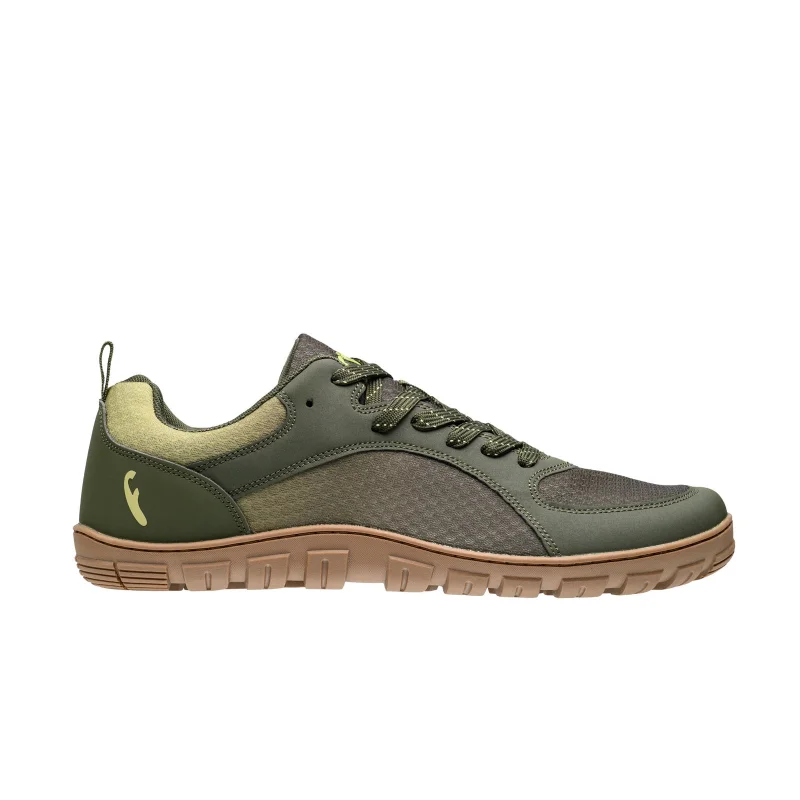
The one I use. Zero drop, 6 mm stack, very wide last and very lightweight (~220 g). Multi-directional lugs valid for dirt and paths. A good middle point between pure barefoot and real-world trail usability.
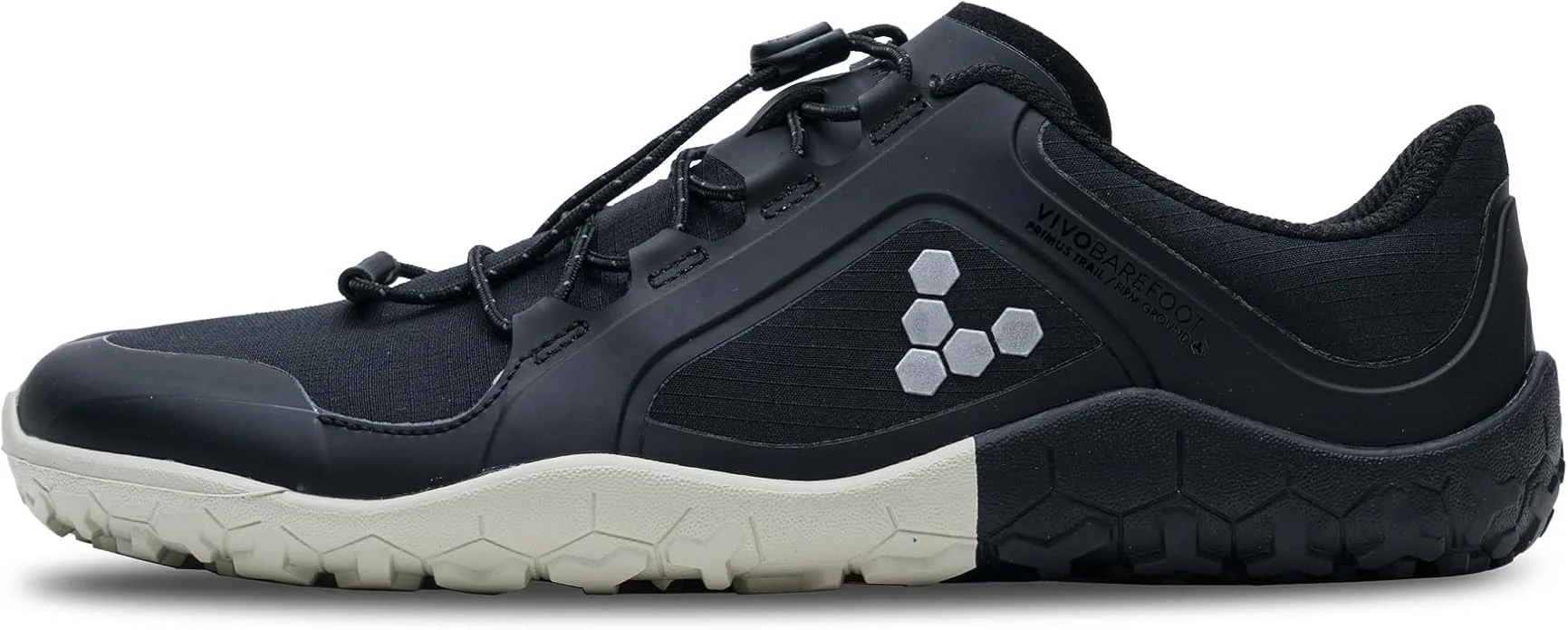
Vivobarefoot Primus Trail III — the premium benchmark
The reference brand in barefoot. The All Weather version with FG (Firm Ground) sole has pronounced lugs for soft ground and a water-resistant upper. More expensive, but with the durability and finish you’d expect from the brand.
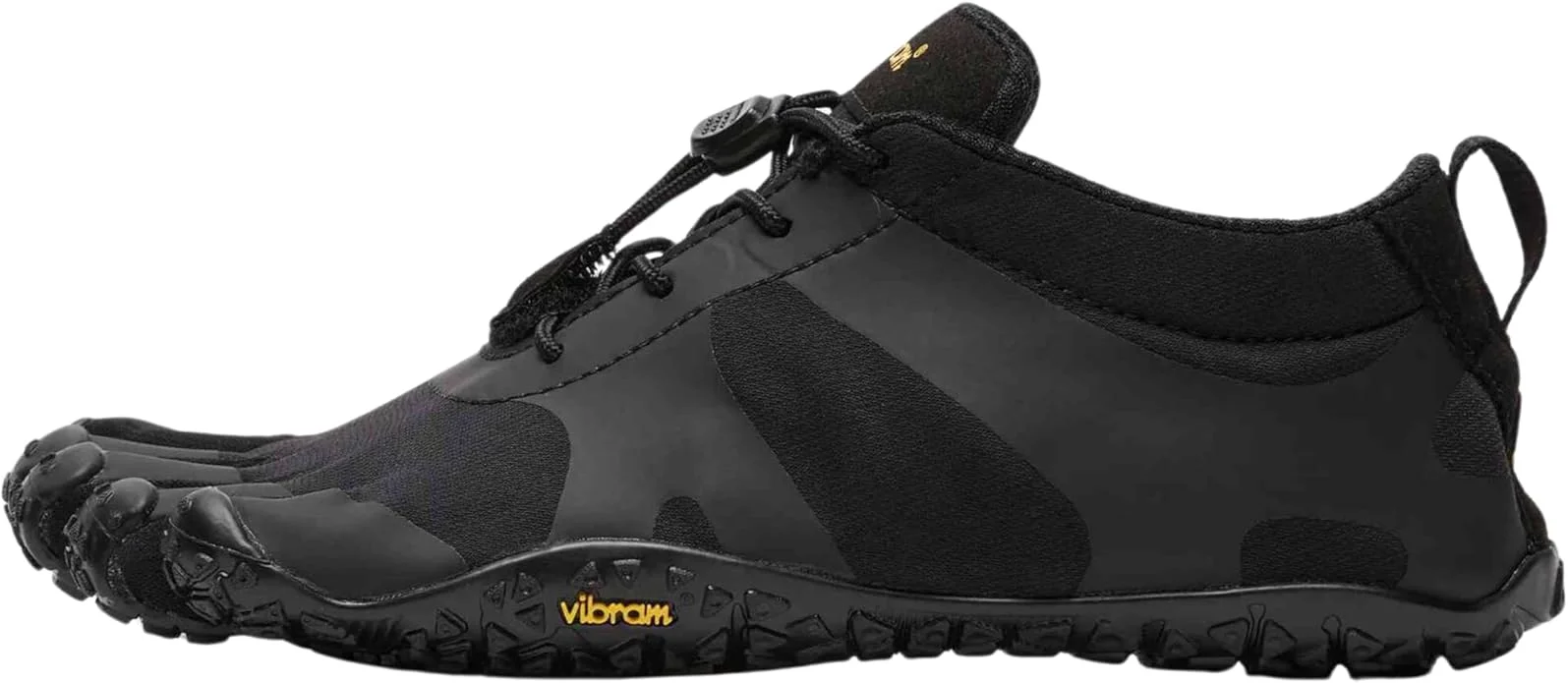
Vibram FiveFingers V-Trail 2.0 — the extreme option with separate toes
The most iconic and recognisable barefoot shoe. Individual pocket for each toe, Vibram Megagrip outsole (the best in the segment) and minimal weight (~180 g). Each toe works independently for maximum proprioception and grip you won’t get from any other shoe. I wouldn’t recommend it as your first barefoot: the learning curve is steep and sizing is tricky. But if you’re already adapted and want to take the philosophy to the extreme, this is the ultimate option.
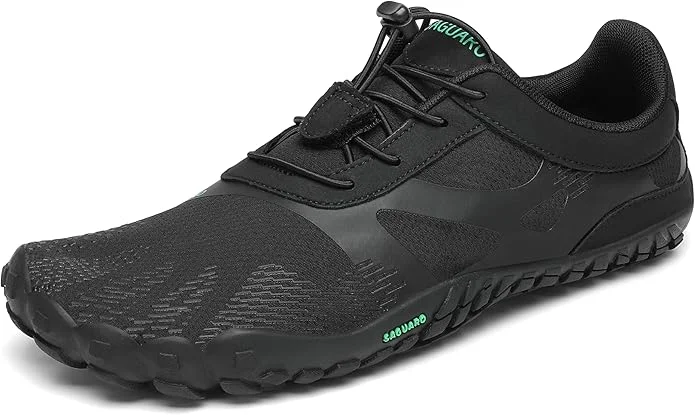
Saguaro — the budget option to test the waters
If you don’t want to drop 100-150 € without knowing if barefoot is for you, Saguaro is the affordable entry point. Bestseller on Amazon Spain with many verified reviews. I wouldn’t recommend them for technical trail, but they’re perfect for walking, around the house and easy transition runs.
Supporting gear: what you actually need
A barefoot shoe alone isn’t enough. These are the accessories that make the difference during the transition:
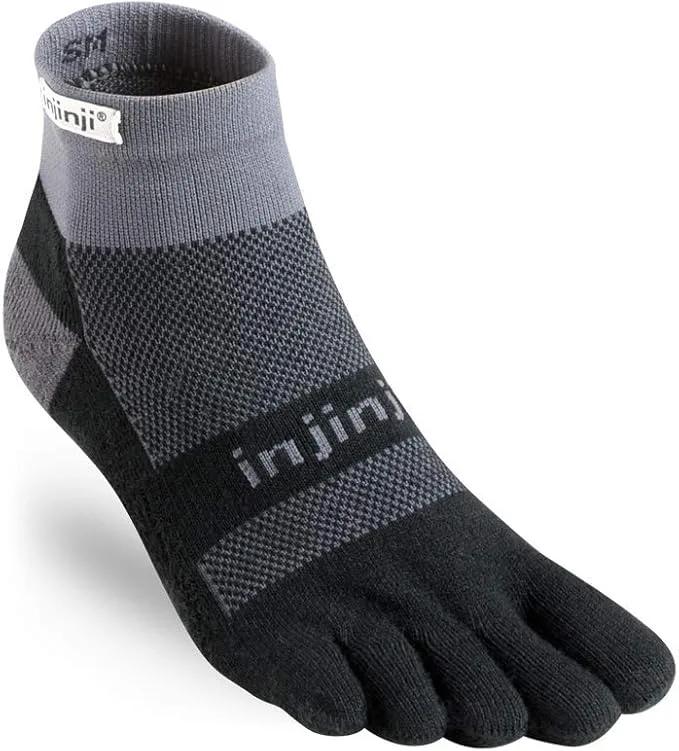
Toe socks
Essential. The wide barefoot last gives toes room, and five-toe socks eliminate friction between them. Result: far fewer interdigital blisters and better toe grip.
If you want a more affordable option to start with:

Anti-chafe balm
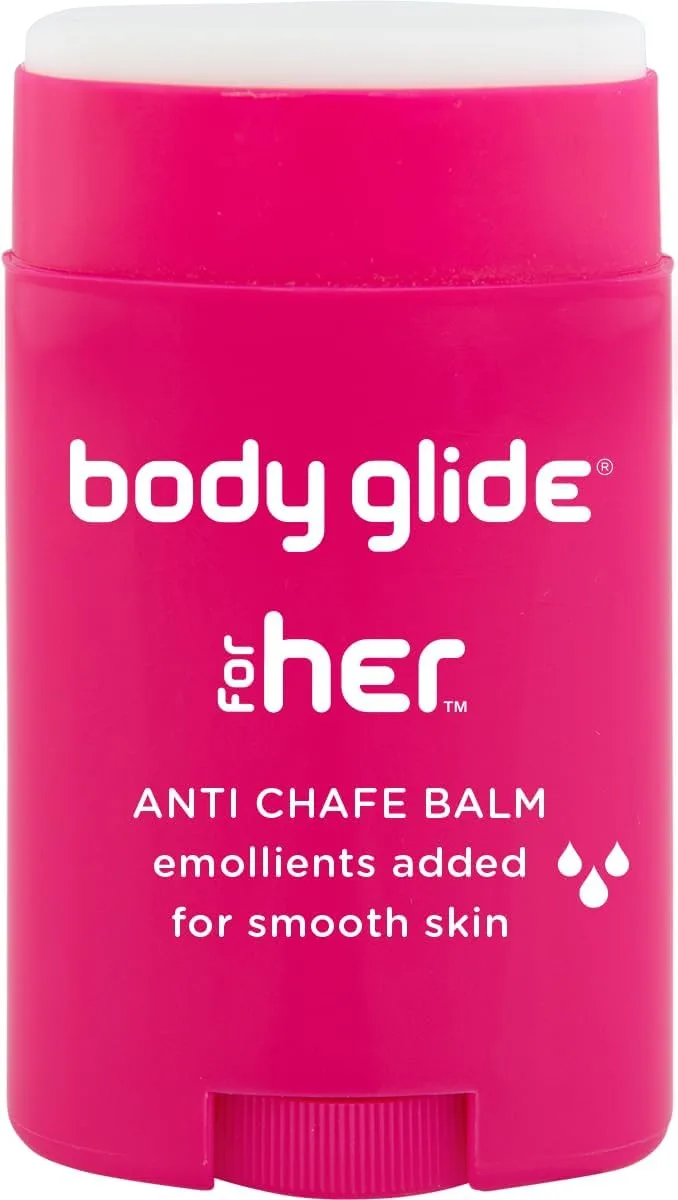
In the first weeks the foot strike changes and new friction points appear, especially under the metatarsals. A balm applied to the sole of the foot before running prevents most blisters.
Hydrocolloid plasters
If a blister does appear (and it will), hydrocolloid plasters are the best fix to keep running pain-free. Essential in the kit during the transition.
Drop 0: what changes in your body
Drop is the height difference between heel and forefoot of the shoe. Conventional shoes usually run 8-12 mm. Pure barefoot is 0 mm.
Why does it matter so much?
- With high drop, the heel is elevated. That shortens the soleus and Achilles tendon over years. When you drop to 0 mm overnight, those tissues are stretched to lengths they’re not used to, and they protest.
- High drop encourages heel striking. That’s a stride that brakes on every step and sends a lot of impact to knee and hip.
- With 0 mm drop, foot strike naturally shifts to mid- or forefoot. Impact distributes better, but the calf works more.
The transition from drop 10 to drop 0 is not physical, it’s neuromuscular. Your nervous system learns a new pattern, and tissues reorganise. No shortcuts: just time and progressive kilometres.
If you want to dive deeper into natural footwear with stack as an intermediate step, read our Altra Lone Peak 9 review after 500 km.
Mistakes you must avoid
Summary of what not to do if you don’t want to end up injured:
- Skipping from drop 10 to drop 0 without going through a zero-drop shoe with stack.
- Running 15 km on day one because “you feel fine”.
- Ignoring soleus or Achilles pain. Pain is information, not weakness.
- Starting barefoot on technical terrain, mud or loose stone.
- Keeping a heel strike at drop 0 (you’ll wreck your shins).
- Skipping specific foot and leg strength work.
- Comparing your progress to already-adapted runners. Each foot has its own timeline.
Verdict: is the jump worth it?
Yes, if you do it right and with patience. The first 2-3 weeks are tough: you’re slower, you tire more, the soleus warns you. But from week 4-6, sensations start to shift. The foot feels stronger, the stride more efficient and the connection with the terrain is something you don’t want to lose.
The Freet Feldom 3 has been a good choice as my first pure barefoot: comfortable width, low weight and enough lugs to run dirt trail. If you come from Altra Lone Peak (8 or 9), it’s a natural step without going to more extreme brands.
But the main message of this post isn’t “buy this shoe”. It’s: respect the transition. The body adapts, but it asks for time. Three runs too long, too soon, and you’re looking at six weeks of injury.
Coming from conventional footwear and curious about zero drop as a first step? Start here: Altra Lone Peak 9 review after 500 km. And if you have doubts about preventing blisters during adaptation, read our trail running blisters and socks prevention guide.