Pine processionary caterpillar: the invisible danger on trail running paths
What is the pine processionary caterpillar
If you run on trails in Spain between February and April, there is a hazard you have probably seen but may not have taken seriously: the pine processionary caterpillar (Thaumetopoea pityocampa).
It is the larval stage of a nocturnal moth. The caterpillars live in white silk nests visible in pine tree canopies. When temperatures rise, they descend to the ground in nose-to-tail lines — hence the name — to burrow and complete their life cycle.
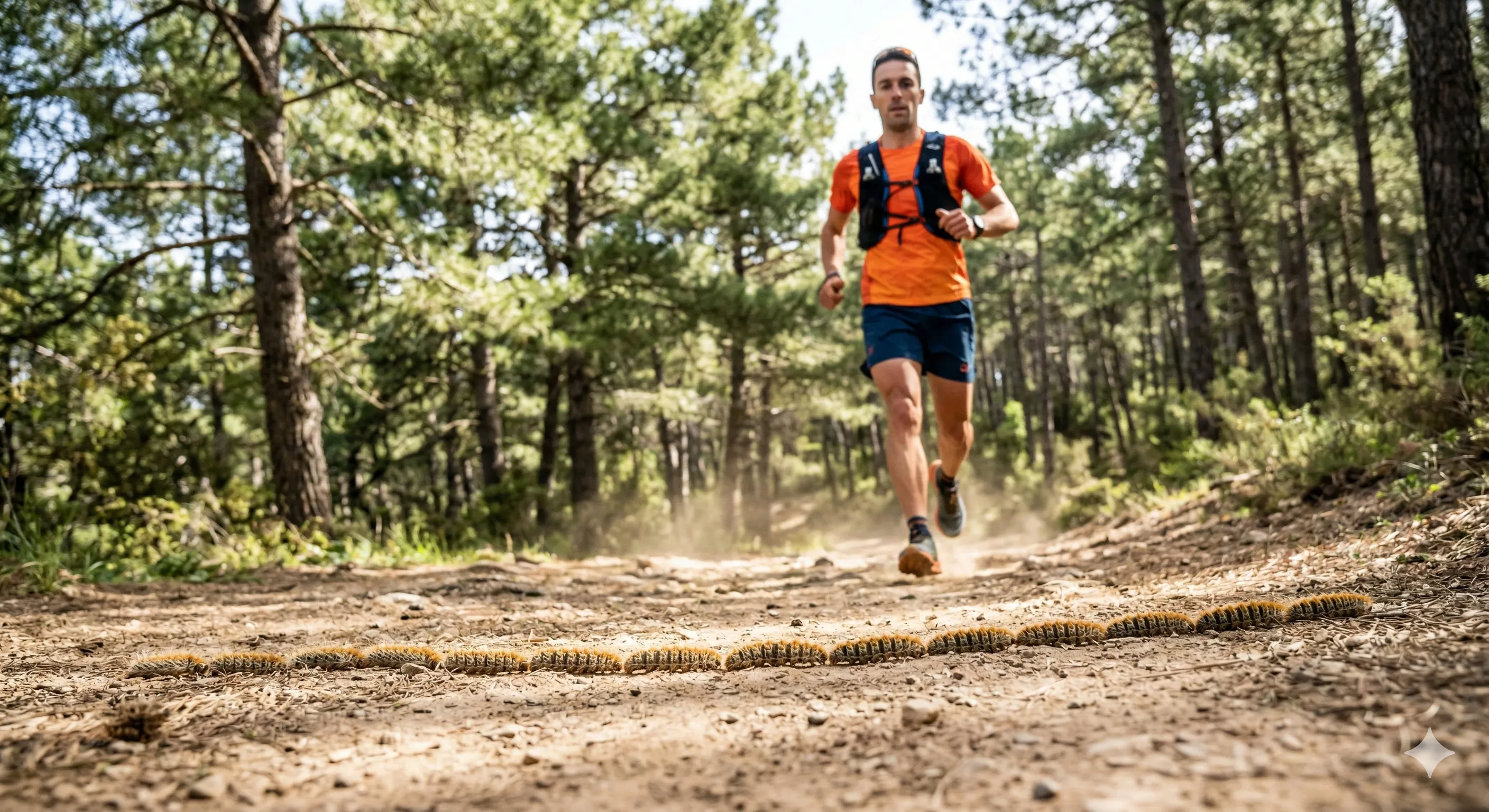
The real danger lies in their urticating hairs: each caterpillar carries roughly 500,000 microscopic barbed hairs that detach easily and become airborne. You do not need to touch the caterpillar to suffer a reaction. Simply running near a procession or a fallen nest is enough for the hairs to reach your skin, eyes or airways.
When and where to find them on the trails
Risk calendar by region
The processionary descends from the trees as temperatures rise. The risk varies by area:
| Region | Peak risk months | Typical altitude |
|---|---|---|
| Andalusia, Murcia, Valencia | February – March | Up to 800 m |
| Balearic Islands | February – April | Up to 600 m |
| Coastal Catalonia, Emporda | March – April | Up to 700 m |
| Madrid, Castilla, Extremadura | March – April | Up to 1,000 m |
| Aragon, Navarra, Basque Country | April – May | Up to 1,200 m |
| Canary Islands | Low risk | Occasional |
Forest types and altitude
The risk is concentrated in pine forests below 1,200 metres. The most affected species are Aleppo pine (Pinus halepensis), stone pine (Pinus pinea) and Scots pine (Pinus sylvestris) at lower elevations.
How to spot the threat:
- Canopy nests: white silk pouches on upper pine branches. If you see them, be extra cautious.
- Ground processions: lines of caterpillars walking nose-to-tail. They can stretch several metres. Do not step on them or jump over them — the hairs scatter with any disturbance.
- Fallen nests: after strong winds, nests may lie on the ground. They are just as dangerous.
Why it is dangerous for trail runners
Skin contact
The most exposed area for a runner is the legs and ankles, especially if you run in shorts. Contact with urticating hairs causes:
- Intense urticaria: red welts that itch for hours or days.
- Contact dermatitis: inflammation, redness and blisters on the affected area.
- Extreme itching: the reaction can last 3 to 7 days.
Inhalation of urticating hairs
This is the risk specific to runners: we breathe harder and deeper than someone walking. When running through an area with active processionaries, you inhale more urticating hairs than a hiker would. Effects range from throat irritation to bronchospasm in sensitive individuals.
Risk for dogs
If you train with a dog, the processionary is even more dangerous for them. Dogs sniff and lick the caterpillars out of curiosity, which causes lingual necrosis (destruction of tongue tissue) that may require surgery. If your dog drools excessively, has a swollen tongue or vomits after a run through pine forest, seek emergency veterinary care.
Severe allergic reactions
In previously sensitised individuals (second contact or later), the processionary can trigger anaphylaxis: breathing difficulty, facial swelling, dizziness and a drop in blood pressure. It is uncommon but potentially serious.
How to protect yourself: recommended gear
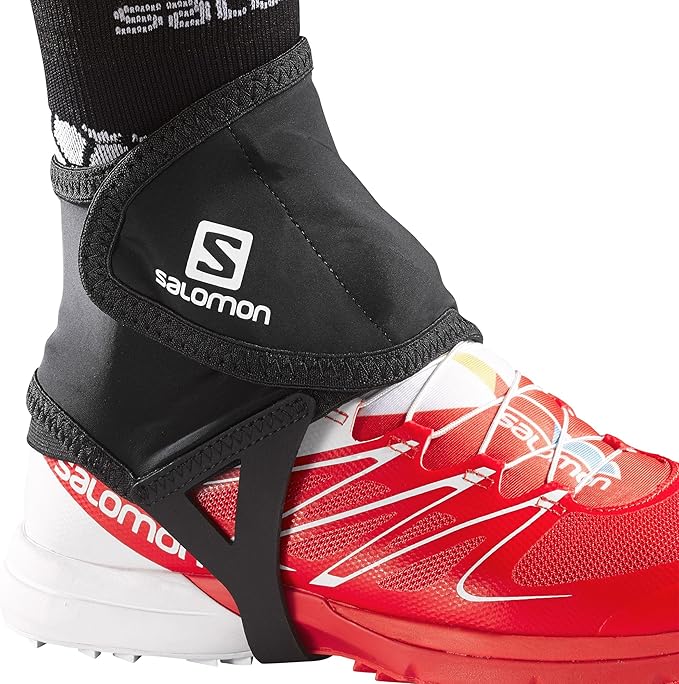
Trail running gaiters
Gaiters cover the gap between shoe and calf — exactly where you are most likely to make accidental contact when running over an unseen procession. During processionary season, high gaiters are the most effective barrier.
Full-length tights or arm sleeves
If temperatures allow, running in full tights instead of shorts dramatically reduces the exposed skin surface. UV compression arm sleeves protect your arms if you pass through areas with nests on low branches.

First aid kit
Carrying a compact first aid kit in your vest is good practice in trail running generally, but during processionary season it is especially important. Make sure it includes (or add): wide adhesive tape (to remove hairs from skin) and antihistamine cream.

Antihistamine cream
A tube of antihistamine gel takes up little space and can make the difference between continuing your run or having to abandon. Apply it immediately after contact to reduce the inflammatory reaction.

What to do if you make contact
Trailside first aid
- Do NOT rub or scratch — you will only drive the urticating hairs deeper into the skin.
- Remove hairs with adhesive tape: press strips of medical tape or duct tape onto the affected area and peel off. Repeat several times. This is the most effective method.
- Wash with cold water — hot water opens pores and helps the hairs penetrate further. Use water from your flask or a nearby stream.
- Apply antihistamine cream to the clean area.
- Do not touch your eyes after handling the affected zone. Wash your hands.
- Remove contaminated clothing as soon as possible. The hairs stick to fabric and can cause reactions every time the clothing touches skin.
When to seek emergency care
Get immediate medical attention if you experience:
- Difficulty breathing or a feeling of throat tightness.
- Swelling of the face, lips or tongue.
- Dizziness, nausea or a drop in blood pressure.
- Eye contact: intense tearing, blurred vision, eyelid swelling.
- Widespread reaction: multiple body areas affected simultaneously.
Races in high-risk areas in Spain
Several races on the Spanish calendar pass through pine forests where the processionary is active. If you are entering any of these, pay extra attention to protective gear:
- Ultra Trail Bosques del Sur (May, Cazorla): extensive pine forests in Jaen. The processionary may still be active at lower elevations in early May.
- Penyagolosa Trails (April, Castellon): crossing Mediterranean pine forests at the peak of the season.
- Gran Trail Penalara (May, Guadarrama): the pine forests of Valsain and La Pedriza are a regular processionary zone.
- Mallorca by UTMB (spring, Tramuntana): low-altitude Mediterranean pines, high risk in March-April.
- Garmin Epic Trail (April, Emporda): coastal Catalan pines at the height of the season.
- El Valle Trail (March, Murcia): El Valle Regional Park, Mediterranean pines with early-season risk.
At TrailRunTemple, every race includes specific gear recommendations in its Pack 360. Check the page for your next race to prepare according to its terrain and time of year.
Summary: your anti-processionary kit
| Product | Purpose | When to use |
|---|---|---|
| High gaiters | Physical barrier for legs and ankles | Whenever running through pines Feb-May |
| Full tights | Cover entire legs | When temperatures allow |
| UV arm sleeves | Protect arms from nests on low branches | Areas with visible nests |
| Antihistamine cream | Immediate relief after contact | Always carry in your first aid kit |
| First aid kit with adhesive tape | Remove urticating hairs from skin | After accidental contact |
The processionary caterpillar is a seasonal risk that many runners are unaware of until they experience it. A little prevention — gaiters, tights and a small first aid kit — can save you from a ruined race or worse.
For more on trail running protective gear, check out our guide to mandatory gear in ultra trail and the sun protection guide for trail running. Use our interactive gear checklist to make sure you have everything you need before each race.