Sodium in trail running: how much you lose in the heat and how to replace it safely
In summer, the difference between finishing a race and blowing up halfway often isn’t in your legs or your gels: it’s in sodium. It’s the electrolyte we lose most through sweat and the one we replace worst. And once the thermometer climbs past 30 °C (86 °F), the problem explodes.
This article gets straight to it: why sodium matters so much in trail running, how much you really lose, and the three real ways to replace it —salt tablets, electrolyte drink mix and gels with sodium—, with concrete data for each product so you can choose wisely.

Why sodium is the electrolyte that matters in trail
Sweat isn’t just water: it carries salts, and the main one is sodium. When you run for hours under the sun, you drain that tank far faster than you think. And sodium isn’t just another mineral; it does three jobs that directly affect your performance:
- Muscle contraction and cramp prevention: sodium (together with potassium, calcium and magnesium) regulates the electrical signal that makes your muscles contract and relax. When levels drop, cramps appear —that feeling that your calf is about to “lock up” on any descent.
- Nerve function: nerve impulse transmission depends on the balance of sodium inside and outside the cell. Without enough sodium, the head-to-legs connection turns slow and clumsy.
- Fluid balance: sodium keeps water where it needs to be. If you drink a lot of water but don’t replace sodium, you dilute what’s left in your blood. That’s hyponatremia, and in severe cases it’s dangerous: confusion, nausea, swelling and even medical emergencies.
That last point is key and counterintuitive: in summer, drinking water without replacing salts can be worse than drinking less. It’s not just about hydrating, it’s about hydrating with sodium.
How much sodium you really lose (and why it spikes in summer)
Here’s the figure almost nobody accounts for. A runner loses between 500 and 1,500 mg of sodium per litre of sweat, and that number varies enormously from person to person. So-called salty sweaters (those who finish with white crusts on their cap and shirt) sit at the high end.
Now combine that with sweat volume in summer: in a hot race you can sweat between 0.5 and 1.5 litres per hour. Multiply it out:
- An average runner in moderate heat: ~500-800 mg of sodium lost per hour.
- A salty sweater in a full heatwave: over 1,500 mg of sodium per hour.
The problem? Most people replace a ridiculous fraction of that. And in a 6-, 10- or 20-hour summer ultra, that deficit piles up hour after hour until the body says enough.
In races like the Ultra Sierra Nevada in July, or the CxM El Fuerte de Frigiliana with the Mediterranean heat of the south, the sodium strategy isn’t a detail: it’s what separates finishing from dropping out.
Want a personalised figure? Our hydration calculator estimates how much fluid and sodium you need based on the duration and conditions of your race.
The 3 ways to replace sodium
There’s no single solution. There are three formats, each with its strengths, and the smart move is almost always to combine them. Let’s take them one by one.
Option 1: Salt tablets and capsules
The most direct, concentrated format. There are two kinds:
- Capsules to swallow (like the 226ERS Sub9): you swallow the capsule with a little water and you’re done. The big advantage is that you control your sodium dose independently of how much you drink. On a technical descent where you don’t want to drink, you can still replace salts.
- Effervescent tablets (like Precision PH): you dissolve them in water and drink the mix. You turn your bottle into a made-to-order electrolyte drink.
The 226ERS Sub9 Salts deliver 250 mg of sodium per capsule, plus potassium, magnesium and ginger extract to improve digestive tolerance. No calories or carbs, so they don’t interfere with your gel plan. The usual guideline: 1-2 capsules per hour depending on the heat.

Precision PH 1500 is the option for heavy salt sweaters. Each tablet, dissolved in 500 ml, gives a concentration of 1,500 mg of sodium per litre (around 750 mg of sodium per tablet), three times more than a normal isotonic drink. Ideal for preloading before the start on a hot day and for hydrating during the race.

Option 2: Electrolyte drink mix
A powdered isotonic drink does everything at once: it provides fluid, some sodium and, depending on the formula, carbohydrates for energy too. It’s the most convenient option if you want to keep it simple and carry everything in your bottle.
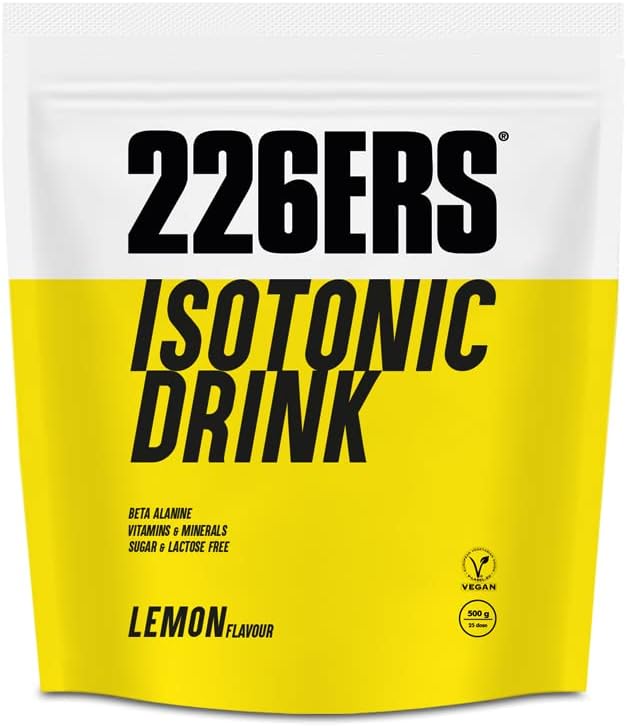
226ERS Isotonic Drink comes in around 98 mg of sodium per serving alongside roughly 34 g of carbohydrates, plus potassium, magnesium and zinc. It’s a solid hydration + energy base, but beware: its sodium level is moderate. For a salty sweater in mid-summer, the isotonic drink alone falls short on salts and should be reinforced with capsules or tablets.
Option 3: Gels “with sodium” (and why they aren’t enough alone)
Here’s the big misunderstanding. Many people think their gels already cover their sodium. The reality, reading the labels, is different:
- Maurten Gel 100: 20 mg of sodium. With 25 g of carbohydrates, it’s a gel designed for energy, not for replacing salts.
- GU Energy Gel Original: around 60 mg of sodium (varies by flavour). A bit better, but still a drop in the ocean against the 500-1,500 mg you lose per hour.
Do the math: to replace 800 mg of sodium in one hour with Maurten gels you’d need 40 gels. That’s absurd. Gels do their job —giving you carbohydrates— and they do it well, but they aren’t a sodium tool. That’s why you have to combine them with one of the two options above.


Comparison table
Sodium and carbohydrate data verified from each product’s official information:
| Product | Type | Sodium | Carbohydrates | Format | When to use it |
|---|---|---|---|---|---|
| 226ERS Sub9 Salts | Salt capsule | 250 mg/capsule (500 mg/h with 2) | 0 g | Capsule to swallow | Heat and salty sweaters; dose sodium without overdrinking |
| Precision PH 1500 | Effervescent tablet | 1,500 mg/L (~750 mg/tablet) | 0 g | Dissolve in water | Heavy salt sweaters; preload and intense hydration |
| 226ERS Isotonic | Isotonic drink | ~98 mg/serving | ~34 g | Powder in bottle | Hydration + energy in one; moderate sodium |
| Maurten Gel 100 | Carbohydrate gel | 20 mg/gel | 25 g | Sachet | Energy only; does not replace sodium |
| GU Original | Carbohydrate gel | ~60 mg/gel | 22 g | Sachet | Energy + some sodium; not enough on its own |
The quick read: if you need energy, gels and isotonic drink. If you need real sodium, salt capsules and tablets. And almost always, a combination of both.
What to use for the heat and the race
There’s no single recipe, but there are clear guidelines depending on the scenario:
- Short race (under 2 h), mild temperatures: an electrolyte drink —or even just water if you sweat little— is probably enough. Don’t overcomplicate it.
- Medium-long in the heat (2-5 h, summer): isotonic drink as a base + 1 salt capsule per hour if you notice you’re sweating a lot. This is where it starts to matter.
- Summer ultra (6 h+): a combined strategy is mandatory. Gels for energy + salt capsules or tablets for sodium + drink for volume. Plan 1-2 capsules per hour depending on the heat and your sweat rate.
- You’re a salty sweater: always raise the sodium dose. Preload with a strong tablet (like PH 1500) before the start and don’t drop below 1 capsule per hour during the race.
This all makes total sense in long, demanding summer events like the Val d’Aran by UTMB in July or the Canfranc-Canfranc in September, where you spend many hours moving and the sodium deficit builds up without you noticing.
Common sodium mistakes in summer
- Drinking only water “to hydrate”: the most dangerous mistake. You dilute the sodium in your blood and edge toward hyponatremia. Drink with electrolytes.
- Assuming gels carry the sodium you need: you’ve seen it in the table. They don’t —not even close.
- Not testing your strategy in training: the golden rule of nutrition. Too many salt capsules can upset your stomach. Find your dose sweating in training, not on race day.
- Same dose for everyone: a runner who barely sweats and a salty sweater need very different strategies. Know yourself.
- Forgetting sodium in races under 2 hours in serious heat: even if it’s short, if it’s 35 °C (95 °F) and you’re pouring sweat, you’re still losing salts.
Frequently asked questions
How much sodium should I take per hour running in summer?
It depends on your sweat rate, but as a reference: between 300 and 800 mg of sodium per hour for most people, and over 1,000 mg/h if you’re a very salty sweater or it’s very hot. Fine-tune it by testing in training.
Do salt tablets prevent cramps?
They help, but they’re not magic. Cramps have several causes (muscle fatigue, lack of specific training, electrolyte deficit). Replacing sodium reduces the risk linked to salt imbalance, especially in the heat, but it doesn’t make up for insufficient preparation.
Capsule to swallow or effervescent tablet —which is better?
The capsule lets you replace sodium without having to drink, ideal on stretches where you don’t want fluid. The effervescent tablet turns your bottle into an electrolyte drink, handy if you already drink regularly. Many runners use both depending on the moment of the race.
Can I replace all my sodium with gels alone?
No. Most gels carry between 20 and 60 mg of sodium, when you can lose over 1,000 mg per hour. Gels are for energy (carbohydrates); for sodium you need capsules, tablets or a well-dosed drink.
Wrapping up
Sodium is the forgotten electrolyte of summer. You don’t need to overthink it: understand how much you sweat, pick a main option —capsules or tablets if you sweat a lot of salt, electrolyte drink if you want convenience— and use it alongside your gels, which stay for what they do best, energy.
Try it in your hot training runs over the coming weeks and arrive at your summer race with a clear strategy. To fine-tune the amounts, take a look at the hydration calculator and the nutrition calculator, and check our trail running nutrition recommendations.