Safety pins for cramps in ultra trail: the risk no one should take
What this practice is and why it exists
Kilometre 80 of an ultra. Your quads have locked up like concrete and there are still 40 km to go. In that moment of desperation, some runners reach for the safety pin on their race bib and puncture the cramped muscle, hoping for immediate relief that lets them keep going.
It is not a medical procedure. It does not appear in any sports first-aid protocol. It is a trick that circulates by word of mouth in ultra trail communities and on social media — and that more and more runners replicate without understanding the real risks.
This article explains why cramps happen in ultra-distance races, what dangers come with puncturing yourself with a safety pin, and how you can make sure this situation never arises through proper preparation.
Why cramps in ultra trail are different
It is not just dehydration
The classic “drink more water and you won’t cramp” model is outdated. Current sports medicine research points to a multifactorial origin:
- Electrolyte depletion: sodium, potassium and magnesium are lost through sweat over hours of exertion. Without adequate replenishment, neuromuscular signalling breaks down.
- Accumulated neuromuscular fatigue: when a muscle group works for 10, 15 or 24 hours at intensities it was not trained for, spinal control mechanisms fail and the muscle contracts involuntarily.
- Insufficient training in duration and specificity: cramps at km 70 are, in many cases, the consequence of a longest training run of just 40 km.
Factors that make it worse during a race
- Heat and solar radiation: accelerate electrolyte loss through sweat.
- Prolonged descents: the eccentric load on the quadriceps is the most common scenario for muscle lock-up in ultra trail.
- Sleep deprivation: in formats lasting over 24 hours, central nervous system fatigue amplifies susceptibility to cramps.
- Gastrointestinal distress: nausea or bloating prevents proper absorption of the electrolytes you are ingesting.
The medical risks of using safety pins
Infection
A race bib safety pin is not sterile. It has been exposed to dust, sweat, mud and your own dirty hands for hours of racing. Inserting it into muscle tissue breaks the skin barrier at a time when your immune system is already suppressed by extreme exertion (elevated cortisol, sleep deprivation).
The outcome can range from local cellulitis (subcutaneous tissue infection) to sepsis requiring hospitalisation. If your tetanus vaccination is not up to date, the risk of tetanus is real.
Nerve damage
The quadriceps and calves — the muscles most prone to cramping in ultras — are crossed by sensory and motor nerve branches that run close to the surface. A blind puncture can damage one of these branches, causing paraesthesia (tingling, numbness) or motor weakness that may persist for weeks or, in severe cases, become permanent.
Vascular injury
Superficial veins and arterioles run through the same tissue. A puncture without anatomical knowledge can cause intramuscular bleeding that worsens compartment inflammation.
Acute compartment syndrome
This is the most serious risk. The muscles of the lower leg sit inside closed fascial compartments. If a puncture causes bleeding or fluid accumulation within the compartment, pressure rises and can cut off circulation to the muscle. This is a surgical emergency. In the context of a mountain race, far from a hospital, the situation can seriously compromise the integrity of the limb.
The “relief” does not work as believed
The temporary relief some runners report after puncturing themselves is explained by the pain gate effect: a new sharp pain (the puncture) temporarily masks the cramp signal. But the cramp mechanism remains active. You have not “released” the muscle — you have simply stopped feeling it for a few minutes. The cramp returns, and now you also have an open wound.
How to prevent cramps: training strategy
Eccentric strength: the work most runners skip
The eccentric contraction — the muscle lengthens while producing force — is exactly what happens on every downhill step. The quadriceps absorb impact, the calves control deceleration. If you have not specifically trained this capacity, your muscles will reach the second half of the race with no reserve.
Key exercises for your base period:
- Nordic hamstring curls: 3 sets of 6-8 slow reps, twice a week. Build eccentric endurance in the hamstrings.
- Decline squats (board at 25°): work the quadriceps in the specific range of prolonged descents.
- Calf raises on a step with slow lowering (3-4 seconds eccentric phase): prepare the soleus and gastrocnemius for hours of accumulated descent.
Progressive overload and specificity
If your target race is 80 km with 4,000 m D+, your training blocks must progressively approach those demands. You do not need to replicate the exact distance, but you do need to expose your muscles to efforts of similar duration and elevation gain.
Rule of thumb: never surprise your muscles on race day. Cramps that appear in the final quarter of an ultra are almost always the reflection of a specific preparation deficit.
Heat training
For summer races or hot conditions (Ultra Sierra Nevada, Transgrancanaria), heat adaptation is a direct tool against cramps. Running sessions during the hottest part of the day and post-run sauna for 10-14 days before the race reduce the sodium concentration in sweat — meaning you lose fewer electrolytes per litre of sweat.
Nutrition and hydration strategy
Sodium: the most important electrolyte in ultra
Sodium is the primary electrolyte lost through sweat and the one most directly linked to exercise-associated muscle cramps. Sweat rate and sodium concentration vary widely between individuals.
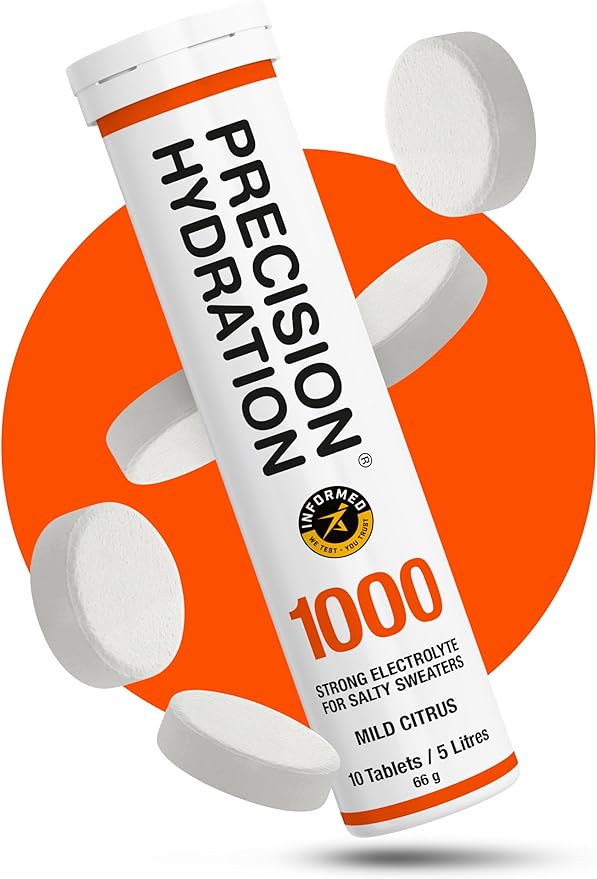
Practical tip: if your shirt, pack or cap is left with a white crust after a long training run, you are a salty sweater and need a more aggressive electrolyte plan than average. A high-concentration tablet like Precision Hydration PH 1500 — delivering 1,500 mg of sodium per litre — is designed for this profile.
Structured hydration plan
Drinking to thirst works for sessions under 3 hours. In an ultra, you need a plan. Use our hydration calculator to estimate your fluid needs based on distance, temperature and duration.
- Calculate your sweat rate: weigh yourself before and after a 2-hour training session in race-like conditions. The difference (adjusted for fluid intake) is your hourly loss.
- Target: 500-800 ml/hour depending on heat and intensity.
- Do not over-hydrate: hyponatraemia (excess water, sodium dilution) is more dangerous than mild dehydration and can cause confusion, seizures and even be fatal.
Pre-race sodium loading
Increasing sodium intake 24-48 hours before the race — through foods like broths, pickles, olives and salted nuts — expands plasma volume and prepares the body to better tolerate sweat losses from the very first kilometre.
What to do when a cramp hits during a race
Even with the best preparation, a cramp can appear. What you do in that moment makes the difference between resolving it and making it worse. This is the protocol that works:
- Stop and stretch: passive stretch of the affected muscle for 60-90 seconds. For calves: dorsiflex the foot (toes up). For quads: bring the heel toward the glute. Do not force — hold firm but without bouncing.
- Walk, do not stand still: blood flow aids recovery. Walking allows partial recovery without stopping completely.
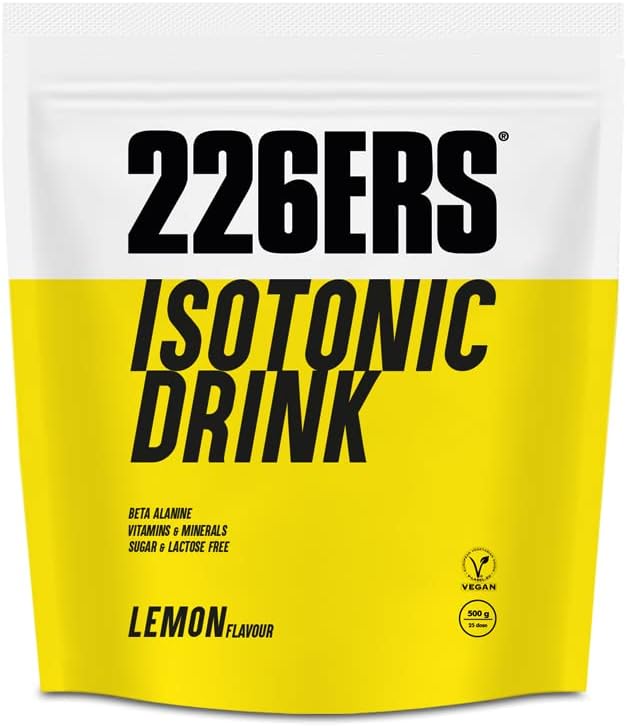
- Immediate electrolytes: this is the moment for the sodium tablet. Dissolve it in whatever liquid you have. Absorption takes 10-20 minutes but begins immediately.
- Gentle massage: compress the muscle belly (the central part of the muscle), not the tendon. No striking or excessive pressure.
- Adjust your pace: drop 10-15% for the next 5-10 km. The cramp is a signal. Ignoring it guarantees it will return harder.
- Aid station: if the cramp does not resolve after these steps, ask for medical assistance at the next checkpoint. Race medics have specific protocols.
What you should NOT do: use safety pins or sharp objects, apply extreme compression over the cramped muscle, or force sudden stretches that can cause a muscle tear.

Compression and gear: their real role
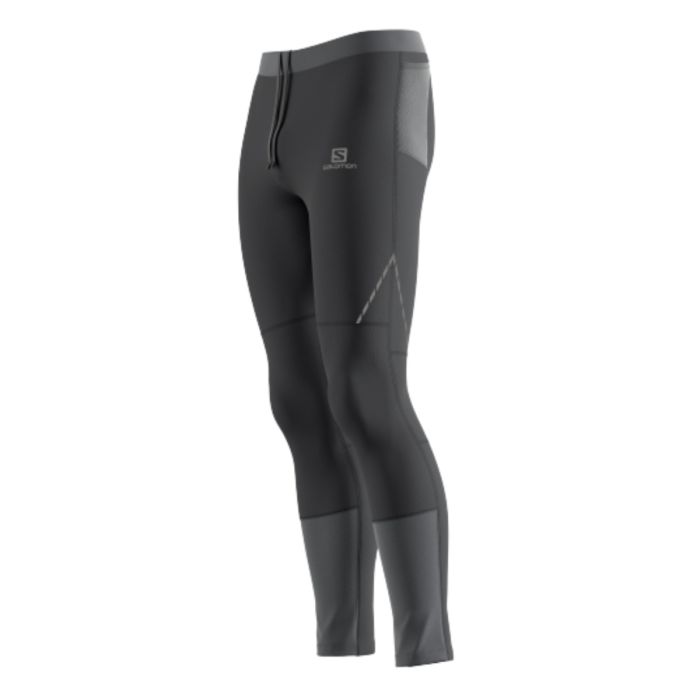
Compression tights reduce muscle oscillation during running and there is evidence supporting their usefulness in delaying exercise-induced muscle damage (EIMD). In a mountain ultra with thousands of metres of negative elevation, that reduction in quad and calf vibration can make a difference in the final hours.
But expectations should be realistic: compression is a complement, not a substitute. It does not prevent cramps caused by severe electrolyte depletion or insufficient training. Its greatest value lies in reducing accumulated fatigue that makes the muscle more susceptible to cramping.
Mandatory gear and first aid
Many ultra trail races in Spain require runners to carry a first-aid kit and, in some cases, to demonstrate basic first-aid training. If you know sports first-aid protocols, you know that improvised puncture with a safety pin is not part of any of them.
Race medics treat cramps with stretching, electrolyte administration and massage — never with needles or sharp objects.
Carrying mandatory gear does not mean knowing how to use it. If you are going to run ultras, consider taking a first-aid course (Red Cross, your federation, or your running club) as part of your preparation. It is an investment that goes beyond a single race.
Check our guide on mandatory gear for ultra trail for exactly what to carry and why.
Summary: what actually works before and during a race
| Timing | Action | Impact |
|---|---|---|
| Months before | Eccentric strength training | Reduces accumulated muscle fatigue |
| Weeks before | Heat training blocks (summer races) | Reduces sodium loss in sweat |
| Days before | Sodium loading through food | Expands plasma volume |
| During the race | Hydration and electrolyte plan | Maintains sodium balance |
| When a cramp hits | Stretch, walk, electrolytes, massage | Safe resolution |
| Under no circumstances | Safety pins or sharp objects | Real danger with no proven benefit |
Cramps in ultra trail are a serious problem, but they have a solution through preparation. Strength training, a personalised hydration strategy and knowing what to do when a cramp appears are the tools that actually work — not a rusty safety pin from your race bib.
To complete your preparation, check our recommendations on nutrition for trail running and mandatory gear for ultra trail. And if you want to plan the nutrition for your next race, use the nutrition and hydration calculator.