Backyard Ultra: the complete guide to the last one standing format
Everything about backyard ultra: what it is, official rules, exact distance, world records, races in Spain, training, gear and strategy for your first backyard.
What is a backyard ultra?
A backyard ultra is an endurance race with a unique format: all participants must complete a 6.706 km loop (4.167 miles) every hour, on the hour. When the bell rings, you go. If you're not at the start line when it rings, you're eliminated.
The race continues until only one runner remains capable of completing another loop. That runner is the winner — the last one standing. There's no maximum distance or time limit: the race can last 24, 48 or even over 72 hours.
Unlike a conventional ultra trail where the fastest runner wins, in a backyard ultra the one who endures the longest wins. You're not racing against the clock but against the other runners — and against your own ability to keep going loop after loop.
History and origin of the backyard ultra
The backyard ultra format was created by Gary "Lazarus Lake" Cantrell, the same mind behind the legendary Barkley Marathons. The first edition of Big's Backyard Ultra was held in 2012 in Bell Buckle, Tennessee (USA), in Lazarus Lake's actual backyard — hence the name.
What started as an experiment among friends grew rapidly. In 2019, Big's Backyard Ultra went viral when Maggie Guterl won the mixed-gender edition by completing 60 loops (402 km) in over 60 hours. The format expanded with official satellite events worldwide.
Today there are over 400 satellite events in more than 50 countries, including Spain. The circuit has a pyramid structure: national backyards qualify runners for an annual World Championship, where the best from each country compete at Big's Backyard Ultra. The winner of the Spanish qualifier receives a Silver Ticket, a direct spot to represent Spain.
Official backyard ultra rules
The format has simple but strict rules. The loop distance — exactly 4.16667 miles (6.706 km) — is not random: it's calculated so that 24 loops total exactly 100 miles (160.9 km).
- The bell rings every hour on the hour. If you're not at the start line when it rings, you're out. No second chances.
- There's only one winner — the last runner able to complete a loop that no one else completes. They're the Last One Standing.
- There's no second place. Everyone else receives a DNF (Did Not Finish), regardless of how many loops they completed.
- No assistance on the course. You can have your base camp at the start/finish area, but no one can accompany or help you during the loop.
- The course must be completed in the designated direction. Some events alternate direction each loop.
- No maximum distance or time limit. The race ends when only one runner remains — it can last 24, 48, 72 hours or more.
- Voluntary withdrawal: to drop out, simply don't show up for the next bell. No formal notification needed.
Distance and format: why 6.706 km?
The loop distance in a backyard ultra is not arbitrary. 6.706 km equals exactly 4.16667 miles. This number is designed so the maths work out:
24 loops
= 100 miles (160.9 km)
36 loops
= 150 miles (241.4 km)
48 loops
= 200 miles (321.9 km)
This allows mile milestones as mental reference points during the race. Completing 24 hours (a full day) equals running 100 miles, an iconic distance in the ultrarunning world.
Elevation gain varies by event. Some loops are virtually flat (like Aranjuez, with ~200 m D+ per loop), while others have more demanding profiles. But the distance is always the same: 6.706 km.
Backyard ultra world records
Backyard ultra records are measured in loops completed. Unlike other ultra formats, what matters here isn't total time but how many hours you can keep going before everyone else drops out.
Men's world record
108 loops
723.8 km in 108 hours (4.5 days)
Harvey Lewis (USA) — Big's Backyard Ultra 2023
Women's world record
75 loops
502.9 km in 75 hours (~3.1 days)
Courtney Dauwalter (USA) — Big's Backyard Ultra 2023
In Spain, the best performances have been achieved at the Spain Backyard Ultra in Castro Caldelas. The competitive level grows each year, with Spanish runners regularly surpassing 30-40 loops in national events.
Backyard ultra in Spain: race calendar
The backyard ultra format has grown rapidly in Spain. There are currently 5 official events on the calendar, spread across Galicia, Catalonia and Madrid. The flagship is the Spain Backyard Ultra in Castro Caldelas (Ourense), which awards a Silver Ticket to the winner: a direct spot on the national team for the Backyard Ultra World Championship.
The Silver Ticket is the ultimate competitive prize in the Spanish backyard circuit. Only a handful of events in the country award it, making these races the most hotly contested on the calendar.
Upcoming backyard ultra races in Spain
View full calendar →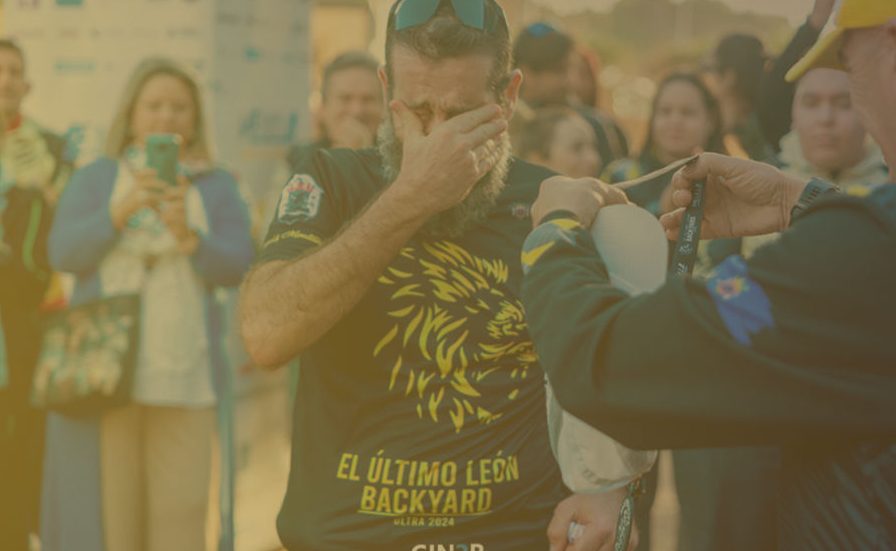 Backyard Ultra
Photo: Club Corredores Africanus
Backyard Ultra
Photo: Club Corredores Africanus El Último León
Melilla
Backyard ultra in Melilla — 6.7 km loops through Fuerte de Rostrogordo pine forests, Silver Ticket
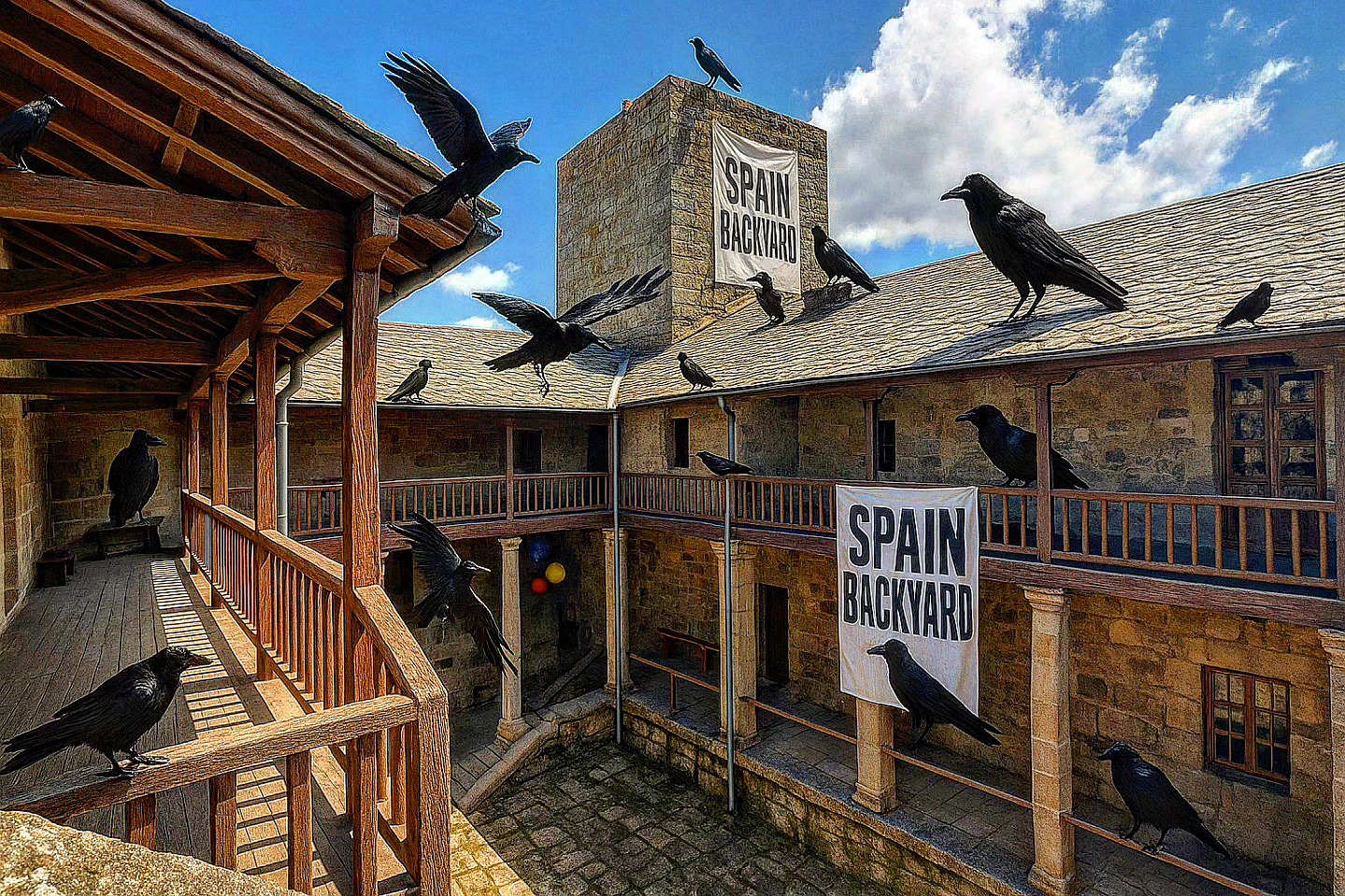 Backyard Ultra
Photo: Spain Backyard Ultra
Backyard Ultra
Photo: Spain Backyard Ultra Spain Backyard Ultra
Castro Caldelas, Ourense
Spain's official backyard ultra — 6.7 km loops with 240 m D+ in Castro Caldelas, Ribeira Sacra
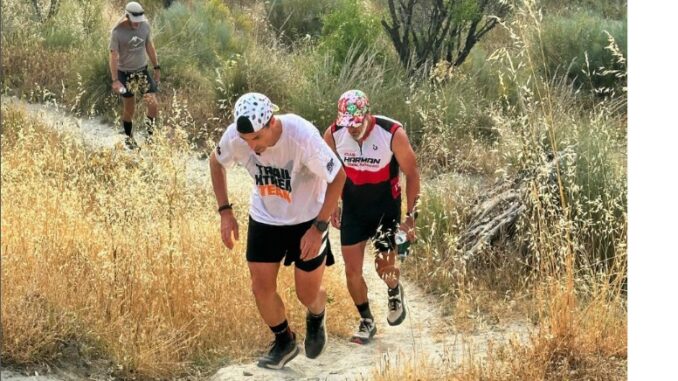 Backyard Ultra
Photo: Only One Race / Backyard Ultra Aranjuez
Backyard Ultra
Photo: Only One Race / Backyard Ultra Aranjuez Backyard Ultra Aranjuez
Aranjuez, Madrid
Backyard ultra in Aranjuez — 6.7 km loops with 200 m D+ along the Tagus river, Big's Backyard Ultra format
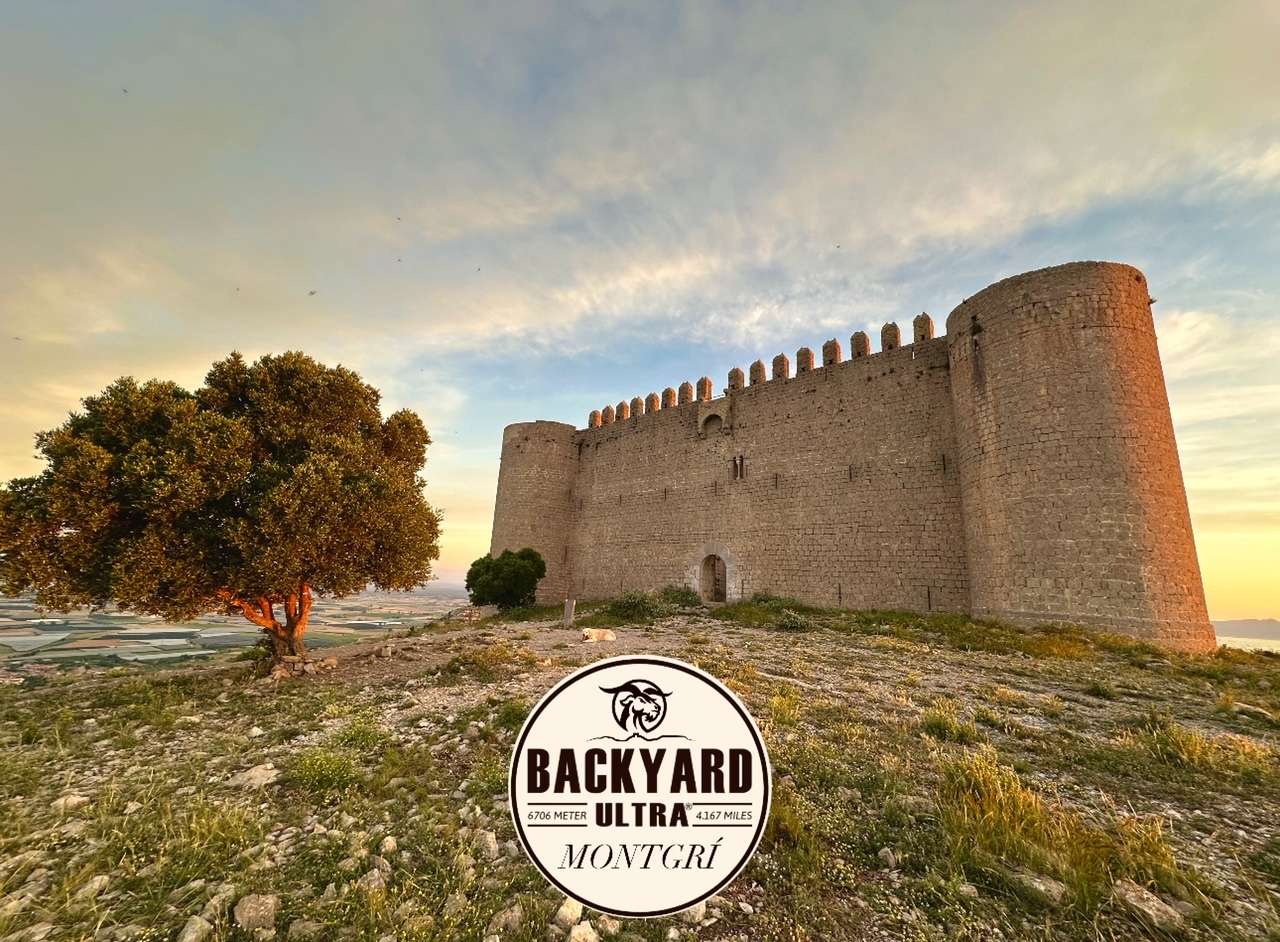 Backyard Ultra
Photo: Backyard Ultra Montgrí / Oncolliga Girona
Backyard Ultra
Photo: Backyard Ultra Montgrí / Oncolliga Girona Backyard Ultra Montgrí
Torroella de Montgrí, Girona
Charity backyard ultra — 6.7 km loops with 90 m D+ in Torroella de Montgrí, night start
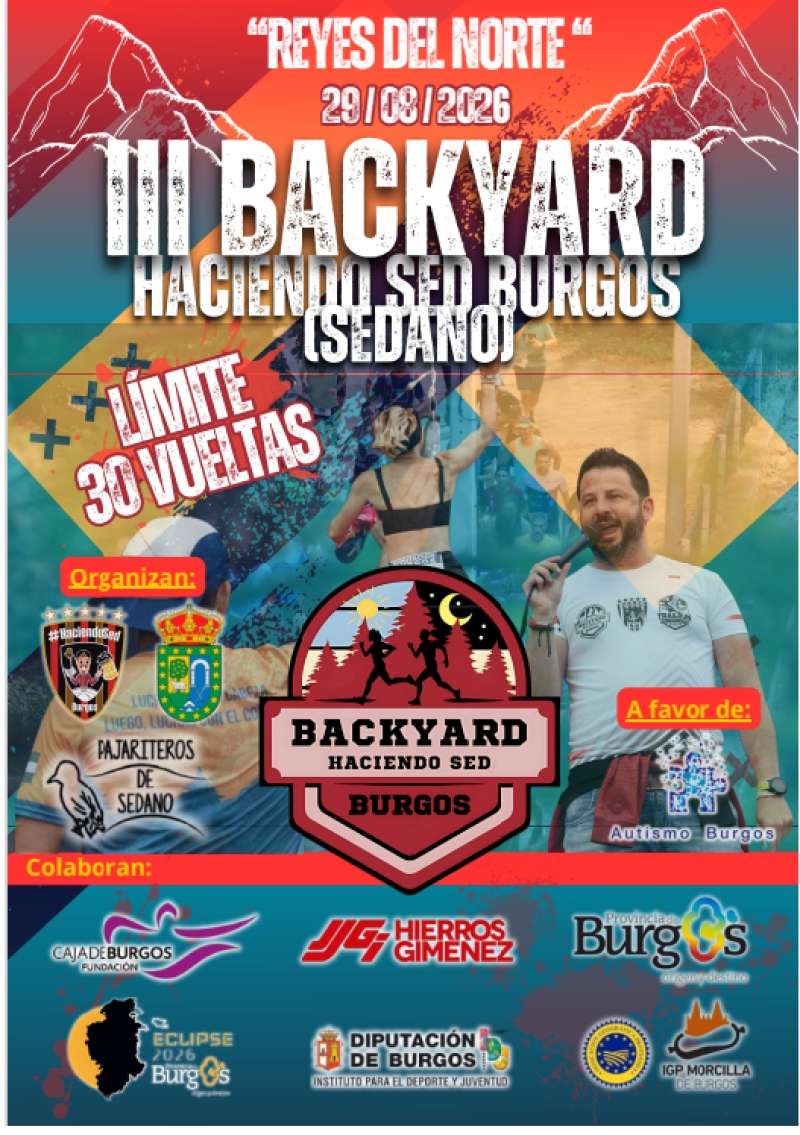 Backyard Ultra
Photo: Haciendo Sed Burgos
Backyard Ultra
Photo: Haciendo Sed Burgos Backyard Haciendo Sed Burgos
Sedano, Burgos
Charity backyard ultra in Sedano (Burgos) — 6.7 km loops benefiting Autismo Burgos
How to train for a backyard ultra
Preparing for a backyard ultra isn't like preparing for a conventional ultra trail. You don't need to climb mountain passes or accumulate elevation gain — you need to be able to repeat a moderate effort for many consecutive hours without wearing yourself out.
The key to training is aerobic base. Run frequently (5-6 days per week) at a comfortable pace, prioritising volume over intensity. A well-prepared backyard runner can maintain the 6.7 km in 45-50 minutes loop after loop without straining.
Specific training sessions
- Long runs at backyard pace: 3-4 hours at the pace you'd use in the race (not faster). The goal is to get your body used to moving for many hours without fatigue.
- Night training: Once a month, do a long session that includes dark hours. Test your headlamp, night clothing and ability to maintain pace while sleepy.
- Transition simulations: Run 45 minutes, stop 15, eat, and run again. Repeat 4-6 times. This trains the start-stop cycle that defines the format.
- Foot and ankle strengthening: The repetitive terrain hits the same points kilometre after kilometre. Work on ankle mobility, plantar fascia and calves.
Training duration: 12-16 weeks is enough if you already have a marathon or ultra base. If you come from running without long-distance experience, plan at least 20 weeks.
Race strategy: how to survive loop by loop
The most common mistake in a backyard ultra is starting too fast. Finishing the loop in 35 minutes gives you 25 minutes of rest, but you burn energy you'll need on loop 20. The winning strategy is the opposite: be efficient, not fast.
The three phases of a backyard
- Loops 1-10 (the easy ones): Comfortable pace, eat from the first loop even if you're not hungry. These loops are for saving energy and stacking calories. Aim to finish in 48-52 minutes.
- Loops 10-20 (the night): This is where backyards are won or lost. Cold, sleepiness and monotony attack. Change your clothes, have hot broth, keep your mind busy. If you can get through the night, you're among those who'll fight to win.
- Loops 20+ (the final battle): Few runners remain. Now mental management matters: loop by loop, without thinking about how many are left. Every loop you complete is a victory.
Key tip: Set up your base camp like an actual campsite. Chair, food organised by hours, labelled dry clothes, charged headlamp. The minutes you save organising, you gain resting.
Essential gear for a backyard ultra
A backyard ultra isn't like a conventional race. You need to set up a base camp next to the start line with everything you might need for days.
Must have
- • At least 2 pairs of shoes — rotating reduces blisters
- • Powerful headlamp with plenty of battery for the night
- • Camping chair for resting between loops
- • 4-5 pairs of dry socks
- • Thermal layers for the early morning hours
Highly recommended
- • Light waterproof jacket
- • Vaseline or anti-chafe cream
- • Small towel to dry your feet
- • Portable charger for headlamp and phone
- • Full change of dry clothes
Backyard ultra nutrition strategy (24h+)
In a backyard ultra you have around 15 minutes of rest between loops (depending on how fast you complete the circuit). That window is your moment to eat, hydrate and prepare for the next hour.
The key is real, varied food. Gels work for the first few hours, but after 10-12 hours the stomach craves solid food. Sandwiches, rice, pasta, fruit, hot broth — variety prevents monotony and ensures a steady calorie intake.
Organise food into boxes by 4-6 hour blocks: morning, midday, afternoon, evening, overnight. Each box with everything you need for that stretch. That way you don't waste time rummaging through bags.
Sample nutrition plan by phase
- Loops 1-8 (first 8h): Gels, bars, fruit, nuts. Light, easy-to-digest food.
- Loops 8-16 (hours 8-16): Transition to solids. Sandwiches, omelette, cold pasta, rice. Hot broth if it's night.
- Loops 16-24 (hours 16-24): Comfort food. Soup, mash, warm sandwich. The stomach appreciates warm, soft food.
- Loops 24+ (beyond a day): Whatever your body asks for. Pizza, ramen, sweets. At this point, any calorie that goes in is a win.
Frequently asked questions about backyard ultra
Do I need ultra experience to do a backyard?
Not necessarily. The format is accessible because every hour you start fresh. If you can run/walk 6.7 km in an hour, you can participate. Ultra experience helps with night hours and nutrition management, but many first-timers complete 12-20 loops.
How many loops is a good result in a backyard ultra?
It depends on context, but as a reference: 12 loops (80 km) is a solid achievement, 24 loops (161 km, a full day) is excellent, and going beyond 30 loops puts you among the best backyard runners at national level.
What is the Silver Ticket?
Some backyards award a Silver Ticket to the winner, granting a spot on Spain's national team for the Backyard Ultra World Championship. In Spain, Spain Backyard Ultra (Castro Caldelas) and El Ultimo Leon (Melilla) are Silver Ticket events.
Can I sleep between loops?
Technically yes: if you finish a loop in 45 minutes, you have 15 minutes before the next start. Some runners take 5-10 minute micro-naps during the early morning hours. But there are no official breaks — the bell rings every hour without exception.
How much does it cost to enter a backyard ultra in Spain?
Entry fees in Spain typically range from 40 to 80 EUR, considerably less than most conventional ultras. The format is logistically simpler (a single loop, no distributed aid stations), which keeps costs low. Check the Pack 360 for each race for the current price.
What's the difference between a backyard ultra and an ultra trail?
In a conventional ultra trail, the distance is fixed and the fastest runner wins. In a backyard ultra, there's no set distance — the race goes on until only one runner remains. The terrain is always the same loop and the pace is partially regulated by the hourly bell. It's more an exercise in endurance and management than pure speed.
Can I have a pacer or crew during the loop?
No. Official Big's Backyard Ultra rules prohibit pacers and any assistance on the course. You can only receive help at your base camp (start/finish area). However, you can have someone preparing your food and clothes between loops — in fact, having a good support crew at the base makes a huge difference.
Who created the backyard ultra format?
Gary "Lazarus Lake" Cantrell, the same creator of the Barkley Marathons. The first Big's Backyard Ultra was held in 2012 in Bell Buckle, Tennessee (USA). Since then, the format has expanded to over 50 countries with official satellite events.
What is the backyard ultra world record?
The men's world record is 108 loops (723.8 km in 108 hours / 4.5 days), set by Harvey Lewis at Big's Backyard Ultra 2023. The women's record is 75 loops (502.9 km), achieved by Courtney Dauwalter at the same edition.
Ready for your first backyard ultra?
Explore the 5 backyard ultra races in Spain with a complete Pack 360: registration, gear, accommodation and nutrition for each one.